

Former Iranian Political Prisoners Share Stories of Survival and Resilience at D.C. Vigil
Weny News, April 24, 2026
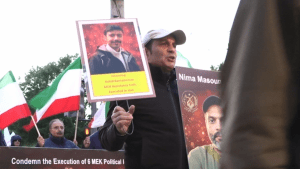
WASHINGTON, D.C. — Decades after surviving some of the darkest chapters in Iran’s history, former political prisoners are speaking out—sharing stories of torture, loss and resilience as the war with Iran continues.
Just steps from the White House this week, a candlelight vigil brought together voices that have carried pain for decades. Behind each glow is a story of survival and a past that never truly fades.
“From 1980 to 1988,” said Ali Sadighi, a former political prisoner and a member of the Organization of Iranian American Communities. “It was terrible.”
“It was horrible,” said Majid Robab.
“I was tortured for four years. I cannot describe it, how badly was that,” said Farhad.
Prison in Iran meant years of fear, watching friends disappear, one by one.
“I witnessed lots of people executed each night, some nights more than hundreds,” said Farhad.
Though hard to imagine, treatment was often even harsher for women.
“Women faced double suppression and torture, because of the fact that they were women and the misogynist practice of the regime,” said one woman, also a former political prisoner.
Human rights groups have long documented mass executions of political prisoners in Iran during the 1980s, and even to this day. The events, survivors say, the world cannot ignore.
Even now, decades later, the trauma persists.
Read More
The Voice They Could Not Silence: Vahid Bani Amerian’s Final Testament
Iran Focus, May 6 2026
The executions carried out in Ghezel Hesar Prison between March 30 and April 4, 2026, marked another chapter in the Iranian regime’s long confrontation with organized political opposition. Among those executed were six imprisoned members of the People’s Mojahedin Organization of Iran (PMOI/MEK): Vahid Bani Amerian, Mohammad Taghavi, Babak Alipour, Pouya Ghabadi, Akbar Daneshvarkar, and Abolhassan Montazer.
The six men were members of the PMOI Resistance Units, networks that Iranian authorities have repeatedly targeted in recent years. Their executions followed legal proceedings that the prisoners themselves described as predetermined and rooted in coercion.
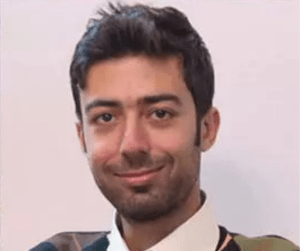
In the days following the executions, one voice emerged with particular force: the final recorded statement of Vahid Bani Amerian, a 32-year-old political prisoner sentenced to death. Delivered from inside prison and intended for public release, his testimony offers a rare look into the mindset of a condemned political prisoner confronting execution while insisting on making his defense visible to the public.
Read More

News Nation Interview with OIAC’s Majid Sadeghpour and Maj. Gen. John F. King
Dr. Majid Sadeghpour (OIAC) identifies the organized resistance as the Iranian regime’s true Achilles’ heel, arguing that Tehran manufactures regional conflict to distract from domestic uprisings. Military pressure alone is insufficient; the solution is supporting the established opposition. With over 4,000 Resistance Unit activities in 2025 and a provisional government framework led by President-elect of the NCRI, Maryam Rajavi, a democratic alternative is ready to lead.
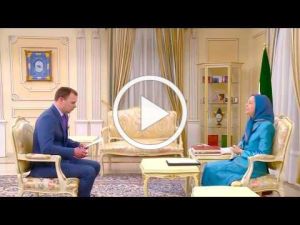
Interview with Kyle Olsen – Maryam Rajavi’s views for the Iran of tomorrow- 2026
In this section of the interview, Maryam Rajavi outlines a future for Iran built on the pillar of gender equality. She makes it clear: freedom in Iran is impossible without women in political leadership.
From the rejection of the compulsory hijab to the guarantee of equal rights in every sphere, the platform of the NCRI is built on choice, not coercion. “No to compulsory hijab, no to compulsory religion, and no to compulsory governance.
OIAC Donation | 501 (c)(3) Tax deductible
Your donation will help OIAC advocate for a democratic, secular and non-nuclear government in Iran. Founded on the respect for human rights, gender equality, religious and ethnic tolerance, as wells as social, economic justice, and security for America. Our goal is to organize Iranian-American communities in the United States to promote these values.