

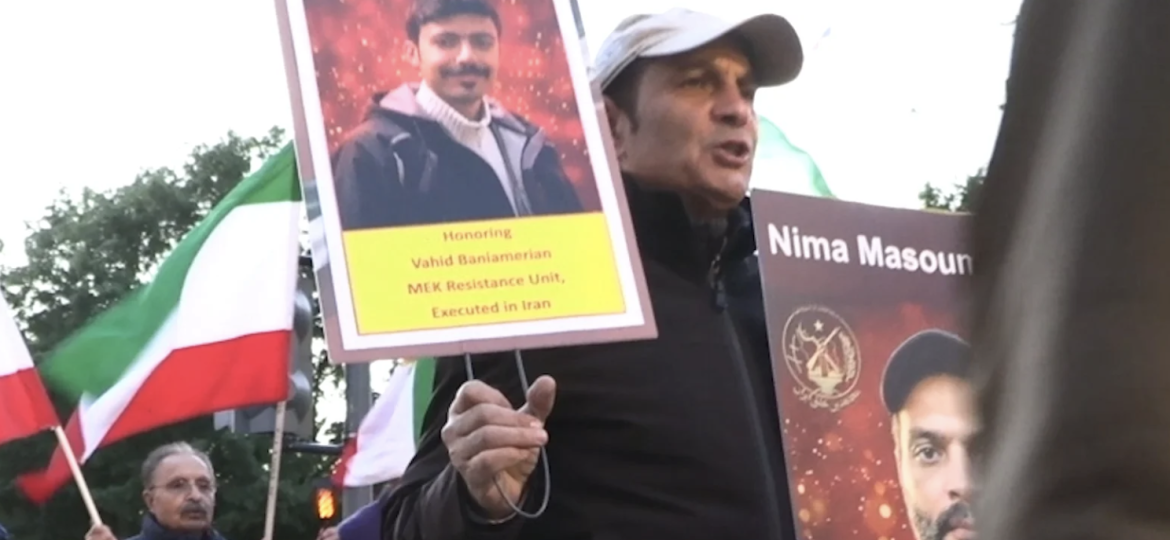
Weekly Report on Human Rights Violation in Iran
June 8-14, 2026
The document reports on the widespread executions of ordinary prisoners and political detainees in Iran from May to June 2026, highlights the structural normalization of the death penalty, details a new social espionage network and mass arrests under wartime pretexts, describes escalating repression including targeting independent lawyers, and exposes the dire conditions and forced deployment pressures on prisoners amid war, calling for urgent international intervention to halt these human rights violations.
Executions
Execution of Ordinary Prisoners in Iran: Names That Must Not Be Forgotten
June 11, 2026
https://iran-hrm.com/2026/06/11/execution-of-ordinary-prisoners-in-iran-names-that-must-not-be-forgotten/
Although the Islamic Republic exploits the shadow and pretext of geopolitical challenges to level charges of espionage, enmity against God (moharebeh), and armed rebellion (baghi) against political prisoners and peaceful protesters in order to silence every critical voice, the shocking rate of executions in Iran against prisoners convicted of ordinary crimes must not be forgotten. This group of prisoners are themselves the primary victims of the regime’s flawed structural, social, and economic policies and the resulting absolute poverty, driven step-by-step toward delinquency.
Over a one-month period (from May 8 to June 8, 2026), the right to life was stripped from a vast number of ordinary crime prisoners; notably for charges where the possibility of a fair trial, due process, and an investigation into the root causes of the crime never existed. The forthcoming statistics represent only a fraction of the death sentences carried out regarding ordinary prisoners, the actual numbers of which are undoubtedly far higher than the names mentioned in this report due to information blockades and frequent internet shutdowns in Iran.
Detailed Statistical Breakdown of Executions in Iran (May 8 to June 8, 2026)
Execution of Ordinary Prisoners in Iran
| Row | Name & Surname | Prison of Execution | Charge | Age & Other Details | Photo |
| 1 | Aslan Amiri | Arak | Drug Offenses | – | 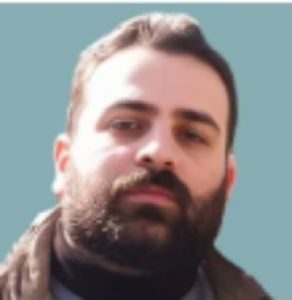 |
| 2 | Ms. Asma Zarei | Ardabil | Murder | 28 years old / Mother of a 2-year-old child born in prison | No Photo |
| 3 | Mojtaba Khosravi | Isfahan (Dastgerd) | Drug Offenses | 42 years old | No Photo |
| 4 | Meysam Abdi | Isfahan (Dastgerd) | Drug Offenses | 38 years old / Father of 1 child | No Photo |
| 5 | Reza Pedram | Isfahan (Dastgerd) | Drug Offenses | – | 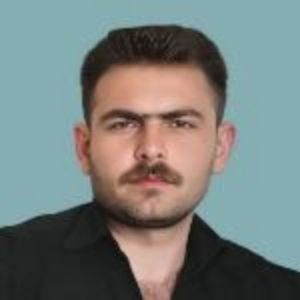 |
| 6 | Amir Mohammadi Joghabad | Isfahan (Dastgerd) | Drug Offenses | – |  |
| 7 | Mohammad Ghasem Abdohvand | Isfahan (Dastgerd) | Drug Offenses | 33 years old | No Photo |
| 8 | Rahim Ghanbari | Isfahan (Dastgerd) | Drug Offenses | 38 years old | No Photo |
| 9 | Mohammad Abiat | Ahvaz | Murder | 27 years old | 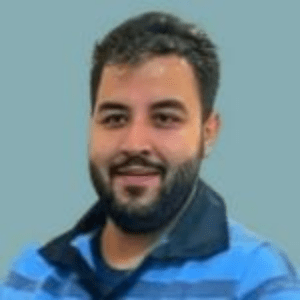 |
| 10 | Mohammad Raoof Majidi | Bukan | Murder | 40 years old | 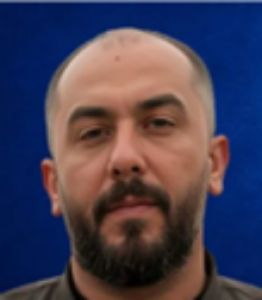 |
Perpetrators of the Deprivation of the Right to Life; A Structure that Normalizes Executions
To understand how the death penalty has transformed into a mechanical process devoid of legal standards, reviewing the record of the officials executing these sentences is essential. A prime example of this is Esmatollah Jaberi, a former assistant prosecutor, judicial enforcement supervisor, and judicial enforcement judge at the Tehran Criminal Prosecutor’s Office. An examination of his performance yields a clear reflection of a judicial framework where speed outpaces justice, and where the right to life, independent investigations, and an effective defense are sacrificed for the sake of punishment execution statistics.
Jaberi’s direct presence and role in executing at least 350 death sentences led state media to refer to him as the “Execution Man” (Khabar Online, May 10, 2020). Although he claims to have successfully obtained pardons from the victims’ families (Oliya-ye Dam) in 180 cases, these statistics are themselves the greatest testament to the system’s structural failure. They demonstrate that many of these cases possessed a high potential for resolution from the very outset without requiring the gallows, yet the system was unwilling to halt the execution machine. His famous catchphrase during the controversial case of Shahla Jahed, stating: “Blessed is the killer who is executed,” perfectly illustrates the ruling ideology that perceives the death penalty not as a painful exception, but as a positive value.
- The Case of Shahla Jahed: A Symbol of Severe Ambiguities in Criminal Investigations
 The case of Khadijeh (Shahla) Jahed was one of the most controversial contemporary criminal cases, in which Esmatollah Jaberi played a pivotal role in the execution process. Despite widespread opposition from legal observers, this case culminated in the gallows, while fundamental ambiguities—such as the failure to discover the murder weapon, glaring contradictions in eyewitness evidence, the condition of the victim’s clothing, and the crime scene—were never resolved. Shahla Jahed recanted her initial confessions in court, explicitly declaring that these admissions were extracted under severe psychological and emotional duress; however, the judiciary carried out the death sentence regardless of these deficiencies.
- The Execution of Behnod Shojaee: A Blatant and Flagrant Violation of the Convention on the Rights of the Child
 The most appalling chapter of Jaberi’s judicial record traces back to the execution process of Behnoud Shojaee. Behnoud was merely 17 years old at the time the crime occurred. Under the international Conventions on the Rights of the Child, to which Iran is a signatory, issuing and executing the death penalty for individuals who were under 18 years of age at the time of the offense is absolutely prohibited. Although the execution of his sentence was halted five times, he was ultimately hanged in October 2009, recording a stark example of the Iranian judicial system’s disregard for international treaties.
The Impasse of “Statement-Therapy”; The Necessity of Moving Beyond Paper Condemnations
Today, the surging rate of executions in Iran has surpassed the threshold of conventional warnings. Although in recent months prominent international figures and bodies, such as Volker Türk (the UN High Commissioner for Human Rights), Amnesty International, and the European Parliament, have condemned this wave of executions through statements, the objective reality inside Iranian prisons proves that mere “statement-therapy” and paper condemnations have lost their efficacy against the Islamic Republic’s machinery of repression.
The ruling government in Iran does not view the death penalty as an ultimate punitive tool for the most heinous crimes; rather, execution—whether weaponized against political activists or ordinary crime prisoners—forms the baseline of the “system’s survival strategy” to inject terror into the fabric of society and prevent any social explosion stemming from poverty and inefficiency. To halt this accelerating cycle of bloodshed, the global community and human rights organizations are compelled to move beyond customary expressions of concern and adopt material, practical measures.
The United Nations Human Rights Council and international courts must refer the dossier of systematic violations of the right to life in Iran to the UN Security Council as a structural crime. Any restructuring of political, economic, and diplomatic relations by democratic nations with the Islamic Republic must be made strictly conditional and contingent upon an “immediate and complete moratorium on the issuance and implementation of death sentences.” Until the international political and diplomatic cost of executions is raised for the regime, the killing machine will continue its work, devouring more lives of Iranian citizens and youth on a daily basis.
The 124th Week of the “No to Execution Tuesdays” Campaign in 56 Prisons Across Iran
June 9, 2026
https://iran-hrm.com/2026/06/09/tuesday-32047/
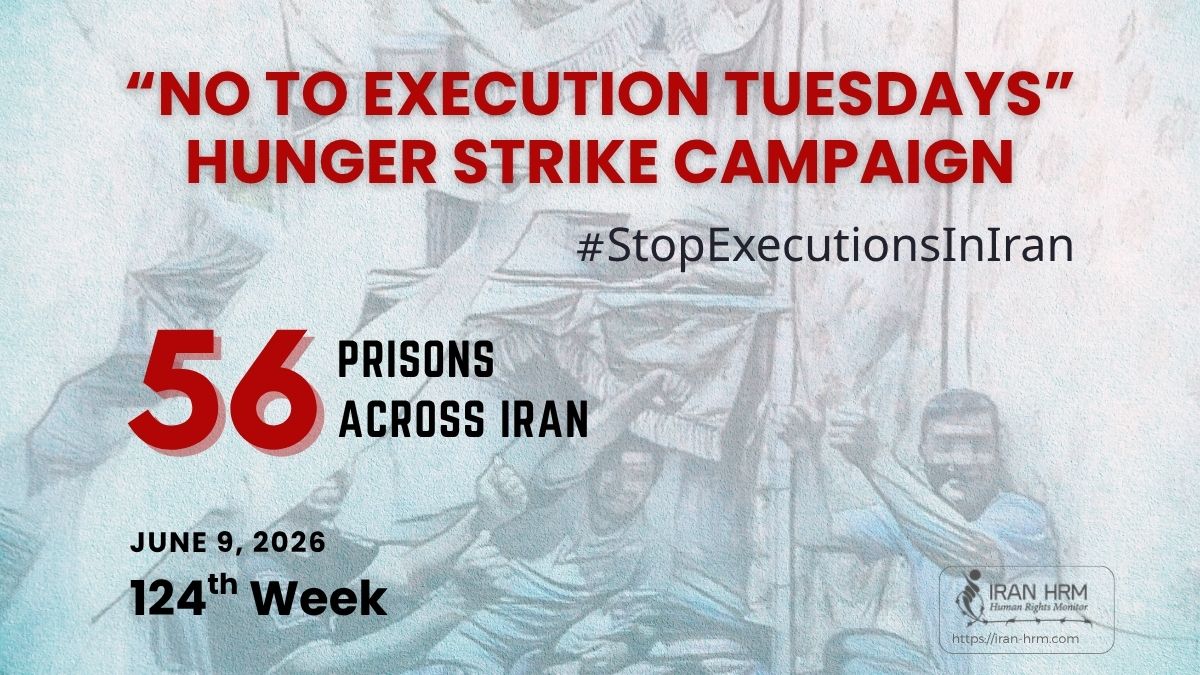
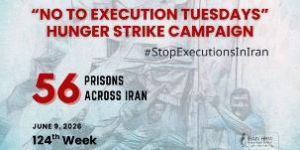 Political and ideological prisoners who are members of the “No to Execution Tuesdays” campaign, in the 124th consecutive week of their resistance, have gone on a hunger strike in 56 different prisons across the country. This widespread protest action has been taken in response to a new and rising wave of executions since the beginning of Khordad [May 22, 2026], as well as the issuance and confirmation of death sentences for a number of other political prisoners.
While emphasizing the fundamental right to life and supporting the civil demands of various segments of society, the hunger strikers have called on the general public to raise their voices for justice against the issuance and implementation of these cruel sentences.
Please find below the full text of the statement by the “No to Execution Tuesdays” campaign:
Continuation of the “No to Execution Tuesdays” Campaign in its 124th Week in 56 Different Prisons
In the past week, conscious students took to the streets in various cities to defend their rights, demonstrating that they are fed up with the ruling policies in the field of education, which are in clear contradiction with educational justice. The “No to Execution Tuesdays” campaign supports these brave and conscious students. Undoubtedly, the future of Iran will be bright with such passionate individuals.
Since the beginning of Khordad [May 22, 2026] to date, the executioner regime has hanged at least 49 individuals. In the continuation of its wave of intimidation and suppression, it has once again confirmed the death sentence of political prisoner Yaghoub Derakhshan in Lakan Prison of Rasht, and has issued death sentences for other political prisoners, namely Yasin Shahbakhsh, Hassan Mosallawi, and Ali Kamali.
Furthermore, four other political prisoners named Farshad Etemadifar, Alireza Mardasi, Masoud Jamei, and Reza Abdali are also facing imminent execution in Sheiban Prison of Ahvaz, and their lives are in danger.
The members of the “No to Execution Tuesdays” campaign, who have resisted these inhumane executions for the 124th consecutive week-and some of whose members have been executed or subjected to various forms of pressure by prison and security agencies-raise their voices once again and more than ever in defense of the fundamental right to life.
This is a right that is the source of all human rights, and its protection is considered a sign of the maturity, equality, freedom, and humanity of any society. Therefore, they call upon all social strata and dear compatriots to raise their voices for justice against the issuance and implementation of cruel death sentences and to express their protest in the strongest possible manner.
Freedom and justice are the rights of every human being, and true justice is achieved not through death and the deprivation of the right to life, but through respect for human rights. Consequently, to attain it from the hands of oppressive and tyrannical rulers, one must fight and resist.
On Tuesday, June 9, 2026, in its 124th week, the “No to Execution Tuesdays” campaign is on a hunger strike in the following 56 prisons:
Evin Prison (women’s and men’s wards), Qezel Hesar Prison (units 2, 3, and 4), Karaj Central Prison, Fardis Prison in Karaj, Greater Tehran Prison, Qarchak Prison, Khorin Prison in Varamin, Choobindar Prison in Qazvin, Ahar Prison, Arak Prison, Langeroud Prison in Qom, Khorramabad Prison, Borujerd Prison, Yasuj Prison, Asadabad Prison in Isfahan, Dastgerd Prison in Isfahan, Sheiban Prison in Ahvaz, Sepidar Prison in Ahvaz (women’s and men’s wards), Nezam Prison in Shiraz, Adelabad Prison in Shiraz (women’s and men’s wards), Firouzabad Prison in Fars, Dehdasht Prison, Zahedan Prison (women’s and men’s wards), Borazjan Prison, Ramhormoz Prison, Behbahan Prison, Bam Prison, Yazd Prison (women’s and men’s wards), Kahnuj Prison, Tabas Prison, Birjand Central Prison, Mashhad Prison, Gorgan Prison, Sabzevar Prison, Gonbad-e Kavus Prison, Qaemshahr Prison, Rasht Prison (men’s and women’s wards), Rudsar Prison, Havigh Prison in Talesh, Azbaram Prison in Lahijan, Dizel Abad Prison in Kermanshah, Ardabil Prison, Tabriz Prison, Urmia Prison, Salmas Prison, Khoy Prison, Naqadeh Prison, Miandoab Prison, Mahabad Prison, Bukan Prison, Saqqez Prison, Baneh Prison, Marivan Prison, Sanandaj Prison, Kamyaran Prison, and Ilam Prison.
Week 124
June 9, 2026
#No_to_Execution_Tuesdays_Campaign
Social Suppression
Escalating Repression in Iran in the Form of a Multi-Dimensional Campaign of Intimidation
June 8, 2026
https://iran-hrm.com/2026/06/08/escalating-repression-in-iran-in-the-form-of-a-multi-dimensional-campaign-of-intimidation/
 Simultaneously with the heightening of geopolitical challenges and internal legitimacy crises, the Islamic Republic has launched an extensive campaign aimed at escalating repression in Iran across the entire country. This survival strategy relies, on one hand, on the issuance and hasty execution of political death sentences to maintain an atmosphere of dread. On the other hand, it has led to the initiation of a new wave of arbitrary arrests and mass detentions of thousands of citizens under the pretext of wartime conditions. In its third dimension, it targets the capillary layers of society to completely destroy social trust among the people by establishing a system of public espionage.
An analysis of recent events demonstrates how the regime’s judicial and security apparatus utilizes the context of wartime conditions as a catalyst to advance the project of escalating repression in Iran.
The “Social Soldiers Network” Project: Localization of Espionage
The official unveiling of the project known as the “Social Soldiers Network” by Ali-Asghar Jahangir, the spokesperson for the Judiciary, is a clear manifestation of the novel mechanisms employed for escalating repression in Iran and atomizing society. When the ruling establishment structurally encourages citizens to report on the behavior of others, monitor cyberspace, and transfer information to security agencies, the coefficient of distrust in social relations rises to an extreme degree. Consequently, every individual perceives the other as a potential government spy, forcing society to contract and withdraw further.
According to an official report by the Daneshju News Agency on June 8, the Judiciary spokesperson accused the media of “inverting realities” and criticized the “empire of lies” for attempting to isolate the achievements of the regime, thereby declaring narrative-building and media monitoring as a “public duty.” In this regard, he announced plans for the formation of this network, adding that in continuation of programs such as the “Jan-Fada (Self-Sacrificing) Project” (implemented by the Islamic Organization of Ideology), the Social Soldiers Network is being executed with the objective of mobilizing civilian capacities to establish a new groundwork for escalating repression in Iran.
Dimensions, Nature, and Functions of this Network in Line with Social Control
The concept of the “Social Soldiers Network” (or its parallel titles such as the Soldiers of Hybrid and Cyber Warfare) put forward in the official literature of the Islamic Republic, is a social and media-oriented version of the Basij structure. It operates within the chain of escalating repression in Iran through the following distinct features:
- 1) Official Objective: Countering Hybrid Warfare and Social Threats
In the statements of officials, this network is introduced as part of the “Social Transformation” program, and its duties are outlined as follows:
- Monitoring social “harms”
- Public reporting
- Assisting government institutions in “crisis management”
- Countering “cognitive warfare” and “media warfare”
- 2) Similarity to the Basij but with a Distinct Structure
This project is in fact a social/media-focused version of the Basij, which:
- Is primarily concentrated on cyberspace
- Utilizes civilian volunteers
- Is designed in a networked and decentralized manner
- 3) The Role of the Judiciary
Based on official statements, the Judiciary intends to use this network for:
- Public reporting
- Documenting citizens’ violations
- Cyberspace monitoring
- 4) Linkage and Overlap with Other Projects
This network stands alongside projects such as:
- The “Public Whistleblowing” initiative
- The “Social Guidance Patrol” (Ghashte Ershad-e Ejtemai)
- The “Public Cyber Police”
- “Reporting Systems” of security agencies
Accordingly, by activating these novel tools, the ruling establishment brings the social groundwork required for restricting public spaces to fruition; a groundwork upon which the judicial and operational apparatus immediately mounts to triggering a widespread and hasty wave of mass arrests across the country. The official statistics and figures confessed by the Judiciary itself vividly expose the horrific dimensions of this reality.
Mass and Arbitrary Arrests: The Operational Arm of Escalating Repression in Iran
Simultaneously with laying the social groundwork for this network, the judicial branch of the ruling establishment has intensified the process of widespread arrests with the objective of escalating repression in Iran. According to a report by the official Islamic Republic News Agency (IRNA) on June 8, the spokesperson for the Judiciary, addressing a public gathering titled “Defense of the Homeland and Avenging the Martyr Imam,” officially announced the prosecution and detention of thousands of citizens under the labels of “traitors to the homeland” and “mercenaries of the enemy.” This marks a new phase in the violent process of escalating repression in Iran.
According to the explicit confession of the judicial apparatus, a total of 3,121 individuals have been prosecuted, out of whom 2,406 individuals have been arrested and remain in detention. The spokesperson for the Judiciary announced the statistics and percentage breakdown of the charges against these individuals—which serves as the regime’s roadmap for escalating repression in Iran—as follows:
- 20 percent:Charged with operational actions in favor of the Zionist regime.
- 22 percent:Charged with security, economic, military, and financial actions.
- 7 percent:Charged with cooperation and assistance with the Zionist regime.
- 43 percent:Charged with cooperation in political, cultural, media, and promotional activities in favor of the Zionist regime (the primary segment of the arrests, which directly targets freedom of expression and civil activists within the project of escalating repression in Iran).
- 7 percent:Charged with the possession, purchase, or sale of electronic equipment, such as satellite internet terminals (Starlink).
Concurrently with the issuance of over 3000 indictments for these detainees, the judicial apparatus announced that the assets of hundreds of these individuals have been identified and seized inside the country. Following the issuance of court rulings, these assets will be confiscated in favor of the ruling establishment, ensuring that the economic goals of the system are secured alongside escalating repression in Iran.
The Execution Machine: A Tool for Maximum Intimidation and Escalating Repression in Iran
The more naked and violent dimension of this campaign of repression is manifested in the directives of Gholam-Hossein Mohseni-Eje’i, the head of the Judiciary, regarding the acceleration of the issuance and implementation of death sentences. An examination of the statistics indicates that within the 100-day period since the onset of the war (from February 28, 2026, to the present), the process of issuing and confirming political death sentences has significantly accelerated. In order to paralyze the public will and overtly implement the strategy of escalating repression in Iran, the ruling establishment has placed the execution of suspended and older sentences on its agenda alongside the newly detained protesters from January 2026.
Some of the citizens and activists who currently face definitive sentences or the imminent risk of execution as victims of this anti-human campaign—which violates all recognized citizenship rights—include:
Detainees of the January 2026 Protests:
- Arman Marefati:30 years old, from Saqqez.
- Ismail Ramezanpour:38 years old, from Fars and residing in Yazd.
- Mohammad Reza Majidi Asl
- Behrouz Zamani Nejadand Kourosh Zamani Nejad
- Majid Nasiri, Shahab Dadkah, and one other individual (identity unverified):Three co-defendants detained during the January 2026 protests in Shiraz, who are facing death sentences or the imminent risk of execution (the identities of only two have been verified).
- Ehsan Hosseinipour
- Maryam Hadavand, confined at Evin Prison’s women ward
- Saeed Zarei Kordshouli from Marvdasht
- Hamidreza Fathiand Abdolreza Fathi from Marvdasht
- Hamidreza Sabet -Ra’y from Marvdasht
- Ali Pishevarzadeh:28 years old.
- Vahid Ghasemi:Biology teacher at Beheshti High School in Fariman.
- Mohammad Reza Tabari , at imminent risk of execution; denied phone calls and family visits
- Mohammad Reza Abdollahpour:28 years old, at imminent risk of execution; denied phone calls and family visits
- Amirmohammad Zare, at imminent risk of execution; denied phone calls and family visits
- Farzad Moradi:Held in the quarantine section of Sheiban Prison in Ahvaz, under imminent risk of execution.
- Benyamin Naghdi:Open tournament champion in Kickboxing and Muay Thai.
- Mohammad Naghizadeh:22 years old.
Child-Defendants (Individuals under 18 at the Time of Arrest):
- Mohsen Eslamkhah:20 years old, under 18 at the time of arrest (from the 2022 protesters).
- Matin Mohammadi:(Detainee of the January 2026 protests).
- Erfan Amiri:(Detainee of the January 2026 protests).
Political Prisoners and Ideological-Political Defendants of Previous Years:
- Zabihullah Kouhkan:34 years old and father of two children, a Baluch prisoner in the Central Prison of Zahedan.
- Mansour Jamali:Imprisoned in Choobinder Prison in Qazvin (death sentence confirmed on the charge of membership in the PMOI).
- Manouchehr Vafaei:28 years old, political prisoner, arrested in 2024.
- Navid Naghdi:32 years old, political prisoner, arrested in 2024.
- Manouchehr Fallah:Political prisoner (death sentence confirmed on the charge of membership in PMOI).
- Milad Armoun, Navid Najaran, Mehdi Imani, and Seyed Mohammad Mehdi Hosseini:Defendants in the Ekbatan Town case (detainees of the 2022 protests).
- Rouhullah Karaki:Political prisoner held in Sheiban Prison in Ahvaz (arrested in August 2025).
- Peyman Farahavar:Gilaki poet and political prisoner (detained in August 2024).
- Hassan Mosallavi:Political prisoner held in Sheiban Prison in Ahvaz, death sentence served (detained in 2022).
- Yasin (Mosayeb) Shahbakhsh:Political prisoner, 22 years old (detained in November 2024).
- Hassan Amiri and Hossein Amiri:20-year-old twin brothers, arrested at a checkpoint on charges of espionage on March 20, 2026.
- Zahra Shahbaz Tabari:Re-confirmation of the death sentence on charges of membership in PMOI.
- Armin Nourmohammadi:Architecture student and political prisoner (last arrested on December 28, 2024).
(It should be noted that these 42 names comprise only a portion of those sentenced to death; furthermore, cases that were carried out within a short interval after the issuance of the verdict have not been included in this list).
Social Closure and the Necessity of Tangible International Intervention
The simultaneous analysis of the three phenomena—namely, “the unveiling of the Social Soldiers Network,” “hasty and mass arrests of thousands under the bogus charge of treason,” and “the indiscriminate issuance and confirmation of death sentences for protesters and political activists”—reveals an all-encompassing, hyper-securitized survival strategy whose ultimate objective is escalating repression in Iran to prevent any form of protest against the violation of human and citizenship rights.
Facing profound crises of domestic legitimacy and geopolitical challenges stemming from the war, the Islamic Republic has redefined its internal campaign as a “full-scale war against society.”
This three-pronged process pursues specific structural objectives in line with escalating repression in Iran:
- 1) Contraction and Breakdown of Public Trust:The “Social Soldiers Network” project, moving far beyond a mere cyber-monitoring tool, is an attempt to localize espionage and transform every citizen into a source of threat to one another. Through this, the regime advances the strategy of atomizing society to stifle any possibility of civic organization or solidarity in its infancy.
- 2) Criminalization of Technology and Awareness:The detention of citizens on charges of possessing tools such as Starlink dishes or engaging in media activity reflects the ruling establishment’s absolute dread of breaking the monopoly of narratives and its utilization of new levers for escalating repression in Iran.
- 3) The Project of Intimidation through Maximum Executions:The extensive list of individuals sentenced to death—ranging from the young protesters of January 2026 and 2022 to dedicated members of society such as teachers, athletes, and physicians, and even children under the age of 18—demonstrates that the regime’s execution machine no longer functions as a conventional punitive tool, but is rather employed as the linchpin of the campaign for escalating repression in Iran to paralyze the public will.
The naked reality presented in this report proves that statements, diplomatic condemnations on paper, and the customary expressions of concern by human rights bodies have lost their efficacy against the accelerated process of escalating repression in Iran. Intoxicated by the wartime atmosphere, the current machinery of repression recognizes no moral, legal, or international boundaries.
Today, halting this accelerated cycle of bloodshed and arbitrary mass arrests requires a tangible, immediate, and coordinated intervention by the international community, the United Nations Human Rights Council, and international courts. Referring the case of the regime’s structural crimes to the Security Council, exerting tangible diplomatic pressures, and conditioning any political-economic relations on the immediate cessation of death sentences for political prisoners represent the minimum practical steps that can halt the unbridled process of escalating repression in Iran and save the lives of dozens of shackled youths—some of whose names are recorded in this document—from the gallows.
Silence or procrastination in the face of this naked campaign is not only a betrayal of the fundamental values of human rights but will also pave the way for the reproduction of harsher totalitarian models across the globe.
Justice System
Iran: Independent Lawyers Under Pressure – Part 1
From Arrests to High-Profile Cases
June 12, 2026
https://iran-hrm.com/2026/06/12/iran-independent-lawyers-under-pressure-part-1/
 In the months following the nationwide protests of 2025, a new wave of arrests, summonses, criminal prosecutions, and professional restrictions targeted lawyers across Iran. From Shiraz and Mashhad to Tehran, Rasht, Tabriz, Ahvaz, Ilam, Jiroft, and Yazd, attorneys representing protesters, political prisoners, civil society activists, justice-seeking families, and victims of human rights violations increasingly became the subjects of security-related cases themselves.
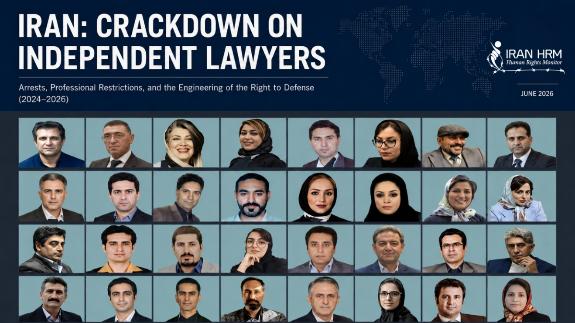
A review of documented cases between January 2024 and June 2026 indicates that the repression of independent lawyers has evolved beyond the prosecution of a small number of prominent attorneys. It has become a structural policy aimed at controlling the right to legal defense. This policy advances through three parallel mechanisms: the exclusion of independent lawyers from political and security-related cases, the weakening of the independence of the Bar Association, and restrictions on the right to choose legal counsel through Article 48 of Iran’s Code of Criminal Procedure.
Independent estimates indicate that more than 50,000 individuals were detained during the nationwide protests of 2025. At the same time, United Nations human rights experts and mechanisms expressed concern regarding widespread arbitrary arrests, denial of access to legal counsel, prolonged detention in security facilities, and reports of enforced disappearances. In such circumstances, access to independent legal representation has become one of the most important safeguards for the protection of detainees’ fundamental rights.
Through an examination of the cases of Mohammad Najafi, Taher Naghavi, Mohammadreza Faghihi, Khosrow Alikordi, Nasrin Sotoudeh, Shima Ghoosheh, Bahar Sahraeian, Elham Zeraatpisheh, and dozens of other lawyers, this report demonstrates that the repression of independent legal professionals has become an integral component of the broader architecture of political repression in Iran. The objective is not merely to punish individual lawyers. Rather, it is to restrict the possibility of independent legal defense in political and security-related cases and to leave society without effective legal protection at moments when citizens need it most.
Chapter One: Mapping the Repression
An examination of cases documented between January 2024 and June 2026 shows that pressure on lawyers in Iran is no longer confined to isolated incidents. Across multiple cities, a recurring pattern has emerged involving summonses, arrests, prosecutions, professional sanctions, and security-related pressure against lawyers engaged in political, civil, and human rights cases.
The geographical spread of these cases, extending from Mashhad and Shiraz to Rasht, Tehran, Ahvaz, Tabriz, Ilam, Yazd, and Jiroft, indicates that the legal profession has increasingly become a primary target of the country’s security and judicial apparatus.
Mashhad: A Case Against the Legal Community
In Mashhad, at least 17 lawyers were targeted in a collective prosecution. Several received prison sentences and financial penalties. A significant portion of the allegations concerned social media activity and public commentary regarding protest-related cases. This case represents one of the most extensive collective actions against lawyers in recent years.
Rasht: The Securitization of Professional Activity
In Gilan Province, at least six lawyers were prosecuted on charges including “propaganda against the state,” “assembly and collusion against national security,” and “spreading false information.” Reports indicate that even private communications on social media platforms were used as evidence in criminal proceedings.
Shiraz: A Wave of Coordinated Arrests
In Shiraz, the arrests of Mohammad Hadi Jafarpour, Mehdi Ansari, Jafar Keshavarz, Jafar Zarei, Sepideh Taheri, and several other lawyers and trainee attorneys constituted one of the largest waves of lawyer arrests recorded in a single city. Some were released only after posting substantial bail, while their cases remain open.
Yazd: Mass Summonses
In Yazd, at least 20 lawyers were summoned by judicial and security authorities. The scale of these summonses demonstrated that the pressure was no longer directed solely at specific individuals but increasingly targeted the legal profession as a whole.
Tehran, Tabriz, Ahvaz, Jiroft, and Ilam
In Tehran, Shima Ghoosheh was arrested and transferred to Ward 209 of Evin Prison. In Tabriz, Abolfazl Ranjbari faced security-related charges. In Ahvaz, Ebrahim Parsamehr and Alireza Farzaneh Jajarmi were arrested. In Jiroft, Teymour Salari remained in detention. In Ilam, Hossein Shokri was subjected to judicial prosecution.
Viewed individually, each of these cases may appear to be an isolated event. Considered collectively, however, they reveal a different picture: a nationwide policy in which independent lawyers, particularly those involved in political, human rights, and protest-related cases, have themselves become targets of the security and judicial authorities.
These developments raise a fundamental question: why has pressure on independent lawyers intensified at the same time as political and security-related arrests have increased? The answer lies in the years preceding this latest wave, when actions against a limited number of prominent lawyers gradually evolved into a structural model for controlling the right to defense.
Table1- Independent Lawyers Subjected to Arrest, Prosecution, or Professional Sanctions in Iran (2024–2026)
| Lawyer | Lawyer | Lawyer |
| Abolfazl Ranjbari | Fatemeh Rohandeh | Mohammadreza Faghihi |
| Alireza Farzaneh Jajarmi | Hossein Shokri | Mohsen Darginnejad |
| Amir Bahadorifar | Jafar Keshavarz | Nazanin Salari |
| Bahar Sahrayian | Jafar Zarei | Nasrin Sotoudeh |
| Behnam Nezhadi | Javad Alikordi | Sepideh Taheri |
| Dariush Ganjehpour | Mahmoud Taravat-Roy | Shohreh Haddadian |
| Ebrahim Parsamehr | Masoud Ahmadian | Sima Ghousheh |
| Elham Zeraatpisheh | Masoud Shirmardi Shahghasemi | Taher Naqavi |
| Enayatollah Keramati | Mehdi Karimi | Teymour Salari |
| Estareh Ansari | Mehdi Razavifard | Zohreh Javani |
| Mohammad Hadi Jafarpour | ||
| Mohammad Najafi | ||
| Mohammad Tarighat Esfanjani |
Chapter Two: From Individual Cases to Networked Repression
The wave of arrests targeting lawyers in 2025 and 2026 did not emerge in isolation. Before the collective cases in Mashhad, Rasht, Shiraz, and Yazd, the contours of this policy were already visible in actions against lawyers representing political prisoners, protesters, civil society activists, and justice-seeking families.
Before examining the most significant cases, a fundamental question must be addressed: what types of lawyers have been disproportionately subjected to prosecution and pressure?
A review of documented cases demonstrates that the majority of targeted lawyers worked in fields the authorities considered politically sensitive or security related. These included representation of political prisoners, protesters, justice-seeking families, journalists, women’s rights activists, labor activists, ethnic and religious minorities, and victims of human rights violations.
This pattern indicates that the pressure has not been randomly distributed. The target is not merely a group of well-known attorneys. Rather, it is a particular model of legal practice; one that seeks to create a balance between citizens and political power through independent representation.
Arak: The Lawyer Who Investigated a Death in Custody
Mohammad Najafi, one of Iran’s best-known defenders of political prisoners, faced a series of judicial and security cases after pursuing accountability in the death-in-custody case of Vahid Heydari. Years of imprisonment, additional sentences imposed while incarcerated, and ultimately the permanent revocation of his law license transformed his case into one of the clearest examples of the repression of independent lawyers in Iran.
Tehran: A Lawyer Defending Political Prisoners
Taher Naghavi, a lawyer representing political prisoners and advocating for the rights of ethnic minorities, was arrested in February 2024. He was later sentenced to six years’ imprisonment, deprivation of social rights, and a travel ban. Multiple reports also documented denial of medical treatment and concerns regarding his prison conditions.
Mashhad: Counsel for Justice-Seeking Families
Khosrow Alikordi, lawyer for the Abolfazl’s family Adinehzadeh and several political prisoners, faced imprisonment, internal exile, professional restrictions, travel bans, and limitations on his online activities. His case was among the earliest examples combining criminal punishment with professional exclusion.
Tehran: Suspension and Professional Elimination
Mohammadreza Faghihi, a board member of the Association for the Defense of Prisoners’ Rights, was sentenced to five years in prison and a two-year suspension of his law license. As in other cases, the punishment extended beyond imprisonment and directly targeted his ability to continue practicing law.
At first glance, these cases appear unrelated. They occurred in different cities, involved different accusations, and unfolded at different times. Yet closer examination reveals a striking commonality. Nearly all of these lawyers were involved in cases the authorities classified as “security-related”; including matters involving political prisoners, protesters, justice-seeking families, civil society activists, women’s rights defenders, and ethnic or religious minorities.
In other words, the target was not merely an individual lawyer. What came under attack was a particular form of legal advocacy. Lawyers were tolerated only so long as their work remained within boundaries acceptable to the authorities. Once legal representation became a vehicle for documenting human rights violations, challenging unfair proceedings, or defending victims of repression, the lawyers themselves became vulnerable to prosecution.
At this stage, repression remained largely individualized. However, these cases laid the groundwork for a subsequent phase in which entire networks of lawyers across multiple cities came under simultaneous pressure.
As protests expanded and the number of detainees increased, the authorities’ interest in controlling legal defense intensified. It was at this point that the repression of independent lawyers became intertwined with legal and institutional mechanisms, giving rise to what many legal experts describe as the “engineering of the right to defense.”
From Individual Cases to a Structural Pattern
The list of lawyers arrested, summoned, prosecuted, or professionally restricted is more than a collection of names. It demonstrates that pressure on Iran’s legal community has not been limited to a few cities, a handful of cases, or several prominent figures.
A review of these cases reveals a consistent pattern: a substantial proportion of the targeted lawyers represented political prisoners, protesters, justice-seeking families, civil society activists, women’s rights defenders, and victims of human rights violations. For this reason, these cases cannot be understood merely as a series of unrelated judicial proceedings.
The central question is what connects these seemingly separate cases. Are they isolated incidents, or do they reflect a structural policy aimed at controlling the right to defense and restricting citizens’ access to independent legal representation?
The second part of this report examines the legal and institutional mechanisms underpinning this process, including Article 48 of the Code of Criminal Procedure, restrictions on the right to choose counsel, and what many legal scholars describe as the systematic “engineering of the right to defense.”
Prisoners of Conscience
Iranian Prisoners in War Conditions: Pressure, Forced Deployment, and Human Rights Violations
June 12, 2026
https://iran-hrm.com/2026/06/12/iranian-prisoners-in-war-conditions-pressure-forced-deployment-and-human-rights-violations/
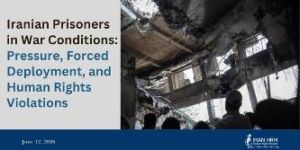 Iranian prisoners in war conditions face simultaneous and escalating dangers: threats resulting from military strikes near prisons and detention centers, heightened securitization of detention facilities, the cutoff or restriction of access to food, water, medical treatment, and communication with family, undisclosed transfers, and pressure on certain prisoners to register for deployment to war zones such as Kharg Island and Hormozgan Province.
This situation demonstrates that prisoners, particularly political prisoners, death-row inmates, protest detainees, sick prisoners, and individuals lacking effective access to a lawyer, have been placed in one of the most vulnerable human rights positions.
According to reports received from inside prisons, authorities in certain facilities, including Kerman Prison, have in recent weeks visited wards and requested prisoners to sign up for deployment to war zones. These requests have been accompanied by promises of monetary payment, improvement of prison conditions, administrative privileges, and in some cases, threats of harsher treatment, restriction of facilities, difficulties regarding furlough, or security pressures. Although these deployments are presented by officials as “voluntary,” the concept of free consent is severely compromised under conditions of confinement and the prisoner’s total dependence on the decisions of prison authorities.
Existing reports indicate that a significant portion of prisoners, despite pressures and promises, have refused to register. Some prisoners have described this scheme as the instrumental exploitation of individuals deprived of liberty, stating that they are being treated as “sacrificial meat.” This resistance occurs under conditions where prisoners are denied free access to the media, secure communication with family and lawyers, and the possibility of protesting without repercussions.
Worsening of Prison Conditions under the Shadow of War
Since the beginning of the war, and concurrent with widespread internet shutdowns, reports have been received regarding food shortages, the closure of prison shops, deprivation of medical treatment, unhygienic and degrading conditions, severe restrictions on access to basic needs, arbitrary transfers, and the increased militarization of the prison environment. Furthermore, at least one prisoner has died as a result of deprivation of medical care.
The control of a number of prisons in provinces such as Khorasan Razavi, Isfahan, Lorestan, West Azerbaijan, Qom, Qvazin, and Tehran has been handed over to special units, and the prison environment has become intensely militarized. In such a situation, on one hand, prisoners lack the possibility of evacuation or seeking independent shelter against the dangers arising from the war, and on the other hand, with the intensification of internal security control within the prison, they are increasingly exposed to pressure, restrictions, sudden transfers, and deprivation of fundamental rights.
Amnesty International has also warned that airstrikes near prisons and the targeting of security centers where detainees are held have placed prisoners, including children, at risk of death or serious injury. The organization has also reported the transfer of certain prisoners to undisclosed locations or areas close to potential military targets, deprivation of adequate food and water, and enforced disappearance.
Deployment of Prisoners to War Zones and the Absence of Free Consent
The deployment or recruitment of prisoners for presence in war zones, even if ostensibly presented under the label of being “voluntary,” must be evaluated within the framework of human rights based on the criteria of free, informed consent, and the absence of coercion. Due to deprivation of liberty, fear of punishment, the need for furlough, medical treatment, visitation, basic facilities, and the possibility of sentence reduction, a prisoner stands in an unequal position vis-à-vis prison authorities. Therefore, if a prisoner consents to deployment under such conditions and influenced by promises of money, furlough, improvement of confinement conditions, or fear of punishment and security pressure, this consent is not an indication of free choice; rather, it can be the result of pressure and helplessness within the prison environment.
Utilizing poverty, debt, family needs, or a prisoner’s hope to improve confinement conditions to induce them to be present in a war zone constitutes the exploitation of the vulnerability of individuals deprived of liberty. This matter becomes particularly more alarming when the specified destinations, such as Kharg Island and Hormozgan Province, are identified as highly sensitive strategic areas exposed to military dangers.
Violations of International Law and Prisoner Treatment Standards
In a state of war, the government remains responsible for protecting the life, dignity, and health of all persons deprived of their liberty. Detention or a criminal conviction does not exempt the state from its obligation to provide food, water, medical treatment, security, communication with family, access to a lawyer, and protection against the dangers of war. The Nelson Mandela Rules stipulate that all prisoners must be treated with respect for their inherent human dignity, and no circumstances can justify torture or cruel, inhuman, or degrading treatment.
Pressuring prisoners to deploy to war zones can stand in conflict with the prohibition of forced or compulsory labor under Article 8 of the International Covenant on Civil and Political Rights, the right to life and personal security, the prohibition of torture and inhuman treatment, and the principle of human dignity. Furthermore, transferring prisoners to undisclosed locations or near potential military targets without notification, clear necessity, and protective guarantees increases the risk of violating the right to life and the prohibition of enforced disappearance.
From the perspective of International Humanitarian Law, prisons and detention centers are inherently civilian objects, and all parties to a conflict are obligated to respect the principles of distinction, proportionality, and precaution. The Office of the UN High Commissioner for Human Rights and the UN Fact-Finding Mission on Iran have warned that during armed conflicts, the protection of civilians, including detainees, becomes more fragile, and state repression can intensify under the shadow of war.
Recent actions against prisoners in Iran stand in direct conflict with the following international principles and treaties:
- The Nelson Mandela Rules (UN General Assembly Resolution 70/175):These rules stipulate that all prisoners must be treated with respect for their inherent human dignity, and no circumstances (even a state of war) can justify torture or cruel, inhuman, or degrading treatment.
- Prohibition of Forced or Compulsory Labor (Article 8 of the International Covenant on Civil and Political Rights – ICCPR):Pressuring prisoners to deploy to war zones is incompatible with this article, the right to life, personal security, and the principle of human dignity. Furthermore, under the International Labour Organization (ILO) Forced Labour Convention (No. 29), any service extracted from a prisoner under pressure, threats, or the promise of essential privileges (such as furlough and release) lacks “free consent” and constitutes forced labor.
- Prohibition of Using “Human Shields” (Third and Fourth Geneva Conventions):According to Article 23 of the Third Geneva Convention and Article 28 of the Fourth Geneva Convention, transferring prisoners to undisclosed locations or close to potential military targets (such as Kharg Island) without notification and protective guarantees constitutes the instrumental exploitation of them as human shields, and severely increases the risk of violating the right to life and enforced disappearance.
The Responsibility of Human Rights Organizations and the International Community
The responsibility of human rights organizations regarding the situation of Iranian prisoners in a state of war extends beyond issuing general statements. For these entities, it is necessary to materially and practically document the names of prisons, the names and conditions of prisoners at risk, transfer locations, methods of pressure for deployment, and the status of access to food, water, medical treatment, telephone calls, visitations, and legal counsel, as well as to record and verify the testimonies of families, released prisoners, lawyers, and former prison staff.
In this regard, taking the following immediate actions by the international community and international mechanisms is essential:
- Clarifying Necessities to Iranian Authorities:It is necessary to exert legal pressure on the Iranian government for the immediate release of all arbitrarily detained prisoners and the granting of humanitarian furloughs or releases for sick, elderly, child, pregnant, political prisoners, and individuals at risk. It is also necessary for authorities to disclose the whereabouts of all transferred individuals and to halt any direct or indirect use of prisoners in military, security, or high-risk activities.
- Immediate Intervention by the International Committee of the Red Cross (ICRC):Given the quasi-war situation and the endangerment of civilian sites, it is essential for the international community to demand the entry and unannounced inspections by international observers and the International Committee of the Red Cross into pressured prisons (particularly Kerman Prison) to guarantee the health and safety of detainees.
- Legal Documentation to Hold Perpetrators Accountable:For United Nations mechanisms, particularly the Special Rapporteur on the situation of human rights in Iran (Mai Sato) and the UN Fact-Finding Mission, it is necessary to record documentation related to pressure on prisoners, undisclosed transfers, deprivation of basic needs, and forced deployment to war zones as potential evidence of international crimes. It is also essential to remind judicial authorities and heads of Iranian prisons that these actions will be legally prosecutable in the future under the principle of Universal Jurisdiction.
Conclusion
Iranian prisoners in war conditions stand at the intersection of war, domestic repression, and the collapse of minimal protections inside prisons. The pressure to deploy prisoners to war zones (such as Kharg Island and Hormozgan Province), alongside food and medical shortages, undisclosed transfers, the militarization of prisons by Special Units, and cutting off of communications, indicates a systematic pattern of violations of rights against individuals deprived of their liberty.
Historical experience demonstrates that governments utilize military crises as a cover and an opportunity for the “silent repression” and purging of detainees. Under such circumstances, it is essential that the protection of the lives and dignity of prisoners does not become marginalized under the shadow of frontline war news; rather, it is necessary for this crucial matter to be transformed into an immediate, specific, and pragmatic demand by human rights organizations, governments, and international mechanisms.