

Report on Human Rights Violation in Iran
June 29 to July 5, 2026
The document is a comprehensive report detailing widespread human rights violations in Iran during June and July 2026, including the continuation of the “No to Execution Tuesdays” hunger strike campaign across 57 prisons protesting the surge in executions and suppression of dissent , the death sentence of political prisoner Arghavan Fallahi amid allegations of torture and unfair trial , systemic child rights violations characterized by psychological distress, ideological indoctrination, and lack of mental health services , the economic exclusion and repression of women reflected in declining labor participation and structural discrimination , documented cases of sexual violence against detained women in 2009 with ongoing impunity , and systematic human rights abuses against Iranian athletes including executions, imprisonments, and political control over sports institutions , culminating in a monthly report highlighting 141 executions, arbitrary arrests, and calls for international intervention to halt the regime’s repressive actions.
Executions
The 127th week of the “No to Execution Tuesdays” campaign in 57 prisons across Iran
June 30, 2026
https://iran-hrm.com/2026/06/30/the-127th-week-of-the-no-to-execution-tuesdays-iran/
 On the eve of June 30, 2026, political prisoners and prisoners of conscience in 57 prisons across the country began the 127th week of the “No to Execution Tuesdays” campaign with a hunger strike, in protest of the ongoing execution machine and suppression of the government. This widespread strike takes place under circumstances where the judiciary, by intensifying security pressures and opening hundreds of cases against protesters, has escalated the process of issuing and executing death sentences across the country. While demanding the complete abolition of the death penalty, the hunger strikers strongly protested the blatant violation of human dignity and the deprivation of seeking-justice families of knowledge about the burial location of their loved ones.
Please find the full text of the “No to Execution Tuesdays” campaign statement below:
Continuation of the “No to Execution Tuesdays” Campaign in 57 Different Prisons in the 127th Week
The ruling tyrannical government’s machine of execution and suppression continues its work, and we witness daily executions of political prisoners and public-crime prisoners across the country. The state judiciary has announced that since the beginning of the recent war, it has arrested 3,292 individuals on charges of “cooperating with the enemy.”
These statistics are published at a time when, following the suppression of the nationwide protests of January 2026 by military and security forces, the crackdown on protesters has entered a new phase, and a large portion of those arrested face the issuance of death sentences or long-term imprisonment.
The Prosecutor of Sari stated that 700 cases have been filed against the January protesters, and Alamolhoda, the corrupt Friday Prayer Leader of Mashhad, has also reported thousands of cases for those arrested in the January uprising.
The number of executions in the Iranian month of Khordad of this year (May 22- June 21) reaches 140 individuals. This government’s record is filled with extensive and blatant violations of human rights and the use of execution as a tool for suppression and intimidation.
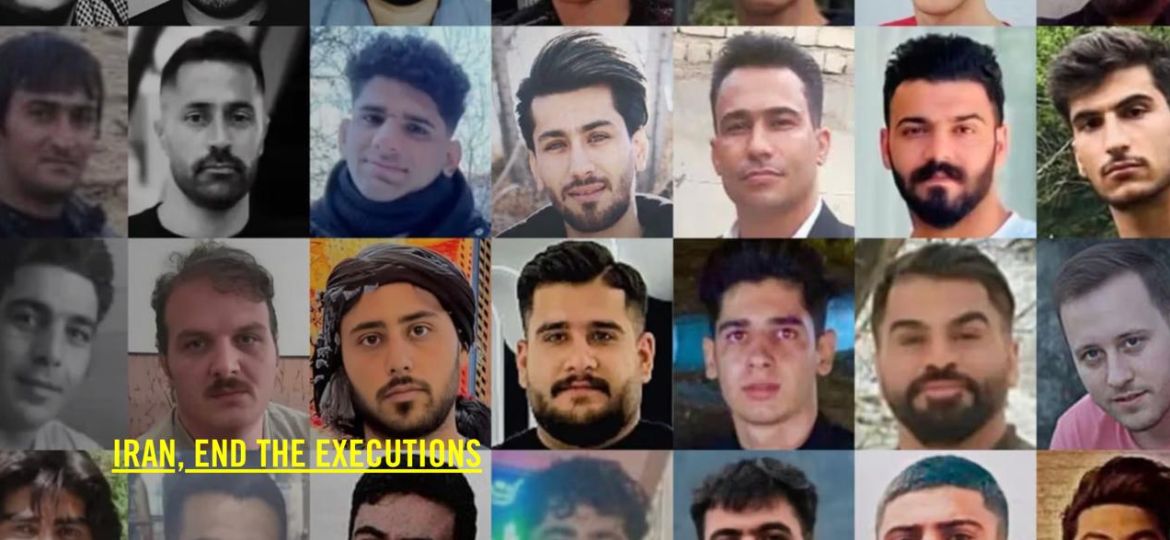
Thousands of families in Iran are grieving loved ones who have fallen victim to the government’s repressive will in an inhumane process. Meanwhile, the voice of a father asking, “Where is my son’s grave?” is a voice that rises from the depths of suffering and injustice; the question of the father of Vahid Bani Amerian, a political prisoner who was executed in Qezelhesar Prison in March–April of this year along with five other political prisoners, and of other families whose children’s bodies were not returned, is not merely a personal demand, but the cry of many seeking justice who have been deprived of even the basic right to know the burial location of their loved ones.
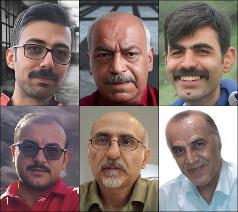 6 political prisoners executed: Vahid Bani-Amerian (top left)
This deprivation is the continuation of punishment after death and a blatant violation of human dignity, where suffering neither ends nor is even allowed mourning. In the face of these suppressions and medieval barbarism, the voice of the prisoners in the “No to Execution Tuesdays” campaign remains loud. Without stopping, every Tuesday, they remind us that the death penalty must be abolished, and freedom and equality must be established in Iran.
The “No to Execution Tuesdays” campaign, on Tuesday, June 30, 2026, in its 127th week, is on hunger strike in the following 57 prisons:
Evin Prison (women’s and men’s wards), Qezelhesar Prison (units 2, 3, and 4), Karaj Central Prison, Fardis Prison in Karaj, Greater Tehran Prison, Qarchak Prison, Khorin Prison in Varamin, Choobindar Prison in Qazvin, Ahar Prison, Arak Prison, Langaroud Prison in Qom, Khorramabad Prison, Borujerd Prison, Yasuj Prison, Asadabad Prison in Isfahan, Dastgerd Prison in Isfahan, Sheiban Prison in Ahvaz, Sepidar Prison in Ahvaz (women’s and men’s wards), Nezam Prison in Shiraz, Adelabad Prison in Shiraz (women’s and men’s wards), Firozabad Prison in Fars, Dehdasht Prison, Zahedan Prison (women’s and men’s wards), Borazjan Prison, Ramhormoz Prison, Behbahan Prison, Bam Prison, Yazd Prison (women’s and men’s wards), Kahnuj Prison, Tabas Prison, Birjand Central Prison, Mashhad Prison, Gorgan Prison, Sabzevar Prison, Gonbad-e Kavus Prison, Qaemshahr Prison, Rasht Prison (men’s and women’s wards), Rudsar Prison, Haviq Prison in Talesh, Azbaram Prison in Lahijan, Dizel Abad Prison in Kermanshah, Ardabil Prison, Tabriz Prison, Urmia Prison, Salmas Prison, Khoy Prison, Naqadeh Prison, Miandoab Prison, Mahabad Prison, Bukan Prison, Saqqez Prison, Baneh Prison, Marivan Prison, Sanandaj Prison, Kamyaran Prison, Ilam Prison, and Kerman Prison.
Death Sentences
Death Sentence for Arghavan Fallahi in Iran: An Urgent Call to Action to Save Her Life
July 3, 2026
https://iran-hrm.com/2026/07/03/death-sentence-for-arghavan-fallahi-in-iran-an-urgent-call-to-action-to-save-her-life/
 The death sentence issued for Arghavan Fallahi stands as an immediate and critical warning regarding the imminent danger of execution facing a female political prisoner in Iran. Arghavan Fallahi, 25 years old, was reportedly sentenced to death on July 1, 2026 (10 Tir 1405) by Branch 15 of the Tehran Revolutionary Court, presided over by Judge Abolghasem Salavati (notoriously known as the “Execution Judge”), with the verdict formally communicated to her through her legal counsel. The acute urgency of this case stems from the fact that the primary accusations against her were framed within security cases linked to the People’s Mojahedin Organization of Iran (PMOI/MEK). This death sentence follows months of arbitrary detention, prolonged solitary confinement, enforced disappearance, relentless interrogations, and explicit reports of torture and coercive pressure aimed at manufacturing a state security case.
Arghavan Fallahi was arrested on January 25, 2025 (6 Bahman 1403) in the city of Parand and subsequently transferred to the high-security wards of Evin Prison, including Wards 209 and 241. She was subjected to solitary confinement for approximately five months—a period defined not merely by “harsh conditions,” but by an environment that family testimonies describe as involving continuous interrogations, physical and psychological torture, total deprivation of communication, and systematic pressure to extract forced confessions for the purpose of judicial framing. Following the attacks on Evin Prison amidst the military conflict between Iran and Israel and the subsequent evacuation of the facility in May/June 2025 (Khordad 1404), she was initially transferred to the Greater Tehran Central Penitentiary (Fashafuye) and later to Qarchak Prison in Varamin, before being moved back to Evin Prison.
This case is a direct continuation of the broader pattern of repression initiated against the Fallahi family in 2022 (1401). On November 4, 2022 (13 Aban 1401), Arghavan Fallahi was arrested during a trip from Isfahan to Shiraz, alongside her father Nasrallah Fallahi, her brother Ardavan Fallahi, and Parvin Mir’asan. They were tried before the Tehran Revolutionary Court under Judge Iman Afshari on charges including “membership in the People’s Mojahedin Organization of Iran,” “assembly and collusion against internal and external security,” and “propaganda against the state.” The verdicts rendered in that case were as follows: Nasrallah Fallahi received 4 years in prison, Parvin Mir’asan 4 years, Arghavan Fallahi 2 years, and Ardavan Fallahi 1 year.
Nasrallah Fallahi, Arghavan’s father and a fellow political prisoner, declared in an audio plea smuggled from the Greater Tehran Penitentiary that Ministry of Intelligence agents detained his daughter “without a shred of evidence” and subjected her to “continuous torture during this period” to manufacture a case against her. He stated that throughout this entire duration (from the initial arrest until August 3, 2025 [12 Mordad 1404], when the audio plea was made public), he had no verifiable information regarding his daughter. Despite repeated inquiries, she was denied even a brief phone call. On the day Evin Prison was attacked and evacuated, while he himself was injured and bleeding, his sole concern was to discover “whether Arghavan was alive or dead.” He further warned of Arghavan’s severe nervous migraines and the high risk of her being denied essential medication, appealing to the public with the words: “Please be my voice and the voice of my Arghavan.”
Manifest Violation of Due Process and the Right to Life
The issuance of the death penalty for Arghavan Fallahi occurs within a context marred by grave, systematic violations of judicial due process: national security detention, prolonged solitary confinement, continuous interrogation, reported physical and psychological torture, denial of regular family contact, severe concerns over medical deprivation, restricted access to effective legal counsel, and a trial conducted by a court whose independence and impartiality are profoundly compromised. Such a flawed process strips the death sentence of any judicial legitimacy, rendering it an immediate and unlawful threat to the right to life.
Under Article 6 of the International Covenant on Civil and Political Rights (ICCPR), the right to life must not be arbitrarily deprived. Furthermore, Article 7 of the Covenant explicitly prohibits torture and cruel, inhuman, or degrading treatment; Article 9 protects against arbitrary arrest and detention; and Article 14 guarantees the right to a fair trial, effective legal defense, and an independent tribunal. Issuing a death sentence following a procedure rife with such fundamental breaches constitutes a double violation of both the right to life and due process. These actions not only violate the provisions of the ICCPR but stand in direct opposition to the core spirit of the UN Convention Against Torture (CAT), which strictly bans any form of coercion, inhuman treatment, and forced confession.
The Nelson Mandela Rules similarly establish that prolonged solitary confinement, deprivation of medical care, denial of family contact, and restriction of legal support violate the minimum international standards for the treatment of prisoners. Consequently, the death sentence against Arghavan Fallahi must be viewed not merely as an isolated individual ruling, but as an immediate test of international accountability mechanisms against a systemic pattern of political repression and the state’s weaponization of capital punishment.
This threat does not unfold in a vacuum. In the months following the outbreak of military conflicts involving Iran, the United States, and Israel, the surge in political executions has escalated drastically. According to published reports, at least 8 individuals, “Resistance Units” (Kanoon-haye Shoorashi), accused of ties to or membership in the People’s Mojahedin Organization of Iran have been executed alongside other political prisoners. This trajectory clearly demonstrates that the Islamic Republic is leveraging wartime conditions and the international community’s absorption with regional crises to intensify domestic crackdowns, execute political dissidents, and instill public terror. Therefore, the death sentence of Arghavan Fallahi must be evaluated strictly within the context of this perilous wave of executions, rather than as an isolated case.
Call for Urgent Action
In light of the extreme urgency and the imminent threat to human life, this call is issued directly to the following authorities, demanding decisive and immediate action:
- United Nations Human Rights Bodies: Mai Sato (Special Rapporteur on the situation of human rights in the Islamic Republic of Iran), the Working Group on Arbitrary Detention, the Special Rapporteur on torture and other cruel, inhuman or degrading treatment or punishment, the Special Rapporteur on extrajudicial, summary or arbitrary executions, the Special Rapporteur on violence against women and girls, and the UN High Commissioner for Human Rights.
- International Bodies and Governments:The European Union and democratic governments worldwide.
- International Non-Governmental Organizations:Amnesty International and all human rights advocacy organizations.
This case demands an immediate, public, and trackable response; silence or confidential diplomatic correspondence is entirely inadequate. Accordingly, the following urgent demands and actions need to be prioritized on the international agenda:
- The immediate issuance of public statementsdemanding an absolute stay of execution for Arghavan Fallahi.
- The mobilization of international pressure on the Iranian governmentto annul the death sentence and grant a comprehensive judicial review of the case in total conformity with international fair trial standards.
- The deployment of all available diplomatic and legal avenuesto secure Arghavan Fallahi immediate, unhindered access to independent legal counsel, her family, and adequate medical care.
- Compelling Iranian authorities to immediately discloseher exact place of detention and health status, guarantee her access to essential medications, and ensure regular communication channels with her family.
- The initiation of an independent, immediate international inquiryinto her months-long detention in solitary confinement, continuous interrogation, physical and psychological torture, and the coercive measures utilized to manufacture security charges.
- A decisive demand for an international fact-finding delegationto visit Evin, Fashafuye, and Qarchak prisons, and to hold direct, unmonitored meetings with Arghavan Fallahi and other political prisoners.
- The consistent prioritization of Arghavan Fallahi’s casein all formal diplomatic communications with the Iranian government, Human Rights Council sessions, and public human rights monitoring reports.
- The formal and explicit declarationthat no international negotiations concerning peace, ceasefires, or political agreements with the Islamic Republic should advance without compelling the regime to halt executions, cease the use of torture, end prolonged solitary confinement, and release political prisoners.
Conclusion
The life of Arghavan Fallahi is in immediate danger. Every single day of delay paves a smoother path toward the execution of this sentence. The international community must act openly and without hesitation right now: halt the death sentence, dismantle fabricated security charges, guarantee her health and medical access, secure immediate contact with her independent lawyer and family, investigate the allegations of torture and solitary confinement, and hold the perpetrators of these violations accountable. Silence in the face of Arghavan Fallahi’s death sentence is complicity in political repression, torture, and the systematic violation of the right to life.
Children’s Right
Child Rights Violations in Iran: A Human Rights Report for Immediate Action
June 29, 2026
https://iran-hrm.com/2026/06/29/child-rights-violations-in-iran-a-human-rights-report-for-immediate-action/
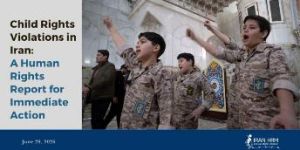 In recent years, child rights violations in Iran have escalated into deeply alarming dimensions. These violations span from intense psychological pressures triggered by economic, social, and security crises, to ideological indoctrination in child-rearing, and a severe shortage of specialized mental health services. Official data published in domestic media reveals that within the national anxiety screening program, out of 899,793 children aged 5 to 6, a staggering 186,772 children were identified as suspected of having anxiety disorders, and 141,293 were referred to counseling centers. Furthermore, out of a total of 2,903 active counseling and psychological service centers across the country, only 91 centers specialize in children and adolescents—representing a mere 3% of all available facilities (Hamshahri Online – June 27, 2026).
The International Legal Framework
The Convention on the Rights of the Child (CRC) mandates state parties to prioritize the “best interests of the child” in all actions concerning children. It obligates governments to guarantee the child’s right to survival and development; protect them from all forms of violence, injury, exploitation, discrimination, and psychological distress; and recognize their rights to freedom of thought, conscience, religion, expression, and participation in accordance with their age and maturity. Consequently, any educational, cultural, or security policy that weaponizes a child as a tool for political, ideological, or military indoctrination directly contradicts the spirit and provisions of this Convention.
The CRC was adopted on November 20, 1989, and entered into force on September 2, 1990. Iran ratified the convention in 1994 but applied a sweeping general reservation declaring that it would not apply any provisions incompatible with “domestic laws and Islamic standards,” effectively undermining and limiting the scope of its full implementation.
The UN Committee on the Rights of the Child expressed grave concerns regarding Iran’s implementation of the Convention in its 2016 Concluding Observations. In these observations, concerning the third and fourth periodic reports of the Islamic Republic of Iran (Document No. CRC/C/IRN/CO/3-4)—adopted in January 2016 and published in April 2016—the Committee voiced deep concern over the incomplete implementation of previous recommendations. It specifically highlighted Iran’s general reservation, systemic discrimination, juvenile justice administration, the low age of criminal responsibility, early marriage, corporal punishment, and inadequate child protection frameworks.
Furthermore, the fifth and sixth periodic reports of the Islamic Republic of Iran (Document No. CRC/C/IRN/5-6), received on October 31, 2023, and officially published on November 18, 2025, explicitly reiterate in the introduction that the provisions of the Convention are binding on Iran only to the extent that they conform to Sharia criteria and domestic legislation. This stance is of fundamental importance when analyzing child rights violations in Iran, as this general reservation systematically obstructs effective state accountability before its international obligations.
Children’s Mental Health: A Hidden Crisis and the Shortage of Specialized Care
The published statistics identifying 186,772 children as suspected of suffering from anxiety out of those screened is a critical indicator of a silent child mental health crisis. This figure is not merely a clinical metric; it is a profound human rights warning regarding the failure of protective, educational, and social structures to secure a safe environment for child development. With only 91 specialized child and adolescent centers operating nationwide, equal and effective access to specialized psychological care is practically non-existent for the vast majority of children.
Scientific evidence strongly reinforces these concerns. The systematic review article titled “Prevalence of Anxiety Disorders among Children and Adolescents in Iran: A Systematic Review,” published in 2015 in the Iranian Journal of Psychiatry, analyzed existing scientific literature up to June 2014 and concluded that anxiety disorders are reported at a significantly high rate among Iranian children and adolescents. Additionally, the study “Child and Adolescent Mental Health Care in Iran: Current Status and Future Directions,” published in 2016 in the Archives of Iranian Medicine, reports that various studies estimate approximately 16.7% to 36.4% of children and adolescents in Iran suffer from one or more mental health disorders, while specialized resources to address these critical needs remain severely limited.
Ideological Indoctrination and the Violation of the Child’s Right to Free Personality Development
One of the core pillars of child rights violations in Iran is the transformation of child-rearing into a state-sponsored ideological project. This issue is not merely a generalized observation of the country’s educational or cultural atmosphere; rather, it is explicitly codified within the official discourse of the highest echelons of state leadership. In compiled doctrines regarding “Child-Rearing in the Thought of Ayatollah Khamenei,” ideal child development is framed not as an autonomous process of personality growth, but as a mechanism designed to forge a “religious-revolutionary identity,” “absolute obedience to the ruling jurist (Velayat-e Faqih),” a “spirit of resistance,” and “enemy-cognition.” The ultimate objective is the engineering of a “Velayi Child” (a child loyal to the supreme leader) and a “pious, revolutionary youth.” Within this framework, a child is subjected from their earliest years to a model that systematically links religion, politics, absolute loyalty to the state, and an enemy-centric revolutionary identity.
Under this mandated educational directive, the family, the school, the media, and the broader social environment are required to operate in unison to cement this state-defined identity:
- The Family:Functions as the primary institution for transmitting unquestioning obedience to authority.
- The School:Operates as a tool for teaching state-sanctioned revolutionary history, romanticizing revolutionary forces and martyrs, and institutionalizing ideological compliance.
- The Media:Utilized as a controlled battlefield to counter what the state defines as a “cultural invasion.”
- The Social Environment:Serves as an arena for mandatory religious-revolutionary participation through state-linked mosques, religious congregations (Heiyats), and the Basij paramilitary forces.
Instead of recognizing the child as an independent, right-bearing individual capable of freely choosing their own identity, this model forces the child onto a predetermined path designed solely to reproduce political and ideological loyalty to the ruling regime.
From a human rights perspective, the fundamental flaw of this approach is that it prioritizes the regime’s ideological interests over the “best interests of the child.” The Convention on the Rights of the Child (CRC) explicitly emphasizes the holistic development of the child’s personality, talents, and mental and physical abilities; respect for freedom of thought and conscience; and the preparation of the child for a responsible life in a free society, imbued with a spirit of peace, dignity, tolerance, liberty, equality, and solidarity.
Conversely, an upbringing that traps a child from infancy within rigid binaries of “truth vs. falsehood,” “insider (insider/Khodi) vs. enemy,” or “loyal vs. disloyal” structurally undermines the child’s right to independent thought, free identity formation, multi-dimensional personality development, freedom of conscience, and safe participation in civic life. Consequently, these top-down educational directives must be analyzed not merely as a cultural viewpoint, but as a core structural mechanism driving child rights violations in Iran.
Comparative Analysis: “Velayi” Indoctrination vs. Modern Child-Rearing Models
| Category | “Velayi” Indoctrination Model | Modern Child-Rearing Model |
| A) Objective of Upbringing | • Engineering a pious-revolutionary individual
• Absolute loyalty to the ruling jurist (Velayat-e Faqih)
• Collective-ideological identity |
• Personal growth, independence, and autonomy
• Critical thinking and freedom of choice
• Individual, multi-layered identity |
| B) Method of Upbringing | • Strict media censorship and control
• Emulation of state-sanctioned revolutionary heroes
• Heavy emphasis on obedience and compliance |
• Media literacy and critical consumption
• Emulation of cultural, scientific, and global diversity
• Emphasis on dialogue and active participation |
| C) Parent-Child Relationship | • Parents act as ideological directors
• Highly patriarchal structure (pronounced role of the father)
• Religious-political indoctrination |
• Parents act as developmental facilitators
• Equal, collaborative parenting roles
• Psycho-social and emotional development |
| D) Worldview | • The world as a zero-sum cultural battlefield
• Enemy-centric and isolationist perspective
• Closed, rigid identity |
• The world as a continuous learning opportunity
• Interaction-oriented and cooperative perspective
• Open, evolving identity |
Structural Mechanisms of “Velayi” Engineering: How a Child’s Identity is Systematically Molded
1.Phase 1: Foundational Ideology: Early Childhood.
The world is framed exclusively through a rigid binary of truth versus falsehood. The concept of Velayat-e Faqih (the rule of the jurist) is introduced as the direct continuation of divine authority, establishing the baseline for a religious-revolutionary identity.
2.Phase 2: Domestic Enforcement (The Family): Primary Socialization.
The household is structured as a micro-revolutionary environment. The father acts as the absolute source of state-aligned authority, while the mother manages emotional compliance. Media exposure and peer circles are tightly monitored and filtered.
3.Phase 3: Educational Indoctrination (The School): Formal Education.
The curriculum heavily prioritizes state-curated revolutionary history and the romanticization of martyrs. This stage focuses on building a “spirit of resistance” and training the child in “enemy-cognition” to reject external or independent ideas.
4.Phase 4: Social Integration: Community Level.
The child is integrated into collective state activities. Mandatory or heavily incentivized participation in state-sponsored religious congregations, the Basij youth divisions, and ideological mosque programs reinforces a collective, state-approved identity over individual expression.
5.Phase 5: Final Consolidation: Adolescence to Young Adulthood.
During adolescence, internal obedience is deeply solidified. An individual’s academic, career, and social trajectories are steered to align strictly with revolutionary values, successfully converting the child into a “pious, revolutionary youth” who serves the state’s apparatus.
Conclusion of Analysis: This structural mapping demonstrates that the issue extends far beyond a mere divergence in parenting styles; it represents a fundamental conflict between two irreconcilable worldviews. While modern child-rearing views the child as a right-bearing individual with an independent personality entitled to free inquiry, the “Velayi” model restricts the child from the outset within a predetermined blueprint aimed at political and ideological subjugation.
When enforced systematically by state leadership through the combined leverage of family, school, state media, and social institutions, this apparatus directly violates the child’s fundamental rights to freedom of thought, conscience, independent identity, and holistic development. Therefore, this model must be categorized in human rights documentation as an organized, structural tool of child rights violations in Iran.
An Unsafe Environment, Continuous Crises, and Psychological Impacts on Children
Domestic reports documenting a surge in clinical manifestations among children—such as heightened fear of loud noises, nyctophobia (fear of darkness), nocturnal enuresis (bedwetting), separation anxiety, aggression, and severe sleep disorders (Hamshahri Online – June 27, 2026)—demonstrate that children in Iran are systematically subjected to chronic psychological distress. Officials from the State Welfare Organization of Iran (Behzisti) have explicitly pointed to the cumulative role of economic deprivation, domestic instability, continuous exposure to crisis news, pervasive insecurity, and the direct or indirect trauma of geopolitical conflict in exacerbating childhood anxiety. This environment constitutes a direct threat to the child’s fundamental right to health, psychological security, holistic development, and a peaceful, nurturing environment.
In its December 2024 Factsheet on the situation of Children in Iran, file, UNICEF reported that children constituted approximately one-quarter of Iran’s population in 2023. This demographic reality underscores that any structural crisis within the realms of public education, mental healthcare, poverty, violence, or national security directly impacts a massive segment of the country’s population, elevating these concerns far beyond mere internal or administrative matters.
Core Dimensions of Child Rights Violations in Iran
- Violation of the Right to Mental Health:The identification of hundreds of thousands of anxious children, contrasted against a severe lack of specialized institutions, exposes the gross inadequacy of state mechanisms for prevention, diagnosis, and clinical intervention.
- Violation of the Right to Free Personality Development:The top-down imposition of rigid political and ideological blueprints restricts the child’s fundamental right to independently form an identity and exercise free thought.
- Violation of the Right to Education Grounded in Human Dignity:Educational systems must serve the development of individual capabilities, critical thinking, tolerance, and global peace, rather than operating as vectors for political alignment or enemy-centric polarization.
- Violation of the Right to Protection Against Violence and Harm:Subjecting children to continuous state-manufactured crises, militarized public spaces, conflict rhetoric, political violence, and the threat of arbitrary detention directly jeopardizes both their physical and psychological safety.
- Violation of the Principle of the Best Interests of the Child:Any state policy that prioritizes the preservation of a political regime or an official state ideology over the developmental, psychological, and educational needs of a child stands in direct, flagrant violation of this foundational pillar of international law.
Urgent Implications for International Child Rights Bodies
Child rights violations in Iran must be scrutinized through a multidimensional lens that covers mental health, education, freedom of thought, security, civic participation, the prohibition of violence, and social protection. Narrowly focusing on a single metric—such as the number of counseling facilities or anxiety screening data—is insufficient. The core investigative focus must remain on the extent to which state, educational, and cultural frameworks recognize the child as an independent, right-bearing entity, versus the degree to which they exploit them as instruments for state ideological production.
On March 4, 2026, the UN Committee on the Rights of the Child, specifically addressing the catastrophic impact of conflicts on children, emphatically reiterated that children must never be treated as “collateral damage.” The Committee reinforced that state parties are legally obligated to guarantee the right to life, survival, and development of children under conditions of crisis and conflict. This binding principle is equally applicable to all forms of harm, including psychological, security-related, educational, and ideological injuries.
Actionable and Urgent Recommendations
To immediately halt and prevent the systemic violation of child rights in Iran, the following international interventions are urgently required:
- Formal Inquiries by the UN Committee on the Rights of the Child:The Committee must demand official, comprehensive explanations from the Iranian government regarding childhood anxiety statistics, the actual operational capacity of its youth mental health infrastructure, and the ideological content of state curricula.
- Independent Assessments by UN Agencies:UNICEF and related specialized international bodies must conduct independent, unhindered evaluations of the state of child mental health and welfare inside Iran.
- Mandate Expansion for UN Special Rapporteurs:UN Special Rapporteurs on human rights must explicitly emphasize state-sponsored ideological indoctrination, chronic psychological pressure, violence against minors, and the restriction of freedom of thought in their periodic briefings.
- Evidence Documentation by Human Rights Organizations:Civil society and human rights groups must compile thoroughly documented case files featuring concrete statistics, familial testimonies, school textbooks, and verified clinical data to present to international tribunals.
- Binding Structural Reforms for the State:The Iranian government must be compelled to immediately expand its specialized child mental health networks, replace enemy-centric indoctrination with educational curricula rooted in human dignity, critical thinking, and peace, and comprehensively review all child-related policies under the strict guidance of the “best interests of the child”
Women’s Right
The Economic Status of Women in Iran: The Nexus of Economic Exclusion and Systematic Repression
July 2, 2026
https://iran-hrm.com/2026/07/02/economic-status-women-iran-nexus-of-economic-exclusion-repression/
 The economic status of women in Iran extends far beyond mere statistical indicators or labor market metrics. It vividly demonstrates how economic crises, structural discrimination, restrictive laws and practices, and social repression are deeply intertwined—ultimately depriving women of their right to employment, financial independence, and equal participation in development. Official data and domestic press reports reveal that the decline in women’s economic participation, the drop in the employment-to-population ratio, the surging numbers of young women classified as NEET (Not in Education, Employment, or Training), and the statistical reclassification of unemployed women as “housewives” are all indicators of a gradual yet profound purging of women from the formal economy.
A Statistical Profile of the Crisis: Low Participation, Unequal Employment, and Submerged Women
By the end of 1404 (early 2026), reports indicated a decline in the country’s overall economic participation rate to approximately 40.6%, with some accounts putting it closer to 38%. This implies that a massive portion of the working-age population is completely absent from formal production and the labor market.[2][3] Furthermore, this rate places Iran among the countries with the lowest economic participation rates globally. Within this framework, domestic accounts show that the female economic participation rate has plummeted from roughly 17% to between 12% and 13.4%, while the female employment-to-population ratio is reported at around 11.4%.[1][3] These figures underscore a deep structural and gender gap within the Iranian economy: while male economic participation was reported at approximately 67.9% in 1404, female participation stood at a mere 13.4%—a staggering gap of over 54 percentage points.[3]
The Economic Exclusion of Women: From Overt Unemployment to Statistical “Housewifization”
A critical element in analyzing the economic status of women in Iran is that many women who lose their jobs do not necessarily remain classified as “unemployed” in official statistics; instead, they are categorized as “housewives,” “students,” or “economically inactive.” Consequently, while official unemployment rates may superficially decrease or stabilize, the underlying reality of the labor market deteriorates. In a report by Tose’e Irani, economist Zahra Karimi notes that women are invariably the first victims of workforce downsizings, with approximately 200,000 women’s jobs destroyed over the past three years.[2] Simply put, many women who lose their livelihoods or abandon their job searches due to the lack of decent opportunities disappear from unemployment metrics entirely. They still practically require work and income, but because they are relegated to the categories of “housewives” or “economically inactive,” they remain invisible to state policymakers, resulting in a total absence of serious initiatives to reintegrate them into the workforce.
The Economy of Repression: Synchronized Controls Over Bodily Autonomy and Livelihoods
The repression of women in Iran is not confined to the streets, schools, universities, or digital spaces; the labor market serves as one of its primary battlegrounds. United Nations reports on Iran have established that the state curtails the fundamental rights of women and girls across multiple spheres—including bodily autonomy, freedom of expression, education, work, and other economic, social, and cultural rights—utilizing surveillance, punishments, fines, judicial harassment, and professional bans to enforce a rigid gender order.[4][5] Therefore, when a woman is forced out of the workforce due to systemic discrimination, job insecurity, mandatory hijab pressures, the absence of childcare services, or substandard wages, it is not merely an instance of economic inefficiency. This displacement is an active component of a broader mechanism of structural repression and enforced financial dependency.
Young Women and the NEET Crisis: An Educated Generation Denied a Future
According to a report by Donya-e-Eqtesad, the population of youth aged 15 to 24 who are not in employment, education, or training (NEET) surpassed 2.7 million in 1404, with young women accounting for more than 1.79 million of this figure.[3] This statistic carries significant weight, proving that the female employment crisis does not just impact current job seekers, but fundamentally jeopardizes the future of the younger generation. The rising educational attainment of women, when met with a lack of equal access to decent work, culminates in systemic social frustration, economic dependency, forced migration, or a long-term exit from the cycle of empowerment.
Depressed Wages, the Absence of Decent Work, and the Burden of Unpaid Care
Existing literature repeatedly highlights that prevailing wage offers in various cities, particularly for women, are so low that they fail to cover the basic costs of commuting, childcare, and workplace pressures.[1][2] When a woman is faced with a monthly wage offer of around 10 million Tomans amidst rampant inflation, formal employment can represent an added financial liability rather than a gateway to independence. The total deficit of childcare infrastructure, combined with patriarchal market perspectives and social constraints, systematically drives women toward unpaid domestic labor—a sector entirely omitted from GDP and employment data, yet functioning as the invisible pillar sustaining social reproduction and family survival.
Human Rights Implications for International Bodies: From Warning to Action
For the United Nations Entity for Gender Equality and the Empowerment of Women (UN Women) and other international bodies, the economic status of women in Iran must be evaluated through the lens of the right to work, the right to equality, the right to economic security, and the right to be free from gender-based discrimination. Reports by the UN Fact-Finding Mission and the UN Human Rights Office have consistently emphasized that the restriction of women in Iran is systemic in nature, extending from clothing regulations to educational and professional bans.[4][5] In addition to violating the right to work, these measures constitute an explicit breach of Iran’s obligations under Articles 6 and 7 of the International Covenant on Economic, Social and Cultural Rights (ICESCR), which guarantees the right to decent work and just and favorable conditions of work. Consequently, the international community’s response must transcend issuing statements or expressing concern. It is imperative that the economic exclusion of women be placed on the agenda of international institutions as an intrinsic component of a broader pattern of gender-based oppression—a pattern that simultaneously violates the right to work and economic security while rendering women more vulnerable to violence, dependency, and social marginalization.
Proposed Actions for the International Community and UN Women
The international community, particularly UN Women, can support Iranian women through several concrete avenues:
- First, establishing a regular mechanism to collect and publish gender-disaggregated data concerning employment, hidden unemployment, the wage gap, informal labor, unpaid care work, gender-based layoffs, and the impacts of repressive policies on women’s livelihoods.
- Second, urging international statistical and economic agencies to demand a meticulous gender, age, geographical, educational, and marital status breakdown of Iranian data, ensuring that women submerged in official registries under the labels of “housewife” or “inactive” become visible to policymakers once again.
- Third, UN Women could compile an independent thematic report focusing on “Economic Exclusion and Gender Oppression of Women in Iran”to complement existing human rights documentation. This report should delineate the hidden process of livelihood deprivation as a primary mechanism of “Gender Persecution” and the structural manifestation of “Gender Apartheid” in Iran. Historically, international attention has heavily centered on street-level crackdowns, mandatory hijab laws, and detentions, while their systematic link to women’s economic deprivation has remained under-examined.
- Fourth, prioritizing direct support for independent women’s organizations, female labor activists, economic journalists, and women’s rights defenders. This includes supporting secure documentation practices, education on economic and social rights, creating confidential reporting channels, and protecting individuals facing security threats for exposing discrimination or repression.
- Fifth, international bodies must demand that the Iranian government abolish all punitive measures and restrictions that tether women’s access to work, education, public services, and social life to compliance with discriminatory standards. UN reports demonstrate that the escalation of surveillance, judicial harassment, and punishment targeting women and girls has persisted and expanded following the 2022 (1401) protests.[4][5] Consequently, women’s right to employment must be viewed in tandem with the right to bodily autonomy, security, freedom of movement, and social participation. If a woman is barred from employment, universities, banking services, public transportation, or public spaces due to her attire, civic engagement, or peaceful protest, this is not merely a civil violation; it is a tool of economic and social coercion designed to systematically push women out of public life.
- Sixth, the international community can utilize bilateral human rights dialogues, periodic reviews, and UN mechanisms to demand a time-bound roadmap from Iran to eradicate discrimination in the labor market. This includes guaranteeing non-discrimination in hiring and firing, protecting female workers and job seekers, ensuring equal access to social security and insurance, introducing childcare infrastructure, recognizing the economic value of unpaid care work, and prohibiting any employment bans based on attire or civic activities.
- Seventh, it is crucial that the voices of women inside Iran—particularly female laborers, women-headed households, young women outside education and employment cycles, and those residing in small towns and marginalized regions—be directly reflected in international summits and reports. Without integrating their lived experiences, international policies risk remaining at the level of abstract generalities.
Mechanisms for Accountability and Enforcing Consequences for Non-Compliance
Demands placed upon the international community gain true meaning only when concrete consequences are attached to non-compliance. If the Islamic Republic fails to implement international recommendations, treaties, or mandates regarding the economic and social rights of women, the international response must not be confined to recycled expressions of concern or generic statements.
- The first steprequires establishing clear, measurable, and time-bound indicators. The female economic participation rate, female employment-to-population ratio, gender wage gap, the number of women barred from employment or education due to mandatory hijab enforcement or civic activism, the socio-economic status of female laborers and women-headed households, access to social security and insurance, and the structural recognition of unpaid care work must all be transformed into official monitoring benchmarks.
- The second stepis independent verification. Reports issued by the Iranian government must never serve as the final source of assessment, given that a core aspect of the problem lies in statistical manipulation and the erasure of women from the “unemployed” or “economically active” classifications. The United Nations—particularly its human rights mechanisms—must cross-reference Iran’s official data with civil society documentation, individual testimonies, reports from labor and women’s rights defenders, Special Rapporteurs, independent human rights organizations, and international agency databases. The Independent International Fact-Finding Mission on Iran, mandated by the UN Human Rights Council to investigate ongoing serious human rights violations and to collect, preserve, and maintain evidence for future independent legal proceedings,[7] must utilize this capacity to systematically document the economic exclusion of women, rather than limiting its scope to overt cases of street-level violence or detentions.
- The third stepis formalizing “non-compliance” within official UN reporting structures. Every monitoring report concerning Iran must explicitly grade the regime’s compliance with international recommendations and mandates: full cooperation, partial cooperation, deficient data provision, active obstruction, or total non-compliance. This tiered grading must be formally integrated into the reports of the Human Rights Council, the Special Rapporteur on the situation of human rights in Iran, the Universal Periodic Review (UPR) mechanism, and thematic reports addressing violence against women, poverty, the right to education, and the right to work. Once non-cooperation is officially coded and recorded, the government can no longer bypass recommendations without incurring political costs.
- The fourth stepinvolves explicitly naming the institutions and officials complicit in the socio-economic disenfranchisement of women. When ministries, security apparatuses, the judiciary, law enforcement forces, universities, municipalities, banking institutions, or state and quasi-state employers play an active role in gender-based dismissals, professional bans, educational expulsions, service terminations, or economic coercion against women, their institutional roles must be meticulously documented in official public reports. This is vital to establish accountability, deter recurrence, and dismantle systemic impunity.
- The fifth stepis anchoring international engagement to women’s rights indicators. Any technical cooperation, training programs, developmental assistance, or economic partnerships conducted with Iranian state institutions must be strictly contingent upon meeting minimum compliance thresholds regarding women’s rights. State entities involved in barring women from work, education, public services, or economic security must not benefit unconditionally from standard international cooperation, professional accreditation, or development projects. Conversely, international backing should be proactively redirected toward independent institutions, civil society organizations, women’s rights activists, journalists, and groups working to document gender discrimination and economic exclusion.
- The sixth stepentails utilizing accountability tools that go beyond mere recommendations. While the United Nations does not independently enforce sanctions, its investigative documentation and findings can serve as the legal and factual basis for sovereign states, regional unions, and parliaments to impose targeted human rights sanctions against officials and entities driving this repression. These measures include travel bans, asset freezes, the prohibition of formal institutional cooperation, and restricting access to international programs. Furthermore, the evidence gathered can be leveraged in future judicial proceedings, including universal jurisdiction mechanisms, to pursue corporate and individual criminal responsibility. Human rights organizations have continually emphasized that expanding the mandate of the UN Fact-Finding Mission on Iran remains crucial for preserving evidence and building pathways toward future accountability.[8]
Consequently, the core international demand must move away from accepting vague promises of “improving the status of women” from the Islamic Republic. Instead, the regime must be compelled to answer to specific, quantified indicators—and should it fail to do so, it must incur definitive institutional, legal, and political costs. Without such an accountability framework, international recommendations degenerate into toothless texts. However, by formalizing non-compliance metrics, enforcing independent verification, preserving evidence for future prosecution, and conditioning international engagement, the economic exclusion of women can successfully shift from an ethical warning to a matter of enforceable international accountability.
Conclusion: An Economy Without Women is Development Without Justice
The economic status of women in Iran reveals that their systematic elimination from the labor market operates simultaneously as a consequence of economic failure and a deliberate tool for reproducing gender-based oppression. The collapse of female economic participation, the profound structural employment gap, the surging population of young women trapped outside education or employment cycles, and the statistical concealment of unemployment under the guise of domestic care work collectively expose a single, unyielding reality: women in Iran are systematically denied economic independence through a synchronized matrix of financial pressure, legal discrimination, social engineering, and political repression.
Therefore, the primary demand presented to the international community—and specifically to UN Women—is to formally recognize the economic exclusion of women as a structural arm of gender persecution in Iran, and to define actionable, measurable, verifiable accountability mechanisms coupled with tangible consequences. In contemporary Iran, defending the right to employment and financial autonomy is indistinguishable from defending human dignity, liberty, and equality. Yet, this defense yields results only when non-compliance carries a distinct cost. Without relentless pressure, rigorous documentation, official registries of non-cooperation, direct amplification of the voices of women inside Iran, and the strategic activation of international accountability channels, this fundamental right will remain permanently sidelined in the margins of abstract reports and generic declarations.
References
- Sazandegi Newspaper, “200,000 Women Have Lost Their Job Seats Over the Past Year,” Published: June 29, 2026 (8 Tir 1405).
- Tose’e Irani Newspaper, Reza Asadabadi, “Iran’s Labor Market Shrinks Day by Day, Job Opportunities Increasingly Restrained,” Published: June 27, 2026 (6 Tir 1405).
- Donya-e-Eqtesad Newspaper, Mohammad Hossein Hosseini, “How to Protect the Workforce During Economic Crises?”, Published: June 30, 2026 (9 Tir 1405).
- UN News, “Iran: Repression of women ‘intensifying’, two years on from mass protests,” Published: September 13, 2024.
- OHCHR, “Iran: Government continues systematic repression and escalates surveillance to crush dissent in the aftermath of protests,” Published: March 14, 2025.
- World Bank Open Data / ILOSTAT, Female Economic Participation Index in Iran, Latest available data for 2024, Accessed: 2026.
- OHCHR, “Independent International Fact-Finding Mission on the Islamic Republic of Iran,” Mandate, extensions, and responsibilities regarding the collection, preservation, and accessibility of evidence for independent legal proceedings, Accessed: 2026.
- Amnesty International, “Iran: UN expands Fact-Finding Mission’s mandate in landmark development to address human rights crisis,” Published: April 3, 2025.
Sexual Violence Against Women: Covert Detention & Impunity of Perpetrators in Shiraz (2009)
July 1, 2026
https://iran-hrm.com/2026/07/01/sexual-violence-32278/
 Amid numerous reports regarding the suppression of the 2009 popular protests in Iran, the case of covert detention centers in Shiraz reveals a horrific, organized, and targeted pattern of sexual violence and rape against detained women used as a mechanism for containment and intimidation. What renders this tragedy a living and critically urgent case today is its legal classification as a “Crime Against Humanity.” Under peremptory international norms, such systematic atrocities are never subject to any statute of limitations, meaning the passage of time does not diminish the legal validity of prosecuting its perpetrators. By exposing the role of paramilitary thugs led by Houshang Fahandaj Saadi and the judicial collusion that facilitated their escape, this report is not merely a narrative of the past, but concrete evidence of the ongoing structural cycle of impunity (exemption from punishment) in Iran.
Gender Targeting: The Organization of Repression Against Women and female Students in Shiraz
During the 2009 gatherings in Shiraz, Mullah Sadra Street, Golestan Boulevard, the Hafezieh area, and districts adjacent to Shiraz University witnessed a prominent and leading presence of women, particularly female college students (especially from the Faculty of Literature and Human Sciences). The pivotal role of women on the frontlines of these protests prompted the repressive apparatus to base its punitive mechanism on gender, directly targeting their dignity and psychological-physical security.
To execute this strategy, special units, the Basij, and the Islamic Revolutionary Guard Corps (IRGC) were deployed in key police stations, including the one in the Saadi region of Shiraz. However, the most harrowing part of this scenario was removing the detention process of women from any legal framework and outsourcing it to a network of paramilitary thugs operating on the fringes of the police station.
The Fahandaj Garages: Covert Detention Centers for the Sexual Torture of Women
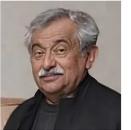 Houshang Fahandaj Saadi
Adjacent to the Saadi region police station and near the Delgosha Garden, two large garages belonging to Houshang Fahandaj Saadi and Hamid Fahandaj Saadi were effectively converted into unofficial and covert detention centers for holding women. The operational management of these sites was directly handled by Houshang Fahandaj Saadi.
Short-Term Enforced Disappearance: Stripping Women of All Legal Immunities and Protections
- Abduction Without Official Registration:Basij and IRGC forces purposefully arrested women and female students in the streets or around the university campus, transferring them to these garages in vehicles with private license plates. The names of these women were never recorded in any official registry, leaving their families in absolute ignorance and paralyzing fear.
- The Garage Basements; A Sexual Slaughterhouse:According to shocking testimonies, the detained women were held at night in the dark, enclosed, and unsanitary basements of these garages; an environment completely severed from any administrative or judicial oversight, deliberately prepared to facilitate the commission of the gravest sexual crimes.
Documented Details of Organized Rape and Sextortion of Victims
Detailed reports indicate that the rape and sexual abuse of women in these garages was not random or accidental behavior, but rather a repeated, organized, and controlled process.
- The Role of the Ringleader and His Accomplices:Victims have revealed that they were initially assaulted and raped by an individual nicknamed “Haji,” who is none other than Houshang Fahandaj Saadi. Following him, two janitors and guards employed at the garage committed repeated rapes involving severe physical violence. The intensity of these sexual assaults was such that at least three of the women sustained serious physical injuries and required immediate medical treatment, yet they remained captive within the same environment.
- Double Torture via Sextortion:A systematic dimension of this crime involved filming and photographing the victims while the rapes were being committed. The perpetrators used these images to threaten the women that if they exposed the crimes, the footage would be published online. This character assassination and threat of public shaming within the societal context, combined with intimidation regarding the arrest of their families by security agencies, was weaponized to enforce mandatory silence upon the victims.
Engineering Impunity: How the Perpetrators of Rape Escaped Justice
The most glaring aspect of this case is the state apparatus’s mechanism for concealing the truth and guaranteeing absolute impunity for Houshang Fahandaj Saadi and his accomplices. Following the leak of reports concerning the rape of detained women, the reaction of senior officials in Fars Province was not to execute justice, but rather to establish comprehensive religious, security, and judicial coordination to close the case and punish the whistleblowers.
The Cover-Up Network and Key Figures in the Suppression of Truth:
- Protecting the Accused as “Value-Driven Forces”: Houshang and Hamid Fahandaj were not only never summoned or interrogated, but officials explicitly designated them as “trusted agents of the regime.” Any attempt to pursue their role was severely suppressed under the labels of “undermining revolutionary forces” and “blackwashing.”
- Asadollah Imani (The Then-Friday Prayer Leader) and Gholamhossein Gheybparvar (The Then-Commander of the Fajr Corps): These two senior officials, during covert meetings, issued direct orders to “swiftly wrap up the issue” and bury all information related to the rapes.
- Ali Moayedi (The Then-Commander of the Law Enforcement Forces): Led the mission to suppress field documentation at the Saadi police station and erase all traces of transferring women to the garages.
- Jaber Banshi (The Then-Prosecutor of Shiraz): Acted as the judicial barrier; he dismissed the reports containing details of rape and sexual abuse as “false and contrary to reality,” archived the case, and threatened the whistleblowers with judicial prosecution and career termination.
Legal Analysis: Organized Violation of Domestic Laws and International Documents Focusing on Violence Against Women
The perpetration of sexual violence, rape, and psychological torture against detained women in the absence of judicial oversight is a flagrant and explicit violation of the codified laws of the Islamic Republic of Iran itself, even before constituting a breach of global treaties. The managers of repression in Shiraz and the provincial judicial officials, by covering up these crimes, simultaneously violated an entire matrix of domestic laws:
- Violation of Constitutional Principles:According to Principles 22 and 39, the life, reputation, and dignity of individuals—and particularly detained persons—are absolutely immune from violation. Furthermore, transferring women to covert garages is a clear violation of Principle 32 (prohibition of arrest outside legal procedures) and an explicit defiance of Principle 38, which completely bans any form of torture or abuse to obtain information or break an accused person’s resolve.
- Fundamental Breach of the Islamic Penal Code:Under Article 570 of this law, any official or government agent who unlawfully deprives individuals of their personal liberty or denies them the rights prescribed in the Constitution is guilty of a crime. In addition, the perpetration of rape and severe physical violence in the garage basements constitutes a textbook definition of torture and “physical abuse and harassment” under Article 578, which mandates imprisonment and Qisas (retaliation in kind) for both the direct perpetrators (the rapists, including Houshang Fahandaj and his henchmen) and the commanders (the officials who issued the crackdown orders).
Therefore, facilitating the escape of Houshang Fahandaj from the courts and archiving the rape reports by the then-prosecutor of Shiraz represents an overt structural collusion to ensure impunity for crimes that carry the heaviest criminal penalties under the country’s own laws.
Aligning Evidence with International Instruments and the Legal Definition of Crimes Against Humanity
Under the peremptory norms of international criminal law (jus cogens), the atrocities committed in the covert detention centers of Shiraz transcend domestic infractions or ordinary crimes. By satisfying four core elements, these actions constitute a textbook case of “Crimes Against Humanity” and repeated violations of international treaties:
- Widespread & Systematic Attack:The assault on citizens in this case was not incidental or rogue behavior, but rather part of an orchestrated attack executed under a premeditated plan against a civilian population (female protesters) within the framework of a broader state policy of repression.
- Sexual Violence as a Weapon:Pursuant to Paragraph (g) of Article 7 of the Rome Statute, the systematic perpetration of rape and sexual abuse by state agents and paramilitary henchmen with the intent to interrogate, humiliate, and break the political will of women directly falls under the definition of crimes against humanity.
- Consolidating Structural Impunity via Tacit State Approval (State-Backed Impunity):The coordination among top religious, military, and judicial authorities of Fars Province (the Friday Prayer Leader, commanders of the IRGC and Law Enforcement Forces, and the then-prosecutor) to classify the case, archive documents, and facilitate the escape of the perpetrators represents explicit support, endorsement, and command from the power structure for these crimes.
- Short-Term Enforced Disappearance:The abduction, transfer, and detention of women in the basements of covert garages without any official registration of identity, leaving families in absolute ignorance, is a direct violation of Paragraph (i) of Article 7 of the Rome Statute (enforced disappearance).
In this light, these actions constitute systematic and flagrant violations of the following international treaties and covenants:
- Article 5 of the Universal Declaration of Human Rights (UDHR) and the Convention Against Torture (CAT):The state-sponsored and paramilitary rape and sexual violence perpetrated within the Fahandaj garages represent the absolute crudest form of torture, severe physical harm, and cruel, inhuman, and degrading treatment.
- Article 1 of the Universal Declaration of Human Rights:The weaponization of gender, sextortion, and assaults on the physical and biological autonomy of women for political containment completely obliterate the human dignity, worth, and identity that this article guarantees.
- Articles 8 and 10 of the Universal Declaration of Human Rights:Dismissing the credibility of documented rape reports by labeling them “false claims” by the then-prosecutor of Shiraz, combined with denying the female victims, absolute access to a fair trial and effective remedy, has guaranteed the continuity of the cycle of impunity.
Conclusion and Call for International Accountability: Breaking the Cycle of Impunity
What occurred inside the covert detention centers and garages of Shiraz was not a rogue disciplinary infraction, but rather an “organized gender-based sexual crime” weaponized as a strategic asset to contain political dissent and crush the resolve of female protesters. The engineered escape of Houshang Fahandaj and his henchmen from justice—sheltered by the aligned backing of the then-prosecutor, IRGC commander, chief of police, and Friday prayer leader of Shiraz—stands as undeniable evidence that sexual violence against women is a systematic tool insulated from accountability within the apparatus of repression.
Under international law, owing to the nature of these offenses as crimes against humanity, this case is subject to no statute of limitations. The rigorous documentation of these files, data, and the names of commanders and perpetrators remains a fundamental commitment to truth and accountability. This documented legal report has been compiled so that by invoking the principle of universal jurisdiction, the structural cycle of impunity in Iran can be shattered, ensuring that all commanders, perpetrators, and judicial figures who covered up these atrocities are ultimately brought to justice before competent tribunals for crimes against women and humanity.
Systematic Human Rights Violations in Iranian Sports
Systematic Human Rights Violations in Iranian Sports (Part I)
From Ideological Repression to Judicial Killing of Athletes
June 29, 2026
https://iran-hrm.com/2026/06/29/sports-32259/
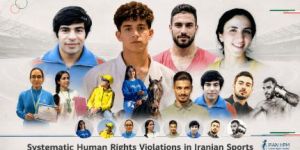 Sport in Iran has increasingly become an instrument of political, ideological, and security control rather than an independent professional institution. Over the past four decades, numerous athletes have faced execution, imprisonment, torture, forced confessions, professional exclusion, and other serious human rights violations because of their peaceful civic engagement, political opinions, religious beliefs, or refusal to comply with state-imposed ideological policies.
This report examines documented cases of executed, imprisoned, and killed athletes, demonstrating that the persecution of Iran’s sporting community is not the result of isolated incidents but forms part of a broader pattern of systematic human rights violations.
Part I focuses on athletes who lost their lives, were executed, or remain imprisoned because of their exercise of fundamental rights and freedoms.
The 2026 Uprising: Athletes Standing with the People
The nationwide uprising of 2026 marked another defining moment in the relationship between Iran’s sporting community and the country’s broader movement for civil rights and democratic freedoms. During this period, numerous athletes, coaches, and national champions, like millions of other Iranian citizens, stood alongside the public in peaceful protests and expressions of solidarity.
As a consequence of their participation in, or support for, these demonstrations, many were subjected to severe reprisals, including arbitrary arrest, enforced disappearance, torture, politically motivated prosecutions, lengthy prison sentences, and, in several documented cases, execution.
Among the victims of the 2026 uprising were a number of accomplished athletes whose professional achievements had previously brought distinction to Iranian sport. Their sporting status, however, offered no protection against state violence. Instead, many became direct targets of the authorities’ campaign to suppress dissent.
Saleh Mohammadi, a young wrestler, was arrested during the protests, sentenced to death, and subsequently executed.
Mehdi Ghadimi, an athlete who participated in the demonstrations, was arrested on national security-related charges, subjected to judicial proceedings that raised serious concerns regarding due process and fair trial guarantees, and was later executed.
Masoud Zatparvar, a bodybuilding champion, was detained because of his participation in the protests and subsequently executed, becoming one of the most prominent athlete victims of the 2026 uprising.
Sasan Azadvar, a young karate athlete, was arrested during the protests and became one of the most prominent examples of athletes subjected to the harshest forms of judicial repression.
Arshia Barari, a young fitness champion, was arrested in connection with the protests and sentenced to death. His case has become another emblematic example of the repression directed against Iranian athletes during the 2026 uprising.
In addition to these prominent cases, Yazdan Afrough, Abbas Khadem, Hadi Forough, Ali-Mohammad Kordkazemi, Hassan Kalaher, Robin Moradi, Mohammad-Hossein Parnoun, Mojtaba Torshizi, Mohammad-Reza Golmakani, and Qasem Vakili are among the athletes and coaches who, because of their alleged connection to the protests, were subjected to arbitrary arrest, security harassment, politically motivated prosecutions, or other forms of serious human rights violations.
These documented cases demonstrate that the Iranian authorities deliberately targeted members of the sporting community as part of a broader strategy to suppress public dissent. Rather than treating athletes as independent citizens entitled to fundamental rights, the authorities subjected them to the same coercive machinery that has been employed against journalists, students, lawyers, artists, and other sectors of Iranian civil society.
Athletes Killed While Standing for Freedom
The nationwide uprising of 2026 was not only marked by mass public protests but also by the active participation of members of Iran’s sporting community. Athletes who had once represented their country in national competitions joined ordinary citizens in demanding freedom, justice, and fundamental rights. For several of them, that choice proved fatal.
The deaths of these athletes were not isolated tragedies. They form part of a broader pattern involving the excessive and often lethal use of force against civilians participating in peaceful demonstrations.
Zahra Azadpour, a professional football player, mountaineer, and former invitee to Iran’s women’s national football training camp, was shot dead by government security forces in Karaj on 9 January 2026.
Sahba Rashtian, a 23-year-old women’s football assistant referee and athlete in track and field and physical fitness, was fatally shot during protests in Isfahan on 9 January 2026.
Sakineh Akbari, a mountaineering instructor and volunteer rescue worker, was killed after government forces opened fire on demonstrators in Ardabil.
Sara Behboudi, a 45-year-old mountaineer from Rasht who had successfully climbed several major peaks, was shot while participating in demonstrations on 9 January 2026 and later died from her injuries.
Arnika Dabbagh, a 15-year-old national swimming champion and winner of multiple domestic medals, was killed by gunfire in Gorgan. According to available reports, widespread communication disruptions prevented her timely transfer to a medical facility, contributing to her death.
Mahna Doukoushani, an 18-year-old taekwondo champion from Kermanshah, was fatally shot by security forces on 8 January 2026.
Parastoo Jarrahian, an athlete in boxing and equestrian sports, succumbed to injuries sustained during protests in Arak. Reports indicate that members of her family were denied access to her while she was hospitalized.
The deaths of these athletes illustrate that Iran’s sporting community was subjected to the same pattern of lethal repression experienced by other sectors of society during the 2026 uprising. Their cases demonstrate that athletes were not targeted because of their profession alone, but because they exercised the same fundamental rights as other citizens, including the rights to peaceful assembly, freedom of expression, and participation in public life.
Together with athletes who have been executed, imprisoned, tortured, or forced into exile, these victims have become part of the documented record of systematic human rights violations committed against Iran’s sporting community.
Execution: The State’s Ultimate Instrument of Repression Against Athletes
Execution represents the gravest and most irreversible violation of the right to life. Over the past four decades, Iranian authorities have repeatedly used capital punishment against athletes in connection with political cases, nationwide protests, and broadly defined national security charges.
Documented cases indicate that many of these athletes were prosecuted through judicial proceedings characterized by allegations of torture, coerced confessions, denial of access to legal counsel of their own choosing, and serious violations of international fair trial standards.
These executions extend beyond the deprivation of individual lives. They form part of a broader strategy designed to intimidate Iran’s sporting community and deter athletes from exercising their fundamental rights or using their public standing to express solidarity with popular movements.
Rather than protecting them, the public visibility and social influence of these athletes often made them more vulnerable. In several cases, the authorities appeared to transform their prosecutions into highly publicized examples intended to discourage other athletes from engaging in civic or political expression.
The following cases represent some of the most significant documented examples of athletes who were executed or sentenced to death in Iran.
Habib Khabiri
Former captain of Iran’s national football team, Habib Khabiri was arrested in 1983 because of his political activities and views. After enduring detention and torture, he was executed in July 1984 at Evin Prison. His case remains one of the earliest documented executions of a prominent Iranian athlete following the establishment of the Islamic Republic.
Forouzan Abdi
Former captain of Iran’s women’s national volleyball team, Forouzan Abdi was arrested during the 1980s and remained imprisoned for several years before being executed during the mass execution of political prisoners in the summer of 1988. She is widely recognized as one of the most prominent female athlete victims of political repression in Iran.
Navid Afkari
Champion Greco-Roman wrestler Navid Afkari was arrested in connection with the nationwide protests of 2018. He was sentenced to death based on confessions that he consistently stated had been extracted under torture. Despite widespread international appeals from governments, United Nations experts, human rights organizations, and the global sporting community, he was executed unexpectedly in September 2020. His case became one of the most internationally recognized symbols of judicial repression against Iranian athletes.
Mohammad Mehdi Karami
Iranian karate champion Mohammad Mehdi Karami was arrested during the 2022 nationwide protests. Following judicial proceedings that attracted widespread criticism for failing to meet basic standards of due process and fair trial, he was executed in January 2023. His execution became a defining symbol of the state’s crackdown on protesting athletes.
Seyed Mohammad Hosseini
Volunteer karate instructor Seyed Mohammad Hosseini was arrested in the same protest-related case as Mohammad Mehdi Karami and executed alongside him in January 2023. Reports concerning his case documented allegations of torture, coerced confessions, and denial of fundamental fair trial guarantees.
Majidreza Rahnavard
Wrestler and bodybuilder Majidreza Rahnavard was arrested during the 2022 protests, sentenced to death in an expedited judicial process, and publicly executed in December 2022. The public implementation of his execution generated widespread international condemnation and intensified concerns regarding Iran’s use of capital punishment against protesters.
These cases demonstrate that the death penalty has functioned not merely as a criminal punishment but as an instrument of political repression. The recurring allegations of torture, forced confessions, denial of due process, and expedited judicial proceedings raise serious concerns regarding violations of Iran’s obligations under international human rights law, including the right to life and the right to a fair trial.
Imprisonment: Silencing the Voices of Athletes
Execution has not been the only instrument used to suppress Iran’s sporting community. Over the past several years, dozens of athletes and coaches have been subjected to arbitrary arrest, prolonged imprisonment, torture, and other serious human rights violations because of their participation in peaceful protests, expression of critical views, or refusal to conform to official state policies.
Many of these cases have been accompanied by credible allegations of prolonged solitary confinement, torture, coerced confessions, denial of access to independent legal counsel, and judicial proceedings that failed to satisfy internationally recognized standards of due process and fair trial.
The cases presented below do not represent all imprisoned athletes in Iran. Rather, they constitute some of the best-documented examples illustrating a broader and systematic pattern of repression against members of the country’s sporting community.
Mohammad Javad Vafaei-Sani
Boxing coach and athlete Mohammad Javad Vafaei-Sani was arrested following the nationwide protests of November 2019. Since his detention, he has repeatedly been sentenced to death in judicial proceedings that have drawn sustained criticism because of allegations of torture, procedural irregularities, and violations of due process. He remains imprisoned, and reports indicate that he continues to face the imminent risk of execution.
Peyvand Naeimi
Swimmer Peyvand Naeimi was arrested during the 2026 nationwide uprising. According to documented reports, he was subjected to severe torture, including mock execution, while in detention. He remains in solitary confinement and continues to face the risk of a death sentence.
Barna Naeimi
Karate champion Barna Naeimi, a member of Iran’s Baha’i community, was arrested and reportedly subjected to electric shocks, coercive interrogation, and threats directed against members of his family in an effort to extract forced confessions. He remains in detention amid serious concerns regarding his physical condition and judicial status.
Parham Parvari
National swimming champion Parham Parvari was arrested during the 2022 protests and sentenced to 15 years’ imprisonment together with internal exile to Jask Prison. His case illustrates the authorities’ combined use of lengthy imprisonment and punitive internal exile as mechanisms of repression against athletes.
Sahand Nourmohammadzadeh
Bodybuilding champion Sahand Nourmohammadzadeh initially received a death sentence, which was later commuted to a prison term. Although the execution order was overturned, he continues to serve a lengthy sentence.
Amir Reza Nasr-Azadani
Former professional football player Amir Reza Nasr-Azadani was arrested in connection with the 2022 protests and sentenced to a lengthy prison term. His prosecution prompted widespread concern and condemnation from international football organizations and members of the global sporting community.
These cases demonstrate that imprisonment, torture, prolonged detention, and the continuing threat of execution have become integral components of a broader strategy designed to silence independent voices within Iran’s sporting community and create an atmosphere of fear among athletes who seek to exercise their fundamental rights.
Rather than serving legitimate criminal justice objectives, these measures appear to function as instruments of political intimidation aimed at deterring athletes from participating in civic life, expressing dissenting opinions, or demonstrating solidarity with broader social movements.
The cases documented in this first part demonstrate that executions, arbitrary detention, torture, and prolonged imprisonment have become central instruments of repression against Iran’s sporting community. Together, they reveal a systematic effort to silence athletes who exercise their fundamental rights or publicly stand alongside Iranian society.
Systematic Human Rights Violations in Iranian Sports (Part II)
July 1, 2026
https://iran-hrm.com/2026/07/01/sport-32275/
Political Control of Sport and International Accountability
While Part I documented the execution, killing, imprisonment, and persecution of Iranian athletes, Part II shifts from individual cases to the institutional framework governing sport in Iran. It analyzes the structures through which authorities exercise control over athletes and sporting institutions, while assessing the responses of international sporting organizations and human rights mechanisms.
Sport as an Instrument of Political Control
The cases documented in this report point to a pattern of state involvement in the governance of sport in Iran. Political and security institutions exert significant influence over sports federations, athletes’ careers, and decisions relating to participation in national and international competitions. Rather than operating independently, key areas of Iranian sport are subject to political and security oversight that affects both institutions and individual athletes.
State interference extends well beyond criminal prosecutions. Athletes have faced pressure to withdraw from competitions against Israeli opponents, ideological restrictions governing women’s participation in sport, exclusion from national teams, disciplinary sanctions, travel bans, suspension from competitions, removal from professional sporting structures, arbitrary dismissal, and sustained pressure to remain silent in the face of widespread human rights abuses.
Athletes who publicly expressed support for peaceful protests or criticized government policies have frequently been subjected to surveillance, arbitrary detention, security interrogations, professional retaliation, and politically motivated judicial proceedings. In many documented cases, the exercise of internationally protected rights—including freedom of expression, freedom of association, and peaceful assembly—has been treated by the authorities as a national security offense.
The cumulative impact of these policies extends far beyond individual victims. Systematic political interference has undermined the independence of Iranian sports institutions, contributed to the forced migration of elite athletes, damaged Iran’s international sporting reputation, and weakened public confidence in the country’s sports governance.
Taken together, these patterns indicate that sport in Iran has increasingly been transformed from an independent civic institution into an instrument of political, ideological, and security control. The resulting environment leaves athletes vulnerable not only to violations of their civil and political rights but also to discrimination affecting their professional careers, personal security, and freedom to participate in sport without political coercion.
Human Rights Analysis
The documented cases presented throughout this report reveal a pattern of violations extending far beyond individual acts of repression. Collectively, they demonstrate the systematic denial of a wide range of internationally protected human rights.
Iranian athletes have been subjected to arbitrary arrest, torture, enforced confessions, unfair trials, prolonged imprisonment, executions, professional exclusion, and discrimination because of their peaceful exercise of fundamental freedoms. These practices violate internationally recognized rights, including the right to life, freedom from torture and other cruel, inhuman or degrading treatment or punishment, the right to liberty and security of person, the right to a fair trial, freedom of expression, freedom of association, freedom of peaceful assembly, freedom of religion or belief, the right to work, and the right to participate in cultural and sporting life without discrimination.
Taken together, these documented violations indicate that the repression of Iranian athletes is not episodic but forms part of a broader policy aimed at restricting civic space, suppressing dissent, and subordinating sport to political and ideological objectives.
Why International Accountability Matters
The continued persecution of Iranian athletes is not solely a domestic concern. International sporting organizations, human rights institutions, and United Nations mechanisms all have important responsibilities in safeguarding the independence of sport and protecting athletes from politically motivated persecution.
Effective international monitoring, continued documentation of violations, and sustained engagement by sporting federations and human rights bodies can help deter further abuses, provide greater protection for athletes at risk, and reinforce international standards governing both human rights and the autonomy of sport.
Ensuring accountability for serious human rights violations committed against athletes is essential not only for justice for the victims, but also for preserving the integrity of international sport and reaffirming that no athlete should face persecution for peacefully exercising fundamental human rights.
International Response: The Global Sporting Community Confronts the Repression of Iranian Athletes
The persecution of Iranian athletes has attracted sustained international attention, particularly following the executions of Navid Afkari and Mohammad Mehdi Karami, as well as the arrest, imprisonment, and prosecution of numerous other athletes.
International sports organizations, professional associations, prominent athletes, human rights organizations, and United Nations human rights mechanisms have repeatedly expressed concern regarding arbitrary detention, death sentences, torture, denial of fair trial guarantees, and the growing interference of political and security institutions in Iranian sport.
Alongside these institutional responses, hundreds of athletes, coaches, Olympic medalists, and sports figures from around the world have publicly called for an end to executions, the release of imprisoned athletes, and full respect for internationally recognized human rights standards in the treatment of Iran’s sporting community.
These reactions demonstrate that the situation of Iranian athletes has evolved beyond a domestic concern and has become an issue of international significance for both the global sporting community and international human rights mechanisms.
Despite sustained international attention, available evidence indicates that arbitrary arrests, harsh prison sentences, professional retaliation, and security persecution of athletes continue. Continued monitoring, systematic documentation, and international engagement therefore remain essential for protecting athletes at risk, supporting victims, and promoting accountability for serious human rights violations committed against Iran’s sporting community.
Conclusion
This report has documented both the human impact of persecution against Iranian athletes and the broader structures through which political and security institutions influence sport in Iran. Together, the evidence presents a comprehensive picture of the challenges faced by athletes whose professional careers and fundamental rights have been affected by state interference.
From the early years following the establishment of the Islamic Republic to the nationwide uprising of 2026, Iranian athletes have been subjected to execution, arbitrary detention, torture, unfair trials, internal exile, forced displacement, professional exclusion, and other serious human rights violations because of their peaceful civic engagement, support for public protests, political opinions, religious beliefs, ethnic identity, or commitment to the fundamental values of sport.
These practices violate a broad range of internationally protected rights, including the right to life, freedom from torture and other cruel, inhuman or degrading treatment or punishment, the right to liberty and security of person, the right to a fair trial, freedom of expression, freedom of thought, conscience and religion, freedom of peaceful assembly, the right to work, freedom of movement, and the right to participate freely in cultural and sporting life without discrimination.
Beyond their devastating impact on individual athletes and their families, these violations have seriously undermined the independence of sport in Iran, weakened public trust in national sporting institutions, accelerated the departure of elite athletes from the country, and damaged Iran’s standing within the international sporting community.
Taken together, the evidence documented in this report shows how political and security institutions have influenced the governance of sport in Iran, with significant consequences for athletes’ rights, the autonomy of sporting institutions, and civic space more broadly.
The international community, international sporting bodies, United Nations human rights mechanisms, and other relevant stakeholders can play a vital role by continuing to document violations, closely monitor the situation of athletes at risk, advocate for their protection, and promote accountability for those responsible for serious human rights violations.
Protecting the independence of sport, safeguarding the fundamental rights of athletes, and ensuring accountability for these violations are essential not only for preserving human dignity but also for upholding the rule of law and fulfilling the principles and obligations enshrined in international human rights law.
Attaches
Iran HRM Monthly Report– June 2026
July 4, 2026
https://iran-hrm.com/2026/07/04/june-32313/
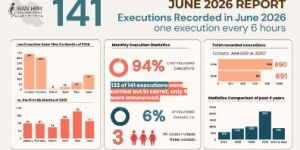 June 2026 was characterized by an intensified crackdown by the Iranian regime, primarily targeting political dissidents, protesters, ethnic minorities, and students, amidst a palpable fear of renewed nationwide uprisings. A staggering total of 141 executions were recorded, with the vast majority remaining unannounced by state media, highlighting a deliberate policy of obfuscation and intimidation. The regime’s judicial and security apparatus continued to employ brutal tactics, including arbitrary arrests, severe prison conditions, torture, and capital punishment, to stifle any form of dissent.
The Execution Crisis: 141 Lives Lost in a Single Month
June 2026 witnessed a horrifying surge in state-sponsored killings, with Iran HRM documenting 141 executions. Of these, 132 executions were carried out without official announcement, a practice that deprives victims and their families of due process and public scrutiny. These unannounced executions included at least three women. The nine officially acknowledged executions included five individuals who were arrested during recent protests, underscoring the regime’s use of the death penalty as a tool for political suppression.
Executions of Protesters
A significant portion of the executions were directly linked to individuals involved in the January 2026 uprising.
On June 16, Javad Zamani and Abolfazl Saedi, two young men from Shahroud, were executed after being labeled as ‘armed leaders’ of the January uprising. They faced charges including ‘Moharebeh’ (enmity against God) and ‘corruption on Earth,’ based on accusations such as drawing firearms, opposing the system, disrupting public order, damaging bank branches, and setting a police car on fire.
On June 3, Fathollah Avari, 42, arrested in Malard, was executed in Hamedan Prison. He was charged with involvement in the death of a State Security Force (SSF) major during the January uprising in Hamedan.
On June 1, Mehrdad Mohammadinia and Ashkan Maleki were hanged in Tehran. They were branded as leaders of the recent January uprising and charged with “operational actions against national security,” setting fire to a Basij center and a seminary, destroying public property, clashing with SSF agents, and blocking streets. The Basij center in question, located at the Jafari Mosque in Kuy-e Nasr (Gisha), has been identified as a significant center of repression in western Tehran.
Mass Executions Across Prisons
Numerous group executions were reported throughout the month.
On June 21, at least six individuals—Isa Rahmani (36), Nematollah Barahouyi in Zahedan, Mirveis Khalilzadeh and Ebrahim Ahmadshahi in Shiraz, and Homayoun Noorzehi and Hossein Yousefzehi in Zabol—were executed.
On June 17, 14 prisoners were hanged across several cities, including Reza Nazif (28), Noorjalal Mojahed (27), and Esfandiar Sadri in Yazd; Fereydoun Varasteh in Shirvan; Ali Aghahosseini (38) in Maragheh; Rashid Arefi (38) in Borujerd; Khaleq Shahriari in Gorgan; Abdollah Jalali (25), Taher Shahouzehi and another unnamed prisoner in Zahedan; Aref Barahouyi (34) in Zabol; and Farzad Bahrami (36), Alireza Maleki and Ramin Bagheri in Hamedan.
Between June 13 and 16, at least 31 prisoners were executed, averaging one execution every three hours. This wave included Seyyed Akbar Bani-Hashem and Amir-Abbas Dekavand in Qezel Hesar Prison (among eight executed on June 13), Hassan Hosseini Narouei and Ali-Bakhsh Raeisi (27, Baluch compatriots) in Zahedan (among ten executed on June 14), Mohammad Amin Narouei and Balal Saadat-Jahani (Gorgij, 35) in Birjand (among eight executed on June 15), and Omar Shahbakhsh and Ghafoor Shahbakhsh (Baluch) in Yazd (among five executed on June 16).
On May 31 and June 1, at least 18 prisoners were executed. On May 31, 12 prisoners were hanged, including Parviz Valizadeh (27) in Zanjan, Aslan Amiri (33) in Arak, and ten in Shiraz, among whom were Saeed Dehghanzadeh, Borzou Mousavizadeh (30), Abbas Bayat (30), Ali Akbar Sarabi-Moghadam, Salar Sheikhi (29), three Baluch (Mohammad Osman Daneh-chin, Mohammad Sediq Baluchi, Qader Khodamoradi), and two Afghan nationals. On June 1, six prisoners were executed, including Morteza Sadeghzadeh in Damghan, Hassan Tahmasebi and Kouhyar Abbasi in Qorveh, and Behnam Nemati (38), who was subjected to a public execution in Rasht.
Systematic Repression of Political Prisoners and Dissidents
The regime continued its intensified pressure on political prisoners, especially those affiliated with opposition groups or involved in protests.
Death Sentences for PMOI/MEK Supporters:
Yaghoub Derakhshan, 51, a supporter of the People’s Mojahedin Organization of Iran (PMOI/MEK) held in Lakan Prison in Rasht, was sentenced to death for the second time in June 2026. He was initially sentenced in August 2025 on charges of ‘Baghi’ (armed rebellion) in sham trials conducted via video conference and without his chosen lawyer. Despite a referral for retrial, the Second Branch of the Revolutionary Court in Rasht, presided over by Mohammad Ali Darvish-Goftar, re-issued the death sentence, placing him in imminent danger.
Zahra Tabari, 68, an electrical engineer, also received her second death sentence from the Rasht Revolutionary Court. She was first sentenced in November 2025 on charges of ‘armed rebellion’ through PMOI/MEK membership after a ten-minute sham trial. The Supreme Court’s referral for retrial led to the same criminal verdict by the Second Branch of the Revolutionary Court in Rasht in April 2026, which was communicated to her in June.
Pressure on Female Political Prisoners in Evin
Several female political prisoners in Evin Prison faced increased harassment, including the cutting off of their telephone access. Among those affected were:
Shiva Esmaeili (60), sentenced to 10 years and six months.
Marzieh Farsi (59), sentenced to six years.
Forough Taghipour (32), sentenced to six years.
Golrokh Iraee, sentenced to six years, previously serving six years.
Sakineh Parvaneh, sentenced to six years, previously imprisoned for three years.
Zahra Safaei (63), sentenced to five years, currently imprisoned for the third time, having spent eight years in the 1980s for supporting the PMOI/MEK.
Elaheh Fouladi, sentenced to five years.
Deplorable Conditions in Qezel Hesar Prison
Prisoners of the January 2026 uprising held in Wards 35 and 37 of Unit 3 in Qezel Hesar Prison are subjected to inhumane conditions. Many suffer from severe injuries, including broken bones and teeth, yet are crammed into wards lacking basic living and sanitary amenities. Ward 37, housing around 200 prisoners, reportedly lacks any cooling system in extreme heat, and running water is frequently cut off, with prisoners being forced to pay for water delivered by tankers.
Arbitrary Arrests and Disappearances
Milad Sajjadian, 32, a former political prisoner and PMOI supporter, was arrested in Shiraz. Following a hunger strike in protest, he was hospitalized and then transferred to Adelabad Prison. He has since been moved to an unknown location, and there is no information regarding his fate or whereabouts. He had previously served three years for supporting the PMOI.
Resistance and Calls for Justice: “No to Executions Tuesdays” Campaign
Despite the heightened repression, political prisoners inside Iran continued their acts of resistance. The “No to Executions Tuesdays” campaign entered its 127th consecutive week on June 30, with inmates in 57 prisons across Iran participating in coordinated hunger strikes.
The campaign condemned the regime’s reliance on executions as a primary tool of intimidation and highlighted the ongoing crackdown following the January 2026 protests.
The regime’s judiciary has acknowledged that 3,292 individuals have been arrested since January on accusations of “cooperating with the enemy.” Many of these detainees now face severe judicial consequences, including death sentences or long-term imprisonment.
Regional reports further illustrated the repression: authorities in Sari reportedly opened 700 legal cases against January protesters, while in Mashhad, thousands of cases were filed.
The campaign reported that 140 people were executed during the Iranian month of Khordad (May 22–June 21), emphasizing that capital punishment remains a key tool for silencing dissent.
A poignant aspect of the campaign focused on the suffering of families denied the right to mourn. The case of Vahid Bani Amerian, a PMOI member and political prisoner executed in Qezel Hesar Prison earlier this year, was highlighted; his family, like many others, has not been informed of his burial location. The campaign denounced this practice as a continuation of punishment after death and a blatant violation of human dignity.
Prisons participating in the hunger strikes included Evin, Qezel Hesar, Greater Tehran, Qarchak, Adelabad, Zahedan, Rasht, Tabriz, Urmia, Sanandaj, and Kerman, among dozens of others, demonstrating the widespread nature of this organized resistance.
Conclusion and Call to Action
The human rights situation in Iran in June 2026 deteriorated drastically, marked by an unprecedented surge in executions, systematic repression of political prisoners, and a severe crackdown on students. The regime’s fear of popular uprisings drives these brutal measures, as evidenced by the high number of executions of protesters and the broad suppression of dissent in universities and prisons.
We condemn the widespread and systematic human rights violations perpetrated by the Iranian regime. We urge the international community, including the United Nations, its relevant bodies, the Human Rights Council, and all human rights organizations, to:
- Immediately and unequivocally condemn the escalating wave of executions and call for an urgent halt to all capital punishment in Iran.
- Demand the immediate and unconditional release of all political prisoners, including those sentenced to death for their participation in protests or their affiliation with opposition groups.
- Call for an independent international fact-finding mission to visit Iran’s prisons, particularly Evin and Qezel Hesar, to investigate the inhumane conditions and systematic torture.
- Pressure the Iranian regime to cease its brutal suppression of students and to respect academic freedoms and the right to peaceful assembly.
Silence and inaction only embolden the regime to continue its atrocities. Effective and urgent measures are imperative to hold the Iranian regime accountable for its egregious violations of human rights and to protect the lives and fundamental freedoms of the Iranian people.