
 Iran’s Regime Executes Alireza Sepahi and Alireza Raeisi, Protesters Detained During January Uprising
Iran Focus, October 6, 2026
Alireza Sepahi and Alireza Raeisi, two detainees arrested during the January 2026 protests and defendants in the so-called “Alikhani Square” case in Isfahan, were executed at dawn on Monday, October 5, at Dastgerd Prison in Isfahan. The sentences were carried out despite human rights reports of torture, forced confessions, and restrictions on the defendants’ access to lawyers during the proceedings.
According to published reports, Alireza Sepahi and Alireza Raeisi were arrested during the January protests and later sentenced to death in the “Alikhani Square” case in Isfahan. Their executions were carried out amid serious concerns about the methods of interrogation, the validity of the confessions, and the judicial proceedings in the case.
According to reports, some defendants in the case were subjected to physical and psychological pressure, beatings, and threats during interrogation. They were allegedly tortured into accepting the charges or making confessions against themselves and others. It has also been reported that some of the defendants’ confessions were broadcast by state-run media outlets.
Read More
 The West disarmed Tehran’s opposition — and handed the regime a lifeline
Washington Examiner, October 7, 2026 by Hamid Enayat
A former French counterterrorism judge has raised a question Western governments should have asked years ago: What did Iran’s rulers gain when Europe and the United States weakened an organized force opposed to them?
Marc Trevidic’s account matters because he speaks from experience inside the judicial system. Discussing France’s 2003 proceedings against members of the People’s Mojahedin Organization of Iran, or MEK, he recalled a period when Paris pursued valuable oil and gas agreements with Tehran while the Iranian authorities sought action against their opponents.
Trevidic later handled the case and dismissed the charges he examined. In remarks delivered in May 2026, he described the political use of counterterrorism justice. He also offered a strategic assessment: The MEK once possessed substantial military capabilities in Iran that, in his view, would be useful today in bringing down the regime. France, the U.S., and Britain, he said, had all played a part in eliminating those capabilities.
Read More
 Meaning behind Flag of Iranian Resistance
In this video, Dr. Sadeghpour explains that Iran’s green, white, and red tricolor featuring the historic Lion and Sun emblem is a centuries-old national symbol of Iranian sovereignty and constitutional heritage—not a dynastic emblem of the Pahlavi monarchy.
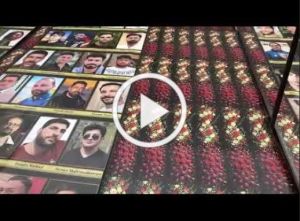 Honoring the Victims of Regime Repression
– NYC, 09/22 & 09/23, 2026
During the two-day UNGA rally in New York, a moving photo memorial paid tribute to the men, women, and youth executed for defying clerical rule in Iran. Lined with victim portraits and flowers, the exhibition brought the human faces of Iran’s freedom movement directly into public view. Organizers used the display to demand international accountability, call for an immediate end to executions, and highlight the sacrifice of those who died fighting for a free, democratic republic.
OIAC Donation | 501 (c)(3) Tax deductible
Your donation will help OIAC advocate for a democratic, secular and non-nuclear government in Iran. Founded on the respect for human rights, gender equality, religious and ethnic tolerance, as wells as social, economic justice, and security for America. Our goal is to organize Iranian-American communities in the United States to promote these values.