

 U.N. nuclear watchdog board reports Iran to the U.N. Security Council for the first time in 20 years
los Angeles Times, September 9, 2026
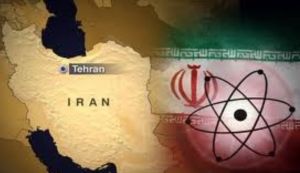
VIENNA — The U.N. atomic watchdog’s board on Wednesday reported Iran to the U.N. Security Council for the first time in 20 years, citing it for failure to cooperate in a long-running investigation into uranium traces detected by inspectors at undeclared sites.
Western officials suspect that the traces could provide evidence that Iran had a secret nuclear weapons program until 2003. Iran says that it’s not pursuing nuclear weapons, and that its program is entirely peaceful.
Reporting Iran to the Security Council opens the country to possible sanctions and asset freezes, though such punitive measures are unlikely because Iran’s allies Russia and China hold veto power on the panel.
Twenty-three countries on the International Atomic Energy Agency ’s 35-member board of governors voted for Wednesday’s resolution at IAEA headquarters in Vienna.
China, Russia and Niger opposed it, while eight countries abstained and one didn’t vote as it was in arrears, according to diplomats who spoke on condition of anonymity to describe the outcome of the closed-door vote.
Read More
 Tehran isn’t asking if the revolution is coming. It’s arming for when
Washington Examiner, September 8, 2026 by Ali Safavi
Iran’s rulers appear to be preparing for an outcome they increasingly fear is inevitable: another nationwide uprising.
Reports from inside Iran point to an intensified effort to recruit, train, and equip the Basij — the paramilitary force long serving as the regime’s principal instrument of domestic repression. At the same time, authorities are struggling to mobilize even their own base for state-organized demonstrations.
The contrast is revealing. Tehran is finding it harder to put loyalists on the streets even as it expands the security forces intended to confront future protesters. Meanwhile, organized opponents of the regime are demonstrating an increasingly audacious ability to operate publicly.
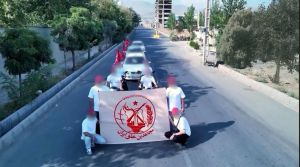
On Sept. 3, Resistance Units affiliated with the Mujahedin-e Khalq (MEK) staged an organized march through Karaj, a major city west of Tehran, using vehicles and motorcycles displaying MEK symbols. The action, marking the MEK’s 61st anniversary, was striking not merely because it occurred in broad daylight in a heavily monitored urban center, but because footage of it was subsequently published by Saberiyoun News, an outlet aligned with the regime’s so-called “Axis of Resistance.”
Saberiyoun described the event as a “parade of Resistance Units in Karaj.” Predictably denouncing the MEK, the outlet nevertheless effectively acknowledged that the organized action had occurred. In a system characterized by pervasive censorship and relentless efforts to suppress evidence of organized opposition, that acknowledgment is significant.
Read More
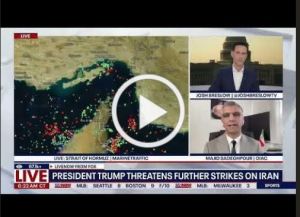 Iran recruiting and training foreign operatives- coverage from @livenowfox
Dr. Majid Sadeghpour explains why the Iranian regime’s violence is not only directed at its own people, but also threatens the wider world—and why the path to lasting change lies with the Iranian people and their organized resistance. He calls for international support for the Iranian people and an end to the regime’s executions.
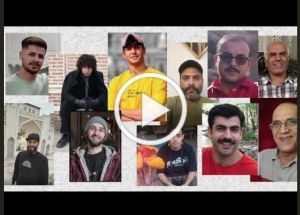 From the 1988 Massacre to today’s executions: A cycle of impunity and resistance in Iran.
1988 was never brought to justice—and the executions continue today. From the massacre of political prisoners to the thousands now facing death sentences, Iran’s prisons remain places of repression and resistance. The call for accountability is not only about the past—it is about stopping the next execution.
OIAC Donation | 501 (c)(3) Tax deductible
Your donation will help OIAC advocate for a democratic, secular and non-nuclear government in Iran. Founded on the respect for human rights, gender equality, religious and ethnic tolerance, as wells as social, economic justice, and security for America. Our goal is to organize Iranian-American communities in the United States to promote these values.