

 Bipartisan lawmakers call on Rubio to address Iran’s executions and arrests
As Trump reiterates calls for Iranians to “rise up and fight,” U.S. lawmakers express concerns about political crackdowns
Scripps News, September 3, 2026
A bipartisan group of U.S. lawmakers is urging Secretary of State Marco Rubio to take stronger actions against what they describe as an escalating campaign of executions, arbitrary arrests and political repression by Iran’s government.
In a letter obtained by Scripps News on Thursday, 64 House lawmakers from both parties — including Reps. Brian Fitzpatrick (R-Pa.), Brad Sherman (D-Calif.), Don Bacon (R-Neb.) and Debbie Wasserman Schultz (D-Fla.) — called on the State Department to publicly condemn the executions, incorporate human rights concerns into any diplomacy with Tehran, coordinate with allies and United Nations investigators to get better data about such crackdowns and impose sanctions on officials responsible for the abuses.
“We write to express our deep concern over the escalating execution of political prisoners by the Iranian regime,” the lawmakers wrote, characterizing the executions as a “grave violation of fundamental human rights and international legal standards.”
The letter goes on to highlight how Iran has sharply increased executions and arrests, expedited trials and imposed lengthy prison sentences on protesters since the U.S. and Israel began combat operations in Iran on Feb. 28.
Read More
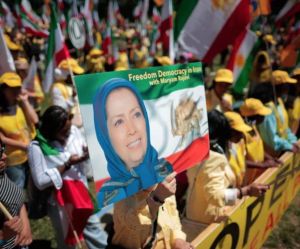 Don’t fall for Tehran’s talking points about the resistance
Washington Examiner, September 1, 2026 by Ali Safavi
The regime in Tehran is reeling under a collapsing economy, public anger, systemic corruption, and its inability to resolve Iran’s multiplying crises. International attention is therefore turning toward the decisive internal factor: the Iranian people and organized resistance. Decades of Western engagement failed to moderate the regime, while the wars of 2025 and 2026 showed that military conflict cannot deliver democratic change. Such change can come only through Iranians themselves.
Against this backdrop, Ehsan Mousavi recycles allegations against the Mujahedin-e Khalq (MEK) that have circulated for decades through the propaganda of both the Shah’s secret police and the clerical regime. He treats contested accusations as settled fact, omits decisive chronology, and makes sweeping claims about public opinion while disregarding the democratic program of the National Council of Resistance of Iran, of which the MEK is a member.
Mousavi’s appeal to what is supposedly “modern” should not be accepted at face value. The social examples on which he relies reveal a narrow, class-coded conception of modernity rather than a political test of democracy. The relevant standards are not conformity to a particular western lifestyle, but commitment to popular sovereignty, political pluralism, equal rights, and the peaceful transfer of power through the ballot box.
Read More
 Iran recruiting and training foreign operatives- coverage from @livenowfox
Dr. Majid Sadeghpour explains why the Iranian regime’s violence is not only directed at its own people, but also threatens the wider world—and why the path to lasting change lies with the Iranian people and their organized resistance. He calls for international support for the Iranian people and an end to the regime’s executions.
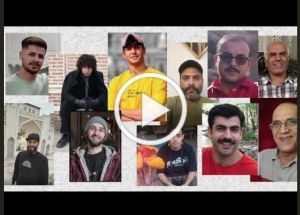 From the 1988 Massacre to today’s executions: A cycle of impunity and resistance in Iran
1988 was never brought to justice—and the executions continue today. From the massacre of political prisoners to the thousands now facing death sentences, Iran’s prisons remain places of repression and resistance. The call for accountability is not only about the past—it is about stopping the next execution.
OIAC Donation | 501 (c)(3) Tax deductible
Your donation will help OIAC advocate for a democratic, secular and non-nuclear government in Iran. Founded on the respect for human rights, gender equality, religious and ethnic tolerance, as wells as social, economic justice, and security for America. Our goal is to organize Iranian-American communities in the United States to promote these values.