

 Iran’s 1988 massacre never really ended
Washington Examiner, August 18, 2026 by Nasser Razii
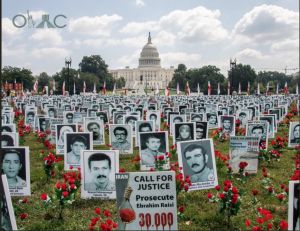
Thirty-eight years after Iran’s mass execution of political prisoners, the gallows are still being used for the same political purpose: to intimidate a population that challenges the Islamic Republic.
On Sunday, Iran executed Shahram Sadeghi in Karaj. He had been convicted of deliberately driving into police officers during the January 2026 anti-government protests. Iran’s judiciary said the Supreme Court had upheld his death sentence.
His execution is not simply another case in Iran’s long record of capital punishment. It comes as the country marks the 38th anniversary of the 1988 massacre of political prisoners, when thousands were summarily executed after secret proceedings.
Read More
 Iran’s Regime Plans Fuel Rationing, Higher Gasoline Prices Within Next 15 Days
Iran Focus, August 17, 2026
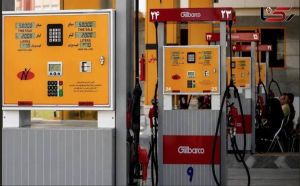
Esmail Saghab-Esfahani, a vice president of Iran’s regime, said on Saturday, August 15, that Iran’s daily gasoline consumption is about 135 million liters, while production by refineries and petrochemical plants is estimated at around 121 million liters. According to him, this has created a daily gasoline shortage of 14 to 15 million liters.
He emphasized that the proposed scenarios are no longer merely “solutions” but, in his words, have become a “necessity,” and the government is compelled to choose one of them.
According to the vice president of Masoud Pezeshkian, the president of Iran’s regime, one option is to distribute all domestically produced gasoline at fuel stations and halt supply once reserves are depleted. A second option is to allocate a fixed fuel quota to vehicles and charge any excess consumption at the market rate. Another scenario would allocate gasoline quotas directly to individuals, under which each person would receive 30 liters per month, with family members’ quotas placed under the control of the head of the household…
The official’s remarks come as rising domestic consumption and the widening gap between gasoline production and demand have once again made fuel rationing and multi-tier pricing one of the country’s major economic issues. Implementing any of these scenarios—particularly increasing the price of non-subsidized gasoline or reducing fuel quotas—could have direct consequences for transportation costs and the prices of goods and services.
Read More
 After Hours with John Hines, featuring Dr. Majid Sadeghpour:
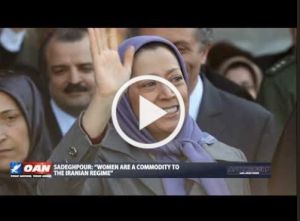
“Misogyny is the driving force of this regime, not just money.”
In this segment, Dr. Majid Sadeghpour highlights how the Iranian dictatorship targeted women from day one, from mandatory hijab laws to systemic oppression. But Iranian women haven’t backed down. They have led the fight for democracy across generations, serving as the backbone of resistance against fundamentalism.
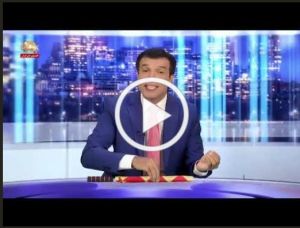 Offside: Exposing the Contradictions of Reza Pahlavi
On the political pitch, own goals don’t go unnoticed. In a recent interview, presenter Sale Abazade dissects Reza Pahlavi’s Reuters interview—exposing deep inconsistencies on democracy, accountability, and the regime’s forces.
From failed political projects and aggressive follower behavior to shifting stances on the IRGC, the transcript reveals how empty promises collapse under critical questioning.
OIAC Donation | 501 (c)(3) Tax deductible
Your donation will help OIAC advocate for a democratic, secular and non-nuclear government in Iran. Founded on the respect for human rights, gender equality, religious and ethnic tolerance, as wells as social, economic justice, and security for America. Our goal is to organize Iranian-American communities in the United States to promote these values.