

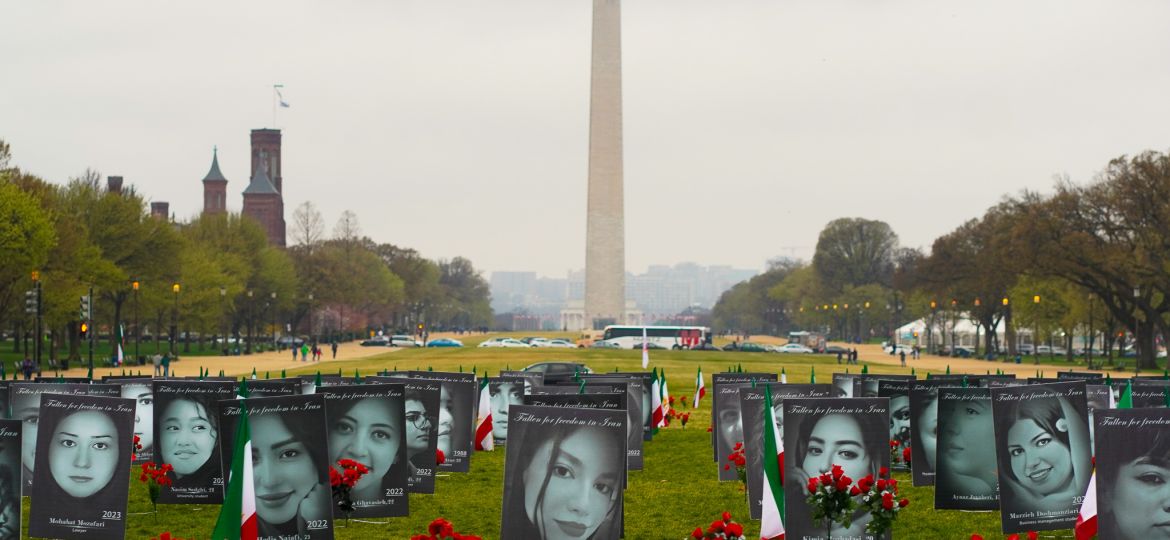
Report on Human Rights Violation in Iran
June 22-28, 2026
International Condemnation of Violation of Human Rights in Iran
This document reports extensive human rights violations in Iran from June 22 to 28, 2026, including wrongful detention and hunger strikes of British nationals, secret executions without family notification, psychological and medical torture of prisoners, systematic use of torture and forced confessions as institutional repression, operation of secret detention centers, and new suppression methods such as biometric surveillance and ideological indoctrination in education; it also details a severe economic crisis marked by soaring inflation, poverty, food insecurity, housing instability, healthcare access barriers, and widespread reliance on informal employment and debt, all contributing to a profound erosion of basic rights and living standards across Iranian society.
UN experts warn British travellers wrongfully detained in Iran at grave risk after 30-day hunger strike
17 June 2026
https://www.ohchr.org/en/press-releases/2026/06/un-experts-warn-british-travellers-wrongfully-detained-iran-grave-risk-after
 GENEVA – UN experts* today expressed grave concern for British nationals Lindsay and Craig Foreman, who have reportedly reached 30+ and 20+ days on hunger strike respectively, while wrongfully detained in Iran.
The couple, who were travelling through Iran by motorcycle with valid visas and a licensed guide, were apprehended by the Iranian Revolutionary Guard Corps, prosecuted for espionage they vehemently deny, and ultimately sentenced to 10 years imprisonment earlier this year. Their appeal has reportedly been rejected and they have been denied contact with their families since early May and continue to be refused consular visits.
“Lindsay and Craig Foreman should not be in prison,” the experts said. “They appear to have been wrongfully detained, prosecuted on highly questionable grounds, and sentenced after proceedings that failed to meet basic fair trial guarantees.”
The experts said the couple’s hunger strike has created an acute risk to their health and life.
“After 30 days without food, this is a medical emergency,” they said. “Iranian authorities must ensure immediate access to independent medical care, protect their dignity and well-being, and urgently restore their rights, including contact with their families and consular representatives.”
In a communication to the Islamic Republic of Iran made public this week, the experts raised serious concerns that the Foremans’ detention forms part of a broader pattern of foreign nationals being arbitrarily detained in Iran on fabricated or unsupported charges for political leverage.
“People must never be used as pawns in inter-State relations,” the experts said. “The arbitrary detention of foreign nationals for political or diplomatic leverage is a distortion of international relations and may amount to hostage-taking under international law.”
The experts recalled that hostage-taking is prohibited under the International Convention Against the Taking of Hostages, to which Iran is a party. They also warned that hostage-taking may amount to psychological torture or other cruel, inhuman or degrading treatment or punishment, including for families left in prolonged anguish and uncertainty.
The experts said the proceedings against Lindsay and Craig Foreman were marked by grave irregularities, including an alleged absence of evidence, failure to ensure legal representation of their choice, language barriers, lack of due process and fair trial safeguards, and allegations that interrogations were marred by torture or other ill-treatment.
“These are not minor procedural defects,” the experts said. “They go to the legality of the arrest, the credibility of the prosecution and the safety of the convictions. The cases should be reopened, the convictions quashed and the Foremans released.”
The experts were also alarmed by reports of harsh detention conditions, prolonged separation, denial of family contact, denial of consular access, and the cumulative impact of detention on the couple’s physical and mental health.
“The immediate priority is to keep Lindsay and Craig Foreman alive and well,” the experts said. “But wider injustice must not be lost: two people who entered Iran lawfully as travellers now face 10 years in prison in circumstances raising grave concerns of wrongful detention and State hostage-taking.”
They called on the Iranian authorities to fulfil their obligations under international law and release Lindsay and Craig Foreman without delay, and urged the British government to exhaust every diplomatic means available to secure their freedom.
*The experts:
Alice Jill Edwards, the Special Rapporteur on torture and other cruel, inhuman or degrading treatment or punishment;
Mai Sato, the Special Rapporteur on the situation of human rights in the Islamic Republic of Iran
Executions
The Agonies of Execution in Iran – Human and Legal Dimensions
June 27, 2026
https://iran-hrm.com/2026/06/27/the-agonies-of-execution-in-iran-human-and-legal-dimensions/
 The execution machinery within the judicial system of the Islamic Republic of Iran is not merely a tool for punishment; rather, it functions as a complex mechanism designed to reproduce terror, inflict psychological torture upon survivors, and contain the society’s potential for protest. The agonies of execution in Iran extend far beyond the gallows, unfolding inside solitary confinement cells filled with dread, within the hearts of families deprived of a final farewell, and across unmarked graves whose very physical handover terrifies the ruling establishment. By screening documented facts of egregious violations of due process, secret executions, and silent medical killings, this report uncovers a human catastrophe that challenges the global human conscience.
- Secret Executions; no right to see your loved ones for the last time
In continuation of the alarming trend of implementing capital sentences without institutional transparency, the inhumane practice of “secret executions” has become a routine tool across the country’s prisons. Under international law, failing to notify the family prior to execution, depriving the prisoner of a final visitation, and concealing the burial site constitute the core components of the crime of secret execution—a lawless pattern executed line by line in the following cases:
- Ali-Asghar Aminipour:48 years old, married, and a father of three children, originally from Sistan and residing in Gorgan. He was arrested on June 4, 2022, in a drug-related case and was executed during the dawn hours of June 14, 2026, in Birjand Prison, without prior notice to his family and without the opportunity for a final visit. Authorities informed the family of his death only after the sentence had been carried out.
- Belal Saadat Jahani (Gorgij) and Mohammad Amin Narouei:Mohammad Amin, 57 years old, and Belal, 35 years old, both fathers of 3 children from Sistan and Golestan provinces. Their death sentences were carried out in the central prison of Birjand at dawn on Sunday, June 14, 2026, and Monday, June 15, 2026, respectively, without prior notification to their families and in absolute deprivation of their right to a final meeting.
- Ali-Bakhsh Raeisi:A 27-year-old Baluch youth, married, and the father of one child. His execution was also carried out secretly at dawn on June 14, 2026, in Roudan Prison in Hormozgan Province, without any prior notification to his family.
- The Dread of Death in the Cell; Suicide or State-Sponsored Killing?
The psychological torture stemming from the agonizing anticipation of execution and living under the constant shadow of the gallows has evolved into another lethal component within the structure of Iranian prisons. On Monday, June 22, 2026, a prisoner held in Ghezel Hesar Prison named “Mostafa Nezami” committed suicide and lost his life following severe mental and psychological pressure.
Mostafa, who had been arrested on charges of murder and sentenced to death, had been on the verge of execution since 2023. The excruciating pressure, horrific detention conditions, and lack of access to specialized mental health services in prison drove this human being to a breaking point where, before the executioner had arrived, he ended his own life—a crime for which the Judiciary and the Prisons Organization bear direct responsibility.
- The Death of Jabbar Mostafa in Evin; Silent Killing Through Medical Deprivation
The deliberate deprivation of access to adequate medical care serves as a hidden, auxiliary arm of death sentences to physically eliminate prisoners. “Jabbar Mostafa”, an Iraqi-born political prisoner who was held in Salon 2 of Ward 7 at Evin Prison, stands as a stark example of these silent killings.
Sentenced to 1.5 years in prison on the baseless charge of “propaganda against the state,” he lost his life after exhibiting acute symptoms of a heart attack due to unanswered pleas for medical assistance and the absolute failure of prison authorities to provide immediate intervention. This tragedy demonstrates once again how the judicial apparatus utilizes the deliberate delay in transferring ailing prisoners and the withholding of medical treatment as instruments of torture and death.
- Hostage-Taking of Corpses and Unmarked Graves; The Eternal Torture of Survivors
The cruel policy of withholding the bodies of executed individuals from their families and concealing their burial sites constitutes a blatant form of continuous psychological torture inflicted upon survivors. Since the beginning of 1405 (March 2026), the bodies of a large number of political prisoners, including Vahid Bani-Amerian, Mohammad Taghavi, Babak Alipour, Pouya Ghobadi, Abolhassan Montazer, Akbar Daneshvarkar, Nima Masoomshahi, and Hamed Validi, as well as detainees from the January 2026 nationwide protests such as Amir-Hossein Hatami, Mohammad-Amin Bigleri, Shahin Vahedparast, and Ali Fahim, have been buried secretly after execution without being returned to their families.
This trajectory continues the 1404 (2025) policy implemented against political prisoners such as Mehdi Hassani, Behrouz Ehsani, Ali Mojadam, Habib Deris, Salem Mousavi, and others. The agonizing and poignant Instagram post by Vahid Bani-Amerian’s father reveals the depth of this torture:
“How long will you fix two expectant eyes on the threshold of the house? You will no longer see the shadow of your child at the door. They have still not handed over the body of Vahid and the other executed individuals, nor have they disclosed the location of their graves.”
- Systematic Obstruction of Due Process; The Engineering of Death Sentences
The facts of recent cases demonstrate how legal safeguards for defendants have been utterly obliterated:
- The Case of Armin Noormohammadi:An architecture student born in 1998, he was sentenced to death on the charge of “Moharebeh” (enmity against God) by Judge Salavati in Branch 15 of the Revolutionary Court for causing minor damage to a Sepah Bank ATM during the 2022 protests. This sentence was issued despite the fact that the designated financial damage of 184 million Tomans had been fully paid and the private plaintiff had formalized a waiver of complaint. His defense attorney (Ali Sharifzadeh Ardkani) stated that he registered the appeal within the statutory legal timeframe; however, Judge Salavati refuses to forward the case to the Supreme Court and falsely claims that no appeal has been filed.
- The Case of Peyman Ganjehi:A 33-year-old youth and one of the detainees of the January 2026 nationwide protests. He was sentenced to death by Judge Iman Afshari in Branch 26 of the Revolutionary Court on the charge of “Moharebeh” (with the alleged act of burning public property cited as the basis).
- The Cases of Zahedan Protesters:Death sentences have been issued for Misagh Rahmatzadeh (Kharkouhi), an 18-year-old Baluch youth who was subjected to severe physical and psychological torture to extract forced confessions, and Yasin Kabdani, 22 years old, who was a minor (17 years old) at the time of his arrest and was sentenced to death solely based on forced confessions extracted under torture.
- Saadan Hassani:Another horrific example is the execution of his death sentence in Hamedan Prison after enduring 26 years of agonizing anticipation under the constant shadow of a death decree.
- The Alarm Bells of Imminent Executions and International Warnings
Following the relative subsiding of regional conflicts and geopolitical tensions, the ruling establishment has drastically intensified its domestic wave of suppression. The covert transfers of prisoners have sounded the alarm regarding the imminent execution of sentences:
- Transfer to Death Quarantine:
- On June 13, 2026, Ali Fattah (Kamali) and Mohammad (Babak) Naghizadeh, both protesters from the January 2026 demonstrations, were immediately transferred from the Greater Tehran Prison to Ghezel Hesar Prison in Karaj following the confirmation of their death sentences (on charges of Moharebeh and Sab-al-Nabi based on confessions extracted under torture).
- Concurrently, Alireza Peighambari, a 26-year-old political prisoner who was previously sentenced to death by Branch 23 of the Tehran Revolutionary Court on the charge of “Moharebeh” and whose case is currently pending before the Supreme Court, was also transferred from Greater Tehran Prison to Ghezel Hesar Prison (the execution facility). Previously, an informed source stated that Alireza Peighambari had not even participated in the protests and happened to find himself amidst the crowd by pure coincidence after leaving his workplace.
Furthermore, Ali Pishevarzadeh, a 28-year-old medal-winning athlete in water polo from Rasht, faces an imminent risk of execution on the charge of Moharebeh.
- Volker Türk’s Warning:Highlighting the execution of at least 40 individuals on security-related charges since the beginning of 2026 (18 of whom were protesters), the UN High Commissioner for Human Rights described the situation in Iran as critical, stating: “I deeply sympathize with the people of Iran, who are caught between war and brutal repression.”
- European Union and Amnesty International Joint Statement:The European Union strongly condemned the widespread violations of human rights and the utilization of executions to silence dissent following the January 2026 protests. Amnesty International and its Secretary General, Agnès Callamard, further warned that geopolitical agreements and ceasefires between the United States and Iran must not serve as a “shield for continued impunity” or a cover for escalating domestic repression.
Conclusion and Executive-Legal Solutions (An Urgent Call to Action)
The agonies of execution must be brought to an end. The international community must not mistake the cessation of military conflicts in the region for the conclusion of its own responsibility; beneath the heavy shroud of current repression, the gallows in Iran are consuming the lives of youth at an unprecedented pace. Peace without justice serves only to grant impunity to human rights abusers. To halt this catastrophic trajectory, the following concrete actions are imperative:
- International Criminalization of “Secret Executions” and the Hostage-Taking of Corpses:The United Nations Human Rights Council must document and investigate the failure to notify families, the deprivation of final visitations, and the withholding of executed individuals’ bodies as “clear instances of systematic torture” and crimes against humanity. Concurrently, the international community must exert rigorous diplomatic pressure on the Islamic Republic to cease these flagrant human rights violations.
- Sanctioning of Death-Decreeing Judges and Perpetrators of Protest Suppression:It is critical that Judge Abolghasem Salavati (Branch 15) and Judge Iman Afshari (Branch 26), who issue death sentences by systematically blocking legal appeals and relying on forced confessions extracted under torture, be placed under severe international sanctions and face criminal prosecution by international tribunals.
- Conditioning All Diplomatic Agreements upon the Cessation of Executions:As emphasized by Amnesty International, Western governments and international institutions must directly condition any political or economic agreement with Tehran upon the immediate halting of the execution machinery, the unconditional release of protesters, and absolute respect for the right to life.
- Establishment of an International Fact-Finding Committee for Silent Medical Killings and Forced Suicides:The World Health Organization (WHO) and the UN Special Rapporteur on Human Rights must investigate cases such as the silent killing of Jabbar Mostafa in Evin and executions-induced suicides like that of Mostafa Nezami in Ghezel Hesar through an independent international committee, holding prison authorities practically accountable.
The right to life and human dignity knows no geographical borders. Silence in the face of the agonies of execution in Iran, and silence regarding the transformation of the country’s judicial courts into slaughterhouses for the deprivation of life, amounts to complicity in these crimes. The execution machinery must be stopped. An end must be put to the agonies of execution in Iran.
The 126th Week of the “No to Execution Tuesdays” Campaign in 57 Prisons Across Iran
June 23, 2026
https://iran-hrm.com/2026/06/23/the-126th-week-of-the-no-to-execution-tuesdays-campaign-in-57-prisons-across-iran/
 The hunger strike campaign of “No to Execution Tuesdays,” protesting the growing wave of executions in Iran, entered its 126th week in 57 different prisons across the country, with a group of prisoners from Kerman Prison joining the campaign. In a statement, the striking prisoners pointed to the execution of at least 134 people during the month of Khordad (May 22 – June 21, 2026) and warned against the ignoring of gross human rights violations in international interactions with the Iranian regime. Emphasizing in their statement that the human rights of the Iranian people are not negotiable, they called on public opinion, international institutions, and the awakened consciences of the world to take immediate action to stop these organized executions.
Please find the full text of the “No to Execution Tuesdays” campaign statement below:
Kerman Prison Joins the “No to Execution Tuesdays Campaign”
Continuation of the “No to Execution Tuesdays” Campaign in its 126th Week across 57 Different Prisons
In an era when human dignity should be the focus of law, justice, and governance, the killing and execution machine of the executioner regime in Iran continues at an accelerated pace. According to reports received, on June 07, 2026, two women aged 28 and 32, identified as Asiyeh Farahmand and Zeinab Zarini, were hanged in Qazvin Prison; due to the lack of transparent information, news of their execution has only recently reached us.
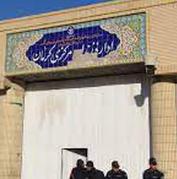 Additionally, on June 16, 2026, two political prisoners of the January 2026 uprising, identified as Abolfazl Saeedi and Javad Zamani, were executed in Shahroud. Accordingly, the number of executed prisoners in the month of Khordad (May 22 – June 21, 2026) has reached 134.
The death penalty in Iran is not a tool for achieving justice, but rather a mechanism to spread fear, silence dissenting voices, and consolidate the authoritarian structure of power.
On the other hand, after months of military conflict and the cost it imposed on the lives of the Iranian people, in the past week, the Velayat-e Faqih regime reached an initial understanding with the United States. Based on the published clauses, no attention whatsoever was paid to human rights or the horrific suppression and executions in Iran. This shows that the powers are not thinking of change, and the people must rely on themselves for change, and not on any foreign force or power.
 Amnesty International and Ms. Mai Sato, the UN Special Rapporteur, along with a number of UN experts, warned in separate statements about the disregard for human rights violations in Iran and the continued impunity of violators of the Iranian people’s human rights from international prosecution and accountability.
We declare to awakened consciences, international institutions, human rights advocates, and opponents of the death penalty:
We, the prisoners of the “No to Execution Tuesdays” campaign, who for 126 continuous weeks have protested medieval executions in Iran every Tuesday through hunger strikes and with all our might in prisons across Iran, once again declare that the human rights of the Iranian people, especially prisoners, are non-negotiable. In unison with the general public of Iran, we will defend freedom, equality, and the abolition of the death penalty with our last breath and to the best of our ability.
We request all honorable and conscious people of Iran, as well as the awakened consciences of the world and international human rights organizations, not to remain indifferent to the rising wave of executions in Iran and to act responsibly and effectively to stop this organized crime committed by the ruling religious fascism in Iran.
History has shown that no tyranny has endured by relying on violence, and no regime has been able to permanently silence the people’s voice demanding justice. What will endure is the ideal of freedom, equality, and respect for the right to life and human dignity; values for whose realization the Iranian people have paid a heavy price and continue to insist upon.
The “No to Execution Tuesdays” campaign informs the general public that a group of prisoners in Kerman Prison have also joined this campaign in protest against death sentences, and they go on hunger strike every Tuesday along with other prisoners.
Members of the “No to Execution Tuesdays” campaign are on hunger strike in its 126th week on Tuesday, June 23, 2026, in the following 57 prisons:
Evin Prison (women’s and men’s wards), Qezel Hesar Prison (units 2, 3, and 4), Karaj Central Prison, Fardis Prison in Karaj, Greater Tehran Prison, Qarchak Prison, Khorin Prison in Varamin, Choobindar Prison in Qazvin, Ahar Prison, Arak Prison, Langaroud Prison in Qom, Khorramabad Prison, Borujerd Prison, Yasuj Prison, Asadabad Prison in Isfahan, Dastgerd Prison in Isfahan, Sheiban Prison in Ahvaz, Sepidar Prison in Ahvaz (women’s and men’s wards), Nezam Prison in Shiraz, Adelabad Prison in Shiraz (women’s and men’s wards), Firozabad Prison in Fars, Dehdasht Prison, Zahedan Prison (women’s and men’s wards), Borazjan Prison, Ramhormoz Prison, Behbahan Prison, Bam Prison, Yazd Prison (women’s and men’s wards), Kahnuj Prison, Tabas Prison, Birjand Central Prison, Mashhad Prison, Gorgan Prison, Sabzevar Prison, Gonbad-e Kavus Prison, Qaemshahr Prison, Rasht Prison (men’s and women’s wards), Rudsar Prison, Haviq Prison in Talesh, Azbaram Prison in Lahijan, Dizel Abad Prison in Kermanshah, Ardabil Prison, Tabriz Prison, Urmia Prison, Salmas Prison, Khoy Prison, Naqadeh Prison, Miandoab Prison, Mahabad Prison, Bukan Prison, Saqqez Prison, Baneh Prison, Marivan Prison, Sanandaj Prison, Kamyaran Prison, Ilam Prison, and Kerman Prison.
Week 126
Tuesday, June 23, 2026
#No_to_Execution_Tuesdays_Campaign
#No_to_Execution
Torture
From Torture to Impunity: How the Cycle of Repression Is Reproduced in Iran
On the Occasion of 26 June – International Day in Support of Victims of Torture
June 27, 2026
https://iran-hrm.com/2026/06/27/from-torture-to-impunity-iran-cycle-of-repression/
The question today is no longer whether torture exists in Iran.
Over the past several years, reports issued by the United Nations Special Rapporteur on the situation of human rights in Iran, the UN Secretary-General, the Independent International Fact-Finding Mission established by the UN Human Rights Council, Amnesty International, and numerous international media outlets have consistently documented the use of torture, forced confessions, prolonged solitary confinement, sexual violence, denial of medical care, and other forms of cruel, inhuman, or degrading treatment against detainees.
 The findings of the Independent International Fact-Finding Mission concluded that, during the suppression of nationwide protests, serious human rights violations—including arbitrary arrests, physical and psychological torture, sexual violence, and forced confessions—were committed in a widespread and systematic manner against protesters. The Mission further stated that some of these violations may amount to crimes against humanity under international law.
Likewise, successive reports by the UN Special Rapporteur have expressed grave concern over the continued use of torture, deaths in custody, deliberate denial of medical treatment, and other forms of ill-treatment, while repeatedly highlighting the absence of independent investigations and effective accountability for perpetrators.
In light of this extensive body of documentation, the central question is no longer whether torture occurs in Iran. Rather, the fundamental issue is why, despite overwhelming evidence, these practices continue unabated and why victims continue to face enormous obstacles in proving the abuses committed against them.
This report therefore adopts a different perspective. Instead of examining torture solely as a series of individual violations, it analyzes it as part of an institutional mechanism that begins with arbitrary arrest, continues through interrogation and unfair judicial proceedings, is reinforced by denial of medical care and the concealment of evidence, and ultimately sustains itself through impunity and the absence of accountability.
From SAVAK to the Islamic Republic: The Continuity of a Repressive Legacy
Torture in Iran did not begin with the establishment of the Islamic Republic.
During the final decades of the Pahlavi monarchy, the State Intelligence and Security Organization (SAVAK) became internationally notorious for its systematic use of arbitrary detention, physical and psychological torture, and forced confessions against political opponents. Figures such as Parviz Sabeti remain deeply embedded in the collective memory of former political prisoners from that era.
The 1979 Revolution promised an end to torture and authoritarian rule. Yet the historical record of the past four decades demonstrates that this cycle was not dismantled; rather, it evolved into a broader and more sophisticated system of repression.
While differing accounts exist regarding the transfer of certain former security personnel into the post-revolutionary security apparatus, what is clearly established by historical evidence is the continuity of repressive methods. Arbitrary detention, prolonged solitary confinement, torture, forced confessions, unfair trials, and the deliberate creation of public fear have remained defining characteristics of state repression.
In this sense, what endured after the Revolution was not merely the survival of individual actors but the preservation of a security doctrine in which torture is treated not as an exceptional abuse but as an instrument for suppressing political dissent.
When Torture Evolves from Individual Abuse into an Institutional Practice
What has repeatedly emerged from political cases over the past four decades is not simply the occurrence of torture but the reproduction of a recurring pattern.
That pattern begins with arbitrary arrest, continues through coercive interrogations, forced confessions, and judicial proceedings that fail to meet international standards of due process, and often ends without any independent investigation or meaningful accountability.
Article 7 of the International Covenant on Civil and Political Rights unequivocally prohibits torture and all forms of cruel, inhuman, or degrading treatment or punishment. Similarly, the Convention against Torture obliges States to conduct prompt, impartial, and effective investigations whenever credible allegations of torture arise. This prohibition constitutes a peremptory norm of international law and admits no exception—not in times of war, political instability, national emergency, or threats to national security.
Despite these unequivocal legal obligations, successive reports issued by the UN Special Rapporteur, the UN Secretary-General, the Independent Fact-Finding Mission, and independent human rights organizations have documented strikingly similar patterns across Iran. These include arbitrary detention, prolonged solitary confinement, denial of access to family members and lawyers of choice, physical and psychological abuse, forced confessions, denial of adequate medical care, and the use of coerced statements during judicial proceedings.
The Independent Fact-Finding Mission concluded that these violations were not isolated incidents attributable to individual officers. Rather, similar practices were documented across multiple provinces and involved different security, intelligence, and judicial institutions. Such consistency is one of the strongest indicators, under international human rights law, of a structural pattern rather than isolated misconduct.
From this perspective, the focus is no longer the conduct of a single interrogator or detention facility. Instead, attention must be directed toward the broader institutional framework whose combined decisions, practices, and omissions allow this cycle of abuse to persist.
Torture Begins Before the First Blow
In many documented cases, torture begins long before physical violence is inflicted.
Reports by the UN Special Rapporteur and the Independent International Fact-Finding Mission indicate that numerous individuals arrested during nationwide protests were held in complete incommunicado detention for days or even weeks. Their families were not informed of their whereabouts, access to independent legal counsel was denied, and all communication with the outside world was deliberately severed.
The Fact-Finding Mission concluded that arbitrary arrests, detention in undisclosed locations, and the widespread use of prolonged solitary confinement formed an integral part of the authorities’ response to public protests. In many instances, these conditions themselves created the environment in which subsequent torture and coercion became possible.
The Istanbul Protocol, the internationally recognized standard for the effective investigation and documentation of torture; identifies prolonged solitary confinement, incommunicado detention, denial of access to legal counsel, independent medical professionals, and family members as conditions that substantially increase the risk of torture and other forms of cruel, inhuman, or degrading treatment.
Accordingly, torture cannot be understood solely as the moment when physical violence occurs. Once a detainee is stripped of legal protection, isolated from the outside world, and deprived of independent oversight, a structure is created that not only facilitates torture but also makes its documentation and subsequent accountability significantly more difficult.
The documented cases of political prisoners such as Motaleb Ahmadian, Gholamhossein Kalbi, Afshin Baymani, Seyed Abolhassan Montazer, Forough Taghipour, Arghavan Fallahi, and many others demonstrate that prolonged solitary confinement, incommunicado detention, sustained psychological pressure, and the denial of fundamental rights have become recurring features of security-related prosecutions in Iran.
Forced Confessions: The Intended Outcome of Torture
An examination of documented political cases demonstrates that torture is frequently employed not merely to inflict suffering or punish detainees, but to produce confessions.
These confessions become the central link connecting arrest, interrogation, prosecution, trial, and ultimately sentencing.
The UN Special Rapporteur, the Independent Fact-Finding Mission, and numerous human rights organizations have documented repeated cases in which detainees—particularly protesters, political activists, and civil society actors—were subjected to severe physical and psychological abuse, threats of execution, intimidation against family members, sexual violence, prolonged solitary confinement, and sleep deprivation in order to force them to sign pre-written statements or participate in recorded “confessions.”
In several documented cases, these coerced confessions were broadcast through state-controlled media before judicial proceedings had even begun, effectively undermining the presumption of innocence and compromising the possibility of a fair trial.
Amnesty International has likewise reported that statements extracted under torture or other forms of coercion have repeatedly been admitted as evidence before Iran’s Revolutionary Courts, while allegations of torture raised by defendants have routinely been ignored or dismissed without independent investigation.
Such practices directly violate Article 15 of the Convention against Torture, which obliges States to ensure that any statement established to have been obtained through torture shall not be invoked as evidence in any proceedings.
Yet available documentation indicates that, in numerous Iranian cases, disputed confessions have not only remained part of judicial files but have served as the principal basis for lengthy prison sentences and even death penalties.
Cases involving Mansour Dehmardeh, Gholamhossein Kalbi, Seyed Abolhassan Montazer, Behrouz Ehsani, Mehdi Hassani, Hamid Hossein-Nejad Heydaranlou, and other political prisoners have drawn repeated concern from human rights organizations regarding allegations of torture, coerced confessions, and serious violations of fair trial guarantees.
The End of Interrogation Is the Beginning of the Struggle for Truth
For many victims, torture does not end when interrogation ends.
In numerous Iranian cases, the next stage consists of preventing victims from proving that torture occurred.
The Istanbul Protocol requires that allegations of torture be documented promptly through independent medical examinations, psychological evaluations, and detailed recording of the victim’s testimony. Independent medical documentation, informed consent, preservation of evidence, and protection of victims constitute essential elements of an effective investigation.
However, reports by United Nations mechanisms and international human rights organizations indicate that victims in Iran have frequently been denied access to independent physicians, medical examinations have been delayed, physical injuries have gone undocumented, and complaints alleging torture have been dismissed without impartial investigation.
The UN Special Rapporteur has repeatedly expressed concern over the absence of independent investigative mechanisms capable of examining allegations of torture and has noted that perpetrators are rarely held accountable.
Similarly, the Independent Fact-Finding Mission concluded that the absence of independent investigations, the lack of accountability, and the persistence of impunity are not isolated shortcomings but integral components of the broader pattern of repression documented in Iran.
For many survivors, therefore, the real struggle begins after they leave the interrogation room—a struggle to preserve evidence, document injuries, and establish the truth of what they endured.
Every delay in recording physical or psychological injuries, every obstacle preventing access to an independent physician, and every complaint dismissed without investigation ultimately reinforces the very system that enables torture to continue.
Medical Deprivation: Torture Continued by Administrative Decision
Torture is not always inflicted through beatings, electric shocks, or physical violence. In many cases, severe physical and psychological suffering is deliberately prolonged through the denial of adequate medical care.
In recent years, the UN Special Rapporteur on the situation of human rights in Iran, the UN Secretary-General, and numerous international human rights organizations have repeatedly expressed concern over the deliberate denial of medical treatment to political prisoners and prisoners of conscience. Their reports emphasize that refusing hospital transfers, delaying specialist treatment, withholding essential medication, or neglecting serious medical conditions—particularly when used as a form of punishment or coercion—may constitute cruel, inhuman or degrading treatment and, in certain circumstances, amount to torture.
The United Nations Standard Minimum Rules for the Treatment of Prisoners (the Nelson Mandela Rules) affirm that prisoners are entitled to the same standard of healthcare available in the community and that all medical decisions must remain independent of security or political considerations.
Nevertheless, numerous documented cases indicate that political prisoners in Iran have been denied access to specialist treatment for months or even years despite clear medical recommendations. In some instances, prisoners have been transferred to hospital only after their health had deteriorated dramatically or when their lives were already in imminent danger.
Cases involving Motaleb Ahmadian, Gholamhossein Kalbi, Afshin Baymani, Forough Taghipour, Arghavan Fallahi, and many other political prisoners illustrate a recurring pattern in which healthcare is transformed from a fundamental human right into another instrument of punishment and coercion.
Why Does This Cycle Continue?
Perhaps the defining characteristic of torture in Iran is not merely its occurrence, but the persistence of impunity.
Article 12 of the Convention against Torture requires States to undertake prompt, impartial, and effective investigations whenever there are reasonable grounds to believe that torture has occurred. Article 13 further guarantees every victim the right to complain and to be protected against intimidation or retaliation.
Successive UN reports concerning Iran, however, have repeatedly concluded that these obligations remain largely unfulfilled. The Independent International Fact-Finding Mission found that the absence of independent investigations, the lack of accountability, and the continued impunity enjoyed by perpetrators are among the principal factors enabling serious human rights violations to recur. It further concluded that the failure to ensure accountability substantially increases the likelihood of future abuse.
Impunity in this context extends far beyond the failure to prosecute individual interrogators. It encompasses the absence of accountability throughout the entire chain of responsibility—from arbitrary arrest and interrogation to prosecutorial decisions, judicial proceedings, prison administration, medical documentation, and the handling of complaints submitted by detainees and their families.
Every allegation of torture dismissed without an independent investigation becomes part of a broader institutional pattern that enables similar abuses to be repeated.
Survivors After Release: Freedom Does Not End Torture
The International Day in Support of Victims of Torture is not only about those who remain behind bars.
For many survivors, torture continues long after their release.
The Istanbul Protocol recognizes that torture leaves profound and lasting psychological consequences, including Post-Traumatic Stress Disorder (PTSD), chronic anxiety, depression, sleep disorders, persistent feelings of insecurity, cognitive impairment, and severe social isolation. For this reason, psychological assessment is considered as essential as physical examination in documenting torture.
Former political prisoners in Iran frequently continue to experience repeated summonses by security authorities, restrictions on employment, pressure against family members, constant fear of re-arrest, and limited access to adequate medical or psychological care.
Freedom from prison therefore does not necessarily mean freedom from torture. For many survivors, imprisonment marks only the beginning of a long struggle with its enduring physical, psychological, social, and economic consequences.
Torture as an Instrument of Fear and the Preservation of Repression
An examination of four decades of documented human rights violations—particularly those committed during the suppression of nationwide protests—demonstrates that torture in Iran cannot be understood merely as a method of extracting confessions or punishing individual detainees.
Instead, arbitrary arrests, prolonged solitary confinement, physical and psychological torture, forced confessions, denial of medical care, unfair trials, severe prison sentences, executions, and the systematic impunity enjoyed by perpetrators form interconnected elements of a broader machinery of repression.
The function of this machinery extends well beyond breaking the will of individual prisoners.
Its broader purpose is to send a powerful message to society: that political dissent, peaceful protest, civic activism, or opposition to state policies may result in arrest, torture, prolonged imprisonment, or even execution.
Viewed in this context, torture is not confined to interrogation rooms. Its consequences are reproduced throughout society by cultivating fear, raising the perceived cost of dissent, and discouraging future public mobilization.
Likewise, the concealment of torture, obstruction of independent documentation, denial of medical treatment, dismissal of victims’ complaints, and the continued impunity of perpetrators are not isolated failures. Together they constitute different components of a single institutional system that sustains repression through intimidation.
Silence in the face of torture—or the failure to hold perpetrators accountable—not only denies justice to individual victims but also reinforces the conditions under which similar violations are likely to recur.
Conclusion
The International Day in Support of Victims of Torture, observed annually on 26 June, commemorates one of the most fundamental principles of international law: the absolute prohibition of torture under all circumstances. No government, public official, political emergency, or national security consideration can justify its use.
The combined findings of the UN Special Rapporteur, the UN Secretary-General, the Independent International Fact-Finding Mission, international human rights organizations, and numerous documented cases of political prisoners in Iran reveal a consistent and recurring pattern: arbitrary arrest, prolonged solitary confinement, physical and psychological torture, forced confessions, denial of medical care, unfair judicial proceedings, severe punishments or executions, and ultimately, impunity for those responsible.
Combating torture therefore requires far more than condemning isolated acts of abuse. It demands independent documentation in accordance with the Istanbul Protocol, unrestricted access to independent lawyers and medical professionals, prompt and impartial investigations, effective remedies for victims, and accountability at every level of the chain of command.
Today, torture in Iran is no longer solely an issue affecting individual prisoners. It has become a matter of society’s collective right to live free from fear.
As long as torture, forced confessions, unfair trials, executions, and impunity continue to function together as instruments of repression, the ultimate victims will not be political prisoners alone, but an entire society deprived of freedom, human dignity, and the fundamental right to peaceful dissent.
Breaking this cycle is therefore not only essential for delivering justice to victims of torture; it is a prerequisite for restoring the rule of law, safeguarding fundamental human rights, and ending impunity for serious human rights violations in Iran.
Selected Documented Cases of Political Prisoners Illustrating Recurring Patterns of Torture in Iran
| Name | Documented Human Rights Violations |
| Motaleb Ahmadian | More than 230 days in solitary confinement, prolonged denial of specialized medical care, physical and psychological abuse, over 15 years of imprisonment without furlough |
| Gholamhossein Kalbi | Fourteen months in solitary confinement, torture to obtain confessions, denial of medical treatment, more than two decades of imprisonment without furlough |
| Afshin Baymani | More than 25 years of imprisonment, denial of medical care, repeated prison transfers, temporary enforced disappearance, continuous pressure |
| Seyed Abolhassan Montazer | Prolonged solitary confinement, physical and psychological torture, denial of fair trial guarantees, risk of execution |
| Mansour Dehmardeh | Electric shocks, severe beatings, forced confession, denial of access to legal counsel, death sentence |
| Behrouz Ehsani | Solitary confinement, allegations of torture, disputed confessions, death sentence |
| Mehdi Hassani | Allegations of torture, coerced confessions, violations of fair trial guarantees, death sentence |
| Hamid Hossein-Nejad Heydaranlou | Torture to extract confessions, threats against family members, denial of defense rights, death sentence |
| Forough Taghipour | Prolonged imprisonment, denial of prison furlough, sustained pressure, denial of adequate medical care (according to documented reports) |
| Arghavan Fallahi | Security-related pressure, denial of prisoners’ rights, restrictions on medical care and family contact (according to documented reports) |
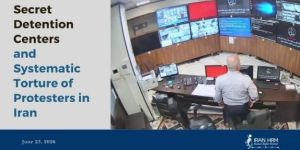
Secret Detention Centers and Systematic Torture of Protesters
Global Neglect of Human Rights Violations in Iran Amid Diplomatic Talks
June 23, 2026
https://iran-hrm.com/2026/06/23/secret-detention-centers-and-systematic-torture-of-protesters/
While global attention remains heavily focused on the political and diplomatic negotiations between Iran and the United States, a critical issue—the severe human rights situation and the ongoing human rights violations in Iran—has been sidelined due to the inaction of the international community.
 Madam Mai Sato, the UN Special Rapporteur on the situation of human rights in the Islamic Republic of Iran, along with a group of independent UN experts, accurately highlighted this crisis. They strictly warned that any final agreement between the US and Iran that overlooks human rights and the fundamental demands of the Iranian people cannot establish a sustainable peace. Accountability, justice, and comprehensive support for victims must be placed at the very center of any negotiations. “A deal that serves geopolitical interests while leaving the Iranian people behind is not a peace agreement worthy of the name,” the experts warned. The experts cautioned that the end of hostilities must not be mistaken for the restoration of rights. “For the Iranian people, that work is yet to begin.”
A matter of profound and continuous concern is the status of those detained during the nationwide protests of January 2026 (Dey 1404). Highly reliable reports recently obtained from inside Iran pull back the curtain on the Islamic Republic’s secret and underground detention centers, where detained protesters are still being held. One of the most acute cases involves clandestine detention facilities run by the regime in the city of Fuman, located in the Gilan Province of northern Iran.
Uncovering the Network of Secret and Unofficial Detention Facilities in Fuman
International bodies are well aware that a significant portion of the detention centers utilized by security agencies in Iran do not fall under the official jurisdiction or supervision of the State Prisons Organization. Over the past four decades, many political, civil, and protest detainees have spent parts of their detention inside facilities managed entirely outside public scrutiny and far from media visibility. These black sites are directly operated by repressive apparatuses, including the Islamic Revolutionary Guard Corps (IRGC) Intelligence, the Ministry of Intelligence (MOIS), and the Law Enforcement Command of the Islamic Republic of Iran (FARAJA).
Being detained in such locations is equivalent to enforced disappearance in the vast majority of cases. Detainees suffer from an absolute deprivation of contact with their families, a total denial of access to legal counsel, and crucially, the complete impossibility of international inspection or monitoring (even if the United Nations possesses the will to do so). Based on precise reports received, at least three parallel security centers are actively involved in the unlawful detention, interrogation, and holding of political prisoners in Fuman and its surrounding areas:
- The IRGC Headquarters on the Entrance Road to Fuman from Rasht (Near the 4 Dokhtaran Square):Since the 1980s, this center has been heavily utilized for brutal interrogations and the confinement of political prisoners and civil activists. Prior to the 1979 revolution, this location was a commercial hotel, which was subsequently repurposed into a high-security stronghold.
- The Fuman Ministry of Intelligence (MOIS) Office on Entezam Street:According to received field reports, a portion of those arrested during protests and individuals facing state-security charges are initially brought to this facility. Following preliminary interrogations and the fabrication of case files, they are transferred to Lakan Prison in Rasht to undergo further intensified pressure.
- The FARAJA-Affiliated Detention Center in the Shahr-e Bijar Area:Another hidden facility used for holding detainees is situated in the Shahr-e Bijar region of Fuman. Reports indicate that certain ordinary prisoners and protesters are kept at this location for a period before being distributed and transferred to other state prisons.
Due to the hidden nature of these detention centers and the absolute denial of access for families and lawyers, there is virtually no reliable information regarding the health and well-being of the detained protesters in these sites. Consequently, their lives are in immediate peril, facing extreme risks of horrific physical torture, systemic medical neglect, and even death under torture—outcomes that are tragically common throughout the history of Iranian prisons.
The dire situation of detained protesters of the January 2026 demonstrations in Amol prison
Fresh reports emerging from Amol Prison present a shocking and deeply concerning illustration of human rights violations in Iran, specifically regarding the conditions of those detained during the nationwide protests of January 2026 (Dey 1404). Dozens of detainees from the cities of Amol, Nour, Chamestan, and Lavij have been held for months under highly unsuitable and subhuman conditions, initially in the quarantine ward and subsequently in the special ward of this facility.
Informed sources have reported severe overcrowding, total deprivation of telephone communication rights, extreme restrictions on access to basic welfare amenities, and deliberate negligence regarding the medical care of prisoners.
According to these accounts, approximately 150 individuals from various cities across the Mazandaran Province are confined within the quarantine ward of this prison. These sources have documented that all communication paths linking the quarantine ward to other sections of the prison have been entirely blocked. Access to this ward is under strict security control; reportedly, only the prison warden is permitted to enter, while other staff members are granted highly restricted access.
During a period when more than one hundred individuals were confined to this section, prison guards routinely disrupted the inmates’ sleep and rest during the night hours by continuously striking cell doors with batons and metallic objects. This psychological torture is deliberately systematically applied to induce anxiety, shatter mental stability, and strip the prisoners of their self-control.
At present, while a small number of detainees have been released on bail or heavy bonds, approximately 30 individuals have been transferred to the prison’s “Special Ward”—a facility where conditions are far more militarized and oppressive than the quarantine section. The prisoners held in this ward are entirely deprived of telephone calls with their families, are denied access to the prison commissary, and have even been stripped of their legal right to fresh air (outdoor exercise). This absolute deprivation has left destructive and irreversible impacts on the physical and psychological health of these individuals.
Medical Neglect as a Mechanism for State-Sponsored Murder Inside Prison
One of the most critical concerns raised regarding Amol Prison is the systematic denial of medical attention to prisoners. According to verified reports, one of the detainees suffered a fractured nose due to severe beatings while being held at an IRGC Intelligence detention center. In protest of his detention conditions and the absolute lack of medical care for his physical injuries, this prisoner embarked on a three-day dry hunger strike (refusing both food and water); however, according to informed sources, he received no effective response or intervention from the authorities.
This calculated medical neglect has previously resulted in fatalities. In mid-May 2026 (Ordibehesht 1405), an inmate identified as “Taghi Salimi” suffered a cardiac arrest and lost his life within Amol Prison. Prior to his passing, he was completely denied access to medical services or a physician, and no effective measures were taken to urgently transfer him to medical facilities outside the prison walls.
Continuous Raids, Enforced Disappearances, and Case-Fabrication in Ahvaz
The brutal raid by Ministry of Intelligence (MOIS) forces on the “Qaleh Chanan” region of Ahvaz on March 9, 2026 (18 Esfand 1404) escalated into one of the bloodiest security operations of recent months in Khuzestan Province. During this operation, at least two local residents, identified as Mahmoud Hasnian (Naseri), son of Mohammad, and Heidar Khayatipour, were killed by direct live fire from security agents, while 14 others were arrested.
More than 100 days after this bloody event, the detainees continue to be held in solitary confinement cells within the Intelligence Department’s detention center, and their families remain in absolute ignorance regarding the health and well-being of their loved ones. Concurrently, reports indicate that the cases of these citizens have been coupled with heavy, fabricated, and ambiguous charges, without the public presentation of any independent evidence whatsoever. As of the compilation of this report, even the bodies of the two deceased individuals (Mahmoud Hasnian and Heidar Khayatipour) have not been returned to their families, a matter that has raised anxiety concerning the situation of the remaining detainees and victims to its peak.
The identities of several of these detainees have been verified as follows:
- Tareq Hasnian
- Bahador Zargani
- Mansour Naseri
- Ahmad Bavifard
- Yousef Hosnian
- Amin Naseri
- Jasem Bavi
- Mohammad Ali Bavi
- Hamid Hosnian
Over the past months, the families of these detainees have been repeatedly summoned, threatened, and placed under intense pressure by security agencies to prevent them from disseminating information. The cases of these citizens are being processed in the Second Branch of the Public and Revolutionary Court of Karun County, presided over by Judge Montazeri, where they face a series of dangerous state-security charges. These charges are cited as “shooting at security forces,” “bombing oil pipelines,” “possession of handmade bombs,” “collaboration with the United States and Israel,” and “disrupting public order.” Nonetheless, no independent document, proof, or evidence corroborating these severe allegations has been publicly released to date.
Legal Concordance of the Report’s Facts with International Treaty Violations
The facts of human rights violations in Iran documented above constitute clear, systematic, and gross violations of international law and binding treaties to which the Iranian government is inherently committed:
- Violation of the Right to Life and Health (The Case of Taghi Salimi and the Deceased in Ahvaz): Substantiated by Article 3 of the Universal Declaration of Human Rights and Article 6 of the International Covenant on Civil and Political Rights (ICCPR), the right to life is non-derogable. The deliberate deprivation of medical treatment for Taghi Salimi and the direct shooting of Mahmoud Hasnian and Heidar Khayatipour constitute a direct violation of these provisions and amount to state-sponsored murder.
- Prohibition of Psychological Torture and Deprivation of Rest (The Case of Amol Prison): Continuously striking cell doors with batons at night and depriving inmates of outdoor exercise in the Special Ward represent a flagrant violation of Article 5 of the Universal Declaration of Human Rights and Article 7 of the ICCPR, both of which absolute prohibit torture and cruel, inhuman, or degrading treatment or punishment.
- Prohibition of Enforced Disappearance and Unofficial Detention Centers (The Case of Fuman and Ahvaz): Holding prisoners in secret facilities in Fuman without access to legal counsel and family constitutes a textbook case of “enforced disappearance.” This violates Article 9 of the ICCPR (prohibiting arbitrary detention) as well as Rules 11 and 93 of the United Nations Standard Minimum Rules for the Treatment of Prisoners (The Nelson Mandela Rules) regarding the necessity of separating prisoners and ensuring their safety.
- Violation of the Right to a Fair Trial (Karun County Court): Indicting 14 Ahvazi citizens with capital charges in Judge Montazeri’s court without presenting evidence, alongside denying them the right to legal defense, is a direct breach of Article 14 of the ICCPR.
Epilogue and Conclusion: An Alarm Bell for the Awakening Conscience of the World
One could continuously document such fundamental facts of human rights violations in Iran against ordinary citizens and political prisoners. However, the foundational and vital question remains: when will the international community cast aside its deadly silence and inaction regarding these atrocities?
If the images of more than 30,000 body bags containing victims in January 2026—an event that sparked a wave of global outrage and revulsion—failed to compel free nations and human rights proponents to take practical, urgent, and deterrent action against human rights violations in Iran, can the exposure of these secret black sites and organized torture shake the world’s conscience? Or will eyes once again be closed to these bitter truths due to economic interests and diplomatic maneuvers?
Today, the international community faces a historical test. Overlooking the arbitrary detention of 50,000 protesters and surrendering them into the hands of torturers in unofficial detention centers strips international laws and standards of all meaning. This passive approach grants any dictatorship a completely free hand to suppress, torture, and massacre its citizens. Silence in the face of the Islamic Republic’s machinery of repression is not only a betrayal of humanitarian values but will also lead to the spread of unbridled fundamentalism, allowing it to spill over the borders of these very nations claiming to defend human rights. The era of diplomatic expressions of regret and issuing statements that result in no practical or deterrent action regarding human rights violations in Iran has passed. The time for practical action, holding the Iranian regime accountable, and bringing the perpetrators of these crimes to justice is today.
Social Suppression
When the Despot Discovers New Methods of Suppression
June 24, 2026
https://iran-hrm.com/2026/06/24/when-the-despot-discovers-new-methods-of-suppression/
 Human creativity is always commendable, up to the point where it is weaponized to engineer new methods of suppression within an authoritarian regime—and in this specific case, within Iran’s religious dictatorship. The containment and eradication of freedoms, especially the freedom of thought through advanced technological, educational, and biometric structures have enabled the regime to exploit accountability vacuums in the international arena, reproducing despotic behavior with impunity. The backdrop to this sinister innovation lies within a global community that has repeatedly failed to hold the Islamic Republic accountable for thousands of human rights violations, leaving it fully aware that its actions face no real consequences.
- “Look into the Camera If You Want Food” (Biometric Surveillance Serving Oppression)
On June 22, 2026, the Rokna News Agency published a report on the Faculty of Natural Resources at the University of Tehran, headlined: “Look into the camera so we can give you food”?!
The article summary states: Students at the University of Tehran’s Faculty of Natural Resources condemn the cafeteria’s new policy as a coercive measure mandating facial recognition to receive meals. This procedure, enforced through rigid biometric authentication and mandatory physical presence at specific hours, effectively deprives numerous students—particularly those engaged in off-site field research or laboratory experiments—of meals they have already paid for in advance.
Under this system, students can only collect their reserved meals by personally appearing for facial scanning during a tight, designated window. If a student is absent due to laboratory conflicts, educational and field research, sampling, illness, or academic scheduling overlaps, their meal is forfeited without any financial refund.
Structural Analysis: On the surface, this appears to be a mundane administrative issue regarding university dining hours. However, a critical question must be presented to the reader: what is the actual objective behind enforcing facial recognition for access to food? Implementing biometric mechanisms in university cafeterias is part of the regime’s new methods of suppression, designed for physical control, daily tracking, and the preemptive containment of student protest potential.
- The New Method of Suppression of Free Thought in Iranian Schools
According to a report by Rokna News Agency dated May 13, 2025, the Islamic Republic’s Minister of Education stated:
“One of the core missions of the Ministry of Education is to develop and promote the culture of sacrifice and martyrdom; we must link students with the martyrs.”
Indoctrinating children—even students as young as eight years old—with this culture is nothing less than the systematic suppression of free thought from early childhood within the Iranian educational system. The minister explicitly acknowledges this strategy by citing an example:
“Referring to the martyrdom of an eight-year-old student, Avin Amir-Kashani, in the Third Imposed War, her diary entries about martyrdom, and her aspiration to become a martyr, the Minister of Education explained: ‘This subject must be integrated into school textbooks to demonstrate that this student possessed an inherent knowledge of martyrdom. It is extraordinary; she kept a diary from the first day of the war until the fifteenth and was martyred that very night. In her diary, she wrote: “I desire to die a martyr just like our Leader.’”
He fully exposes the repressive apparatus of the Ministry of Education by stating:
“Promoting the culture of sacrifice and martyrdom remains a paramount mission of the Ministry of Education. We must mobilize every educational capacity to instill this virtue in the hearts, souls, and minds of our people. The fact that citizens stood resilient in the streets under heavy bombardment was entirely due to this culture and an unwavering belief in these values, which eliminates fear. The soldiers of the Islamic Republic of Iran confronted American hegemony precisely because this virtue is embedded within them. The culture of martyrdom is one of the most critical strategic missions of the Islamic Republic, and we must design comprehensive programming for it. Commemorations and memorials are merely pretexts; our objective is ideological conditioning. The Ministry of Education initiated this during the Third Imposed War by establishing the Taskforce for the Promotion of the Culture of Sacrifice and Martyrdom. Our deputies are fully deployed on the ground. We have directed all available resources toward this initiative, and Farhangian (Cultural) University must integrate this into its core mandate. The students of Farhangian University must serve as the standard-bearers of sacrifice and martyrdom across all educational environments and society at large. We must bind students to the martyrs. We face a heavy mission ahead…”
A stark example of this aggressive promotion of sacrifice and martyrdom in schools is documented in a report by IRNA, the official state news agency, dated June 20, 2026. The headline reads: “The Scientific, Revolutionary, and Jihadist Personality of Martyr Chamran Printed in Student Textbooks.” (https://www.irna.ir/news/86187660/)
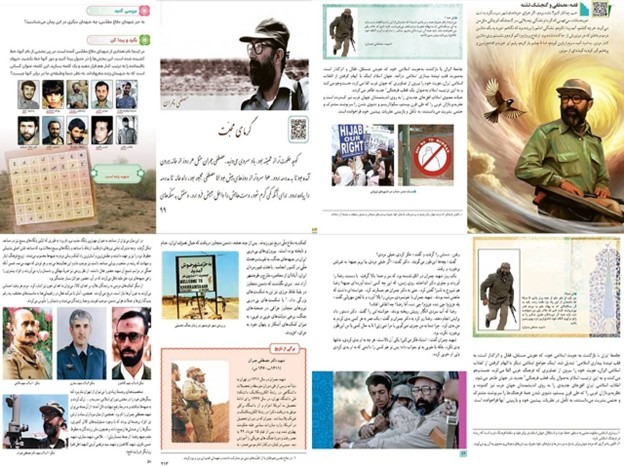
Chamran in school textbooks
Who is Mostafa Chamran? A politician, military commander, and prominent figure of the Islamic Revolution, Chamran was a key founder of the resistance movement in Lebanon and an influential commander during the initial years of the Iran-Iraq war. [Despite being an elite student who pursued higher education in the United States, following the 1979 revolution, and on Khomeini’s direct advice to preserve revolutionary cadres, he traveled to Egypt for advanced military training (Khabar Online – June 22, 2026)]. He subsequently moved to Lebanon at the invitation of Imam Musa Sadr, becoming a co-founder of the Amal Movement (Persian Wikipedia). Following the revolution, he served as Minister of Defense and Deputy Prime Minister for Revolutionary Affairs. With the outbreak of the Iran-Iraq war, he established the Irregular Warfare Headquarters. [Many label him the ‘architect of resistance’ (ISNA – June 21, 2026)].
The institutional message is clear: academic excellence holds zero intrinsic value unless the individual functions as a jihadist element for the Islamic Republic—a dynamic that exposes the precise dissection of the new methods of suppression targeting young minds through the educational curriculum.
- Home Schooling Forbidden: The Rationale Behind the Ban
To advance its new methods of suppression, the Islamic Republic has outlawed home schooling nationwide. This policy systematically strips away any alternative pathway that might shield students from state-sponsored ideological coercion and preserve their fundamental freedom of thought.
Mousa al-Reza Kaffash, Deputy Secretary-General of the Supreme Council of Education, explicitly confirmed this restriction, stating that the Ministry of Education issues no permits or licenses for home schooling activities (Rokna – May 21, 2026).
- State Inaction Toward Narcotics in Schoolsanother New Method of Suppression
Classifying deliberate state inaction regarding drug addiction in schools as a new method of suppression may initially seem unconventional. However, a critical examination of the official statistics published by the Islamic Republic’s own educational authorities exposes the gravity of the crisis:
On May 14, 2026, Rokna News Agency reported:
“Statistics released by educational officials indicate that approximately 136,000 students across the country are currently at risk of drug abuse, with at least 3,600 minors having already experienced narcotic consumption. These metrics document a dangerous decline in the age of first exposure and reflect escalating anxieties over the proliferation of this social harm within school environments… Social experts warn that the infiltration of synthetic and psychotropic drugs into adolescent life poses a direct threat to the health of the next generation. Left unchecked, schools will soon confront a silent yet catastrophic crisis.”
Is the ruling establishment genuinely invested in mitigating this crisis, or is it actively facilitating it? A retrospective look at the January protests—where teenagers were brutally killed by the regime for demanding change—or a glance at recent student demonstrations across major Iranian metropolises following the de-escalation of foreign conflicts, reveals an undeniable reality. Despite the regime’s extensive programming to manufacture compliant, loyalist cadres within schools, the yearning for free thought and personal autonomy remains vibrant among Iran’s youth. What more effective mechanism exists to neutralize this revolutionary potential than enabling systematic substance addiction among these very students? This dynamic unfolds within a context where the dominant trafficking networks supplying narcotics in Iran are widely known to be under the direct oversight of the Islamic Revolutionary Guard Corps (IRGC).
- The Nishat Plan, Jihadist Groups, and the Risk of Ideological Coercion in Public Education: A New Method of Suppression
Official reporting on the “Martyr Ajamian Plan” and the “Nishat Card Campaign” reveals that these initiatives—while publicly framed as infrastructure rehabilitation, welfare support for marginalized youth, and community philanthropy—are structured to enforce deep ideological conformity within public education. According to an IRNA report dated June 17, 2026, the Minister of Education announced that 1,200 educational facilities have been renovated by jihadist groups. He noted that the Martyr Ajamian Plan, driven by a “popular and jihadist” framework, has commenced across 76,000 schools, with an ultimate target exceeding 100,000 facilities.
In the same report, the Minister characterized the school as “the empowering core of a neighborhood,” emphasizing that the school environment must serve as “the manifestation of the people’s identity and devotion to the homeland.” He dictated that maps, the state flag, and images representing state-sponsored street rallies and nocturnal gatherings must be painted on school walls. This rhetoric extends far beyond physical renovation; it represents a calculated effort to transform public schools into visual conduits for the regime’s official political narrative. Under international human rights benchmarks, a school must remain a secure, neutral, and pluralistic sanctuary that nurtures critical thinking, personal growth, and a child’s freedom of thought—not a venue for institutionalized political indoctrination.
The secondary component of this program, the “Nishat Card Campaign,” is presented by state media as a welfare mechanism to identify and assist underprivileged students in marginalized areas. The Minister of Education stated that 500,000 students were registered in the initial phase to receive these cards, with expansion plans targeting one million, and eventually two million students across the lowest four income deciles. While financial assistance to vulnerable children aligns with the right to equal educational access, intertwining social welfare with jihadist structures and ideological state apparatuses heightens the risk of conditioning aid upon ideological compliance.
The human rights implications become starker when reports from the Pana News Agency regarding the Educational Justice Headquarters are cross-referenced with IRNA’s data. Pana reports indicate that the Educational Justice Headquarters operates explicitly to “implement the Supreme Leader’s directives” and “realize the Fundamental Reform Document of Education,” noting that 15,000 student-led jihadist groups operate under direct teacher supervision. Furthermore, another Pana report outlines the operational involvement of entities such as the Basij Construction Organization, the Mostazafan Foundation, and the Executive Headquarters of Imam’s Directive (Setad) in school-centered initiatives. These sources confirm that the Nishat Plan and its offshoots are not benign welfare or infrastructure projects; they are integrated components of a broader sovereign and ideological state network.
Under international human rights standards—particularly Articles 13, 14, and 29 of the UN Convention on the Rights of the Child (CRC) and Article 13 of the International Covenant on Economic, Social and Cultural Rights (ICESCR)—education must foster the free development of a child’s personality, respect for human rights, and the capacity for independent thought, conscience, and religion. The principle of the “acceptability of education” mandates that educational content remains free from forced political or religious dogmatism. Within this framework, three distinct areas of the Nishat Plan stand in direct violation of international standards: cultural-educational programming anchored in the Fundamental Reform Document, extracurricular activities led by jihadist groups, and the structural infiltration of ideological state organs into public schools. Consequently, any program deployed within a school—regardless of its branding as welfare or support—must be scrutinized regarding its political neutrality, voluntariness, institutional transparency, and the best interests of the child.
- First:The cultural-educational initiatives under the Nishat Plan, by referencing the “educational spheres” of the Fundamental Reform Document, serve as vehicles for specific religious, moral, and socio-political doctrines. These domains demonstrate that the plan is not restricted to recreation, but functions as a platform to transmit the official tenets of the ruling establishment. This structure conflicts with Article 14 of the CRC (freedom of thought, conscience, and religion) and Article 13 of the ICESCR regarding the acceptability of education.
- Second:The mobilization of jihadist groups in school maintenance and extracurricular activities—explicitly coupled with state rhetoric surrounding “jihadist values” and the “Leader’s directives”—blurs the boundary between public service and political conditioning. Official sources detailing the deployment of 15,000 student jihadist groups under teacher management reveal that these programs expose minors to state-sanctioned political socialization. The core issues here are the absence of free choice, the normalization of ideological entities within sanctuaries of learning, and the exploitation of extracurricular activities for political conditioning. This configuration infringes upon the child’s right to freedom of thought, the parents’ right to guide their child’s education, and the absolute requirement of school neutrality.
- Third:The institutional integration of bodies like the Educational Justice Headquarters, the Basij Construction Organization, the Mostazafan Foundation, and Setad in school execution carries distinct human rights implications. Official reports indicate that their partnership in the Martyr Ajamian Plan and Nishat-affiliated programs binds public education to entities whose primary mandate is the propagation of state orthodoxy. This institutional presence undermines educational independence, compromises political neutrality, and facilitates ideological encroachment into the learning environment.
Furthermore, the large-scale registration of impoverished minors to issue Nishat cards demands absolute transparency regarding data collection, storage protocols, institutional access to children’s private data, and independent oversight. When welfare initiatives targeting minors are executed in tandem with security or semi-governmental apparatuses, the risk of exploiting economic vulnerability for political or value-oriented penetration intensifies, threatening the dignity of children and violating the principle of non-discrimination.
In conclusion, the Nishat Plan and its associated initiatives, including the Martyr Ajamian Plan, cannot be evaluated simply as civil or humanitarian programs. Official sources, including IRNA’s report of June 17, 2026, and Pana reports on the Educational Justice Headquarters, demonstrate that these programs operate within an infrastructure bound to the regime’s ideological structures. While the Nishat Plan may encompass structural upgrades and support for marginalized youth, its execution design places it in direct tension with international standards of neutral education. The initiative accelerates the risk of forced political indoctrination, reduces school autonomy, restricts children’s freedom of thought and parents’ right to choose, and remains incompatible with the concept of the school as a neutral space. Therefore, these programs must be subjected to rigorous scrutiny by international human rights bodies regarding the right to neutral education, children’s freedom of thought, parental rights, the principle of non-discrimination, the dignity of underprivileged students, and the autonomy of educational environments.
Sources Referenced:
- IRNA – June 17, 2026:Minister of Education: 1,200 educational facilities renovated by jihadist groups nationwide.
- PANA – March 3, 2024:Justice in the style of the 13th government with a jihad spanning Iran; 17 transformative actions of the Educational Justice Headquarters in the last two years.
- PANA – April 14, 2024:“Educational Justice Program of the Ministry of Education” to be approved and notified soon.
Conclusion and Executive-Legal Mechanisms (Human Rights in Action)
The trajectory pursued by the ruling establishment—wherein welfare infrastructure, educational institutions, biometric surveillance, and even structural social harms (such as the orchestrated proliferation of drug addiction) are systematically weaponized as new methods of suppression—demands a global counterstrategy that transcends symbolic diplomatic resolutions or rhetorical condemnations. The tangible reality in Iran demonstrates that the regime’s strategic apparatus is actively engineering sophisticated mechanisms designed to impose rigid “biometric-security controls and systematic ideological coercion” upon the daily existence of school and university students, thereby systematically eradicating the foundational right to freedom of thought.
To effectively dismantle these modernized patterns of state oppression, the international community needs to pursue concrete, enforceable legal and executive actions:
1-International Criminalization and Documentation of Weaponizing Welfare and Biometrics for Suppression
Human rights organizations and international monitoring bodies need to formally register the mandatory facial-recognition policies in universities, alongside the conditioning of basic food provisions on security check-ins, as severe breaches of the right to privacy under Article 17 of the International Covenant on Civil and Political Rights (ICCPR). International technology firms and developers of biometric AI algorithms need to be legally bound to prevent the direct, indirect, or intermediary sale and transfer of facial recognition technologies to any repressive state apparatus in Iran.
2-Formal Escalation of Home-Schooling Bans to the UN Special Rapporteur on the Right to Education
The systematic obstruction of alternative educational pathways (such as home schooling), designed to maintain an absolute state monopoly over children’s minds and inject state doctrines of militancy and martyrdom, constitutes a direct violation of Article 13(3) of the International Covenant on Economic, Social and Cultural Rights (ICESCR)—which guarantees the liberty of parents to ensure the religious and moral education of their children in conformity with their own convictions. This domestic ban must be treated as a distinct legal violation and formally escalated to the UN Special Rapporteur on the Right to Education to pressure the regime into rescinding its restrictive decrees.
3-Enforcing Accountability on Parallel and Quasi-Governmental Entities in Educational Funding Chains
Entities such as the Executive Headquarters of Imam’s Directive (Setad), the Mostazafan Foundation, and the Educational Justice Headquarters—which act as the primary financial pillars for these new methods of suppression—must be subjected to exhaustive, sector-specific international banking and logistical sanctions under counterterrorism and human rights violation frameworks. They must be legally blocked from utilizing structural development or civil renovation projects as a cover to advance the systematic ideological conditioning of minors.
4-Establishment of an Independent International Commission of Inquiry into Orchestrated Narcotic Proliferation in Schools
It is essential that The World Health Organization (WHO) and the United Nations Office on Drugs and Crime (UNODC), in coordination with independent non-governmental organizations, investigate the influx and broad distribution of synthetic psychotropic substances within Iranian schools. This phenomenon, enabled by the deliberate inaction or complicity of military units like the Islamic Revolutionary Guard Corps (IRGC), must be documented as a deliberate strategy of non-military warfare against the youth. The catastrophic metric of 136,000 endangered students must be presented before international tribunals as a case of state-sponsored public health degradation and biological subjugation.
The right to an education free from forced indoctrination and the right to personal privacy are non-negotiable pillars of human dignity. The conversion of classrooms into ideological barracks and universities into biometric detention hubs requires structural sanctions against executing institutions, international supply-chain prohibitions, and binding processes of international judicial accountability.
Poverty
Living on the Edge of Survival – Part I
Poverty, Inflation, and the Erosion of Purchasing Power in Iran
June 22, 2026
https://iran-hrm.com/2026/06/22/living-on-the-edge-of-survival-part-i/
 Rising living costs, widening gaps between income and household expenses, expanding poverty, and growing pressure on vulnerable populations across Iran
Between 2024 and 2026, the continued rise in living costs and the rapid increase in the prices of goods and services placed growing pressure on Iranian households. Official statistics, statements by government officials, assessments by international organizations, and first-hand accounts from citizens all point to a consistent trend: the gap between income and the cost of living has steadily widened.
Under these conditions, poverty is no longer merely an economic indicator. For millions of people, it has become a daily reality that directly affects access to food, housing, healthcare, education, and other basic necessities. The economic crisis has increasingly extended beyond macroeconomic indicators and entered the everyday lives of ordinary citizens.
The Poverty Line and the Growing Gap Between Income and Living Costs
“The poverty line for a family of four has exceeded 550 million rials (55 million tomans) per month.”
This assessment, made by labor market expert Hamid Haj Esmaeili, is among the clearest indicators of the widening gap between household income and living expenses in contemporary Iran. While economic estimates place the poverty line above 55 million tomans per month, average wages remain significantly below the level required to meet basic living costs.
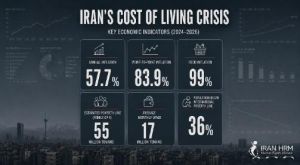 This gap is not merely an economic statistic. For millions of households, it translates into a continuous decline in purchasing power and increasing difficulty in meeting essential needs. Expenses that were once considered part of ordinary life have become daily concerns for a growing number of citizens; from purchasing food and paying rent to covering healthcare and educational costs.
The impact of economic hardship is visible not only in national indicators but also in household survival strategies. Field reports and case studies indicate that increasing numbers of families have been forced to eliminate non-essential expenses, reduce food consumption, postpone medical treatment, borrow money to pay rent, and work multiple jobs simultaneously. In some cases, economic pressure has contributed to severe social crises.
Warnings about declining purchasing power have not been limited to economists. Government officials and members of parliament have also acknowledged the widening gap between income and living costs.
Nasrollah Pejmanfar, Chairman of the Parliament’s Article 90 Commission, warned during discussions on the 2025 state budget:
“A 20 percent salary increase has been proposed while inflation is projected at 33 percent. This means that compensation levels have not been adequately addressed in the budget bill, and the livelihood problems of government employees will certainly increase.”
Several months later, Mojtaba Yousefi, spokesperson for Parliament’s Budget Consolidation Commission, stated:
“With the budget submitted by the government, employees’ purchasing power will decline by 25 percent next year.”
Asad Salehi, a member of the Supreme Labor Council, also commented on workers’ living conditions:
“The gap between workers’ wages and actual market prices has deepened year after year, and the purchasing power of this segment of society continues to decline.”
These statements demonstrate that concerns regarding declining purchasing power and rising economic pressure are reflected not only in international assessments and economic analyses, but also in the statements of officials and institutions within Iran itself.
Official data published by the Statistical Center of Iran indicate that annual inflation reached approximately 57.7 percent in May 2026. During the same period, point-to-point inflation was reported at approximately 83.9 percent, meaning that the cost of purchasing a similar basket of goods and services had nearly doubled compared to the previous year.
The International Monetary Fund (IMF) has also warned that Iran’s inflation rate could reach approximately 68.9 percent in 2026, placing the country among those experiencing the highest inflation rates in the world.
The burden of inflation has not been distributed equally across society. According to data from the Statistical Center of Iran, annual inflation for the second income decile reached approximately 50.4 percent, compared with 46.3 percent for the tenth income decile. This disparity indicates that inflation exerts its greatest pressure on households with the fewest financial resources. Because low-income households spend a larger share of their income on food, housing, energy, and transportation, rising prices have had a disproportionately severe impact on their daily lives.
At the same time, official reports and statements by domestic experts point to expanding poverty, declining purchasing power, and growing difficulty in accessing necessities.
Ahmad Meydari, Iran’s Minister of Cooperatives, Labor and Social Welfare, acknowledged in January 2025 that preserving workers’ purchasing power had become one of the country’s most pressing economic policy challenges. He warned that the continuation of inflationary trends could further reduce the purchasing power of working-class households.
The expansion of poverty among women-headed households presents particularly alarming dimensions. According to data released by the Iranian Welfare Database, approximately 55 percent of women-headed households fall within the country’s poorest income decile. Women-headed households now account for more than one-fifth of all households in Iran, while many of these women work in informal, low-income occupations without stable social protection or long-term economic security.
International Assessments: A Broader Picture of Economic Hardship
Assessments by international organizations also point to intensifying economic pressure on Iranian households.
In its latest estimates, the World Bank reported that approximately 36 percent of Iran’s population lives below the international poverty line. This figure highlights the vulnerability of a significant portion of society to economic shocks and rising living costs.
The World Bank has further noted that low-income households have borne the heaviest burden of food inflation and housing costs. Rising prices for food and rent have disproportionately affected vulnerable groups, further reducing their ability to meet basic needs.
In its April 2026 World Economic Outlook, the International Monetary Fund (IMF) warned that Iran’s inflation rate could reach approximately 68.9 percent, placing the country among the nations experiencing the highest inflation levels worldwide.
Assessments by the United Nations Development Programme (UNDP) indicate that vulnerable households in Iran spend approximately 45 percent of their total consumption expenditure on food. As a result, increases in food prices directly affect both the quality and quantity of their diets.
The United Nations High Commissioner for Refugees (UNHCR), in its assessment of conditions in Iran, has referred to a “cost-of-living crisis,” emphasizing that rising prices for essential goods, housing, utilities, and energy have made access to basic necessities increasingly difficult for many households. The agency warned that a significant number of families are living at or near subsistence levels.
The International Labour Organization (ILO) has likewise warned that rising prices and declining real incomes are placing growing pressure on household living standards and workers’ purchasing power. According to the organization’s assessment, the continuation of inflationary trends could further reduce workers’ real incomes and deepen the economic vulnerability of low-income groups.
The United Nations Development Programme has also estimated that approximately 39 percent of Iran’s employed workforce operates within the informal economy. Workers in this sector typically lack job security, social insurance coverage, and effective social protection mechanisms, leaving them particularly exposed to economic shocks.
Taken together, the assessments of international organizations present a picture consistent with official data and domestic statements: a society in which a substantial share of the population faces rising living costs, declining purchasing power, and increasing difficulty in accessing basic necessities.
These findings extend beyond economic indicators alone. Field reports from different regions of Iran suggest that rising living costs, declining purchasing power, and growing economic uncertainty have become part of the daily reality of millions of households.
The Human Impact of the Crisis
Behind every economic indicator are individuals whose lives are directly shaped by these developments.
Sanaz, a woman-headed household living in eastern Tehran, described the collapse of her income in stark terms:
“From June 10 to July 6, I earned only two million tomans.”
Zahra, a street vendor working in the Tehran metro system, spoke of the emotional toll of economic hardship:
“My sense of loneliness never ends. Sometimes I feel as if I have been abandoned in a deep well with no rope to climb out.”
Shiva, a university graduate in Persian literature who turned to ride-hailing work to support herself, explained:
“For two or three weeks, work completely dried up. I had to borrow money from my brother.”
The consequences of economic pressure extend beyond declining income. Nader, a 42-year-old worker in Iran’s film industry, lost his job in early 2026 while his wife’s online business income also disappeared. The family exhausted its savings paying rent before eventually being forced to leave their rented home and move in with relatives in another city.
As Nader explained:
“We were using our savings to pay the rent, but if we had continued, there would have been nothing left for food or medical expenses.”
In another documented case, a dismissed worker from the Marvdasht Petrochemical Complex, unemployed for more than two months, reported that financial hardship had forced him and his elderly mother to reduce their food consumption to a single meal per day.
He stated:
“I have an elderly mother, and I feel ashamed in front of her. We have reduced our meals to one a day, and even that is difficult to afford.”
Conclusion
The evidence presented in this chapter indicates that rising living costs, declining purchasing power, and widening gaps between income and essential expenses have increased economic pressure on many Iranian households. For a growing number of families, these pressures extend beyond financial hardship and increasingly affect access to basic necessities.
One of the most visible consequences of this trend has been its impact on food consumption and household nutrition. The following chapter examines food inflation, food insecurity, and the implications of rising food costs for the right to adequate food in Iran.
Living on the Edge of Survival – Part II
June 23, 2026
https://iran-hrm.com/2026/06/23/living-on-the-edge-of-survival-chapter-2/
Food Security and the Right to Food
 If inflation and declining purchasing power are the first visible signs of an economic crisis, its most tangible effects can be observed at the family dining table. Between 2024 and 2026, food prices in Iran continued to rise at a pace exceeding that of many other goods and services, placing severe pressure on low-income households. For many families, the issue was not merely that food had become more expensive; it was that access to an adequate, diverse, and nutritious diet had become increasingly difficult.
Official reports, assessments by international organizations, and testimonies from citizens indicate that food insecurity has become one of the most significant social and human consequences of Iran’s economic crisis.
“Sometimes we could not even afford plain bread.”
This testimony from a tenant woman living in Eslamshahr offers a human portrait of a crisis that is also reflected in official statistics and international assessments. Between 2024 and 2026, rising food prices became one of the most serious pressures on household livelihoods in Iran, making access to sufficient and nutritious food increasingly difficult for lower-income groups.
In its April 2026 Poverty and Macroeconomic Outlook report, the World Bank estimated food inflation in Iran at approximately 99 percent in February 2026; a figure substantially higher than overall inflation during the same period. This gap demonstrates that the actual pressure on household food consumption, particularly among low-income families, is significantly greater than what general inflation indicators alone suggest.
The Food and Agriculture Organization of the United Nations (FAO), in its assessment of 10 June 2026, reported that retail wheat flour prices in Tehran increased by approximately 170 percent in April 2026 compared with the previous year, while rice prices rose by approximately 220 percent. The same report recorded a roughly 140 percent increase in the government’s guaranteed wheat procurement price.
Field evidence suggests that rising food prices have not merely altered consumption patterns but have also pushed some households toward dependence on credit purchases. One report from Tehran described how several young women divided responsibility for obtaining food on credit: one purchased cooking oil and tomato paste on account, another obtained bread and cheese through informal credit arrangements, while a third was responsible for acquiring legumes. Such arrangements illustrate the survival strategies adopted in response to escalating food costs.
These figures indicate that Iran’s food crisis is not simply the result of general inflation. Some of the most basic food staples, including flour, bread, rice, and cereals, have experienced price increases far exceeding overall inflation rates. For households that devote a substantial share of their income to food, such increases translate directly into reduced purchasing power and fewer dietary choices.
According to the United Nations Development Programme (UNDP), vulnerable households in Iran allocate approximately 45 percent of their total consumption expenditure to food. The organization has warned that elevated food inflation increases the likelihood that vulnerable families will either reduce the quality of their diets or consume less food overall.
Field reports further indicate that many low-income households have gradually removed nutritionally valuable foods from their consumption baskets. Labor and economic experts have repeatedly warned that meat, dairy products, fruit, and other key sources of protein and micronutrients have become infrequently consumed or increasingly inaccessible for a growing number of families.
From a human rights perspective, these warnings carry particular significance. When families are forced to reduce either the quality or quantity of food they consume in order to cope with rising prices, the crisis becomes more than a matter of income and inflation. It becomes a question of the right to adequate, safe, and nutritious food.
Article 11 of the International Covenant on Economic, Social and Cultural Rights recognizes the right of every individual to adequate food and an adequate standard of living. Sharp increases in food prices, combined with declining purchasing power, have seriously undermined the realization of this right for segments of Iranian society.
Food Insecurity and Malnutrition: From Economic Pressure to Physical Harm
Rising food prices do not merely reduce household purchasing power. When families are compelled to reduce either the quantity or quality of the food they consume, the consequences can directly affect health, child development, and overall well-being.
The United Nations Development Programme (UNDP) has warned that high food inflation in Iran may push vulnerable households toward lowering the quality of their diets or reducing overall food consumption. This concern is particularly significant for families that already spend a large share of their income on food and therefore have limited capacity to absorb further price increases.
Assessments by UNICEF indicate that food insecurity has become a serious concern in parts of Iran. In reports concerning Sistan and Baluchestan Province, UNICEF has identified food insecurity as one of the region’s principal challenges and noted that significant numbers of children suffering from acute malnutrition have required treatment and nutritional support.
Women-headed households, who account for approximately 22.5 percent of all households in Iran, are among the groups most vulnerable to food insecurity. Approximately 55 percent of these households fall within the country’s poorest income decile, increasing their exposure to rising food prices and declining living standards.
According to UNICEF data, Sistan and Baluchestan records the highest rate of child malnutrition in the country, estimated at approximately 11.7 percent. These figures demonstrate that the consequences of the economic and food crisis are not evenly distributed across Iran and that economically marginalized regions face substantially greater risks.
The World Food Programme (WFP) has also warned that sharp increases in food prices weaken households’ ability to cope with future economic shocks. Families that already devote most of their income to food possess far fewer resources to absorb the effects of illness, unemployment, rent increases, or other economic disruptions.
The implications of food insecurity extend beyond nutrition alone. Food insecurity can contribute to increased vulnerability among children, deteriorating public health outcomes, reduced educational performance, and growing pressure on low-income families. For this reason, many international organizations regard access to sufficient and nutritious food not merely as a welfare concern but as a fundamental human right.
Available evidence suggests that Iran’s food crisis cannot be understood simply as a matter of more expensive groceries. For a portion of the population, particularly those living in deprived regions and low-income households, the crisis has become directly linked to health, child development, and access to minimum standards of living.
Domestic Warnings: When the Public’s Food Basket Becomes a Subject of Official Concern
The rise in food prices and the decline in household purchasing power have not been highlighted solely in international reports. Government officials, members of parliament, labor representatives, and domestic experts have repeatedly warned about the livelihood consequences of these developments.
Asad Salehi, a member of Iran’s Supreme Labor Council, stated:
“The gap between workers’ wages and actual market prices has deepened year after year, and the purchasing power of workers continues to decline.”
These remarks come at a time when food prices have risen faster than many other categories of goods and services. For households that devote a substantial share of their income to food, declining purchasing power translates directly into reduced access to adequate and nutritious nutrition.
A baker in Tehran reported that some customers can no longer afford a full loaf of bread and instead ask to purchase half a loaf or even a smaller portion of traditional sangak bread. According to his account, many of these customers come from low-income or salaried households whose purchasing power has been eroded by rising living costs.
Taken together, assessments by the World Bank, UNDP, FAO, UNICEF, and the World Food Programme, alongside statements by domestic officials and experts, present a broadly consistent picture: rising food costs have placed disproportionate pressure on lower-income households and have increasingly challenged the food security of segments of Iranian society.
For many families, the issue is no longer simply that food has become more expensive. The deeper concern is the growing difficulty of securing an adequate, diverse, and nutritious diet; a condition whose consequences extend beyond household economics and affect health, child development, and overall quality of life.
Conclusion
The evidence presented in this chapter indicates that the consequences of rising food prices extend far beyond household consumption patterns. Food insecurity increasingly affects public health, family well-being, and overall living standards, raising broader concerns regarding the right to adequate food.
At the same time, the pressure created by rising food costs leaves fewer resources available for housing, healthcare, and other essential needs. The next chapter examines how these pressures contribute to housing insecurity, barriers to medical care, household debt, and the survival strategies adopted by many Iranian families.
Living on the Edge of Survival – Part III
Housing Crisis, Healthcare Costs, Debt, and Survival Strategies in Iran (2024–2026)
June 24, 2026
https://iran-hrm.com/2026/06/24/living-on-the-edge-of-survival-part-iii/
 For many Iranian households, the consequences of the economic crisis no longer end at the dining table. When income is no longer sufficient to meet everyday expenses, economic pressure spreads into other dimensions of life; from securing shelter and paying rent to accessing healthcare, maintaining employment, and preserving a minimum level of economic security.
Under such conditions, any economic shock can have consequences far beyond a decline in purchasing power. The loss of a job, a sudden increase in rent, illness within the family, or the disappearance of a source of income can become more than a financial setback. For many households, such events can trigger a crisis that affects the very foundations of daily life.
In some cases, economic hardship has resulted in tragic responses.
Ahmad Baladi, a 20-year-old resident of Ahvaz, set himself on fire in front of municipal officials after authorities demolished his family’s small business, which represented their sole source of income. He died several days later from severe burn injuries. The case attracted widespread public attention and became a symbol of the vulnerability of households whose livelihoods depend on informal economic activities and daily earnings.
Although exceptional and tragic, this incident occurred within a broader context in which millions of households face rising housing costs, barriers to healthcare, job insecurity, indebtedness, and a continuing erosion of purchasing power.
Housing Costs and the Growing Burden on Households
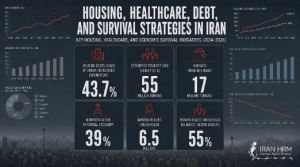 According to official data, approximately 43.7 percent of urban household expenditures in Iran are devoted to housing, fuel, and utilities. This represents the largest category of household spending and demonstrates that housing exerts a greater influence on family livelihoods than any other area of expenditure.
This situation exists at a time when economic estimates place the poverty line for a family of four above 55 million tomans per month, while average wages remain substantially below that threshold. As a result, a growing share of household income is absorbed by rent and housing-related expenses.
Between 2024 and 2026, rising rents and housing costs placed increasing pressure on both low-income households and the middle class. For many families, the issue was no longer home ownership; it became the struggle to remain in their existing homes and continue paying monthly rent.
The consequences of this trend are visible in the daily lives of tenants across the country. A 45-year-old woman living in Tehran’s Bahar neighborhood, who had lived independently for more than two decades, reported that after her monthly rent rose to 400 million rials, she could no longer afford to maintain an independent household and was forced to search for a roommate for the first time in her life.
As she explained:
“I lived alone for more than twenty years, but now I am forced to change my standards of living.”
Official and media reports indicate that rising housing costs have pushed some households toward more peripheral neighborhoods, smaller housing units, or areas with fewer services and resources. Under these conditions, housing is no longer merely an economic commodity. It has become one of the most important determinants of household welfare and security.
In some cases, the rising cost of living has forced residents to leave major cities altogether. A veteran editor in Iran’s publishing sector, who had lived and worked in Tehran for more than twenty years, reported that in 2026 he was compelled to leave the capital and return to his hometown of Kashan because of rising housing costs and declining employment opportunities. His experience reflects a broader pattern of reverse migration driven by the growing cost of living in Tehran.
From Homeownership to Simply Keeping a Roof Overhead
The rising cost of housing has affected more than the ability of families to purchase homes. For many households, maintaining their existing place of residence has itself become an increasing challenge.
The United Nations High Commissioner for Refugees (UNHCR) has described rising housing costs as part of Iran’s broader “cost-of-living crisis” and warned that increases in the prices of essential goods, services, and rent have made access to basic necessities more difficult for many households.
The growing share of household budgets devoted to housing has consequences extending well beyond shelter. When a substantial portion of income is consumed by rent and housing-related expenses, fewer resources remain available for food, healthcare, education, and other essential needs. As a result, the housing crisis becomes intertwined with broader patterns of poverty and economic deprivation.
Media reports and social assessments in recent years indicate the expansion of settlement in peripheral areas and increasing pressure on low-income households to find housing that matches their limited financial resources. For many families, the choice between housing quality, access to services, and affordability has become part of everyday reality.
Informal Settlements and Urban Marginalization: The Hidden Cost of the Housing Crisis
The burden of rising housing costs extends beyond increasing rents. For a portion of Iranian society, it has resulted in forced relocation to peripheral neighborhoods, informal settlements, and underserved urban areas.
According to officials responsible for urban regeneration programs, between 7 and 8 percent of Iran’s population lives in informal or marginal settlements. These areas are often characterized by inadequate infrastructure, limited public services, insufficient educational facilities, weak transportation networks, and restricted access to healthcare.
The expansion of informal settlements is not merely a reflection of housing shortages. It is also an indicator of the widening gap between household income and the cost of living. When rent absorbs a substantial share of household resources, families are often compelled to relocate to less expensive areas with fewer services and opportunities.
Homelessness: The Most Severe Form of Housing Deprivation
At the lowest end of this cycle, some individuals and families face the risk of losing shelter altogether.
Although official statistics on homelessness in Iran remain limited and fragmented, media reports and social assessments in recent years have documented growing concern regarding both visible and hidden forms of homelessness. These include living in overcrowded shared rooms, relying on relatives for extended periods, residing at workplaces, or using public spaces as temporary shelter.
In some cases, households have been forced to adopt arrangements that were previously considered outside the norm in order to avoid homelessness. Shared living arrangements among unrelated adults, returning to parental homes in middle age, long-term residence with relatives, and the subdivision of small housing units among multiple families have all emerged as coping mechanisms in response to rising housing costs.
The combined pressure of escalating rents, declining purchasing power, and unstable incomes has increased the risk of housing loss among lower-income groups. Under such conditions, housing security has become one of the most important components of household economic and social security.
The right to adequate housing is recognized in international human rights instruments. Any trend that restricts access to suitable shelter for larger segments of society has consequences extending beyond economics and directly affects human dignity, health, and social security.
Housing, Poverty, and Food Security: Interconnected Crises
The housing crisis in Iran is no longer merely an economic issue. It has increasingly become a structural factor contributing to the erosion of economic and social rights.
Analysis based on official household data indicates that tenant households spend approximately 44 percent of their total expenditures on housing, while their average daily caloric intake has fallen to approximately 1,815 calories. This represents a decline of roughly 28 percent compared with 2006 levels. These findings suggest that many families are effectively sacrificing food security in order to maintain access to shelter.
At the same time, officials responsible for urban regeneration programs have acknowledged that between 7 and 8 percent of the population lives in informal settlements. In addition, approximately six million tenant households, representing nearly twenty million people, are directly exposed to continuing rent increases.
Under these conditions, rising housing costs and declining purchasing power have pushed many families toward shared housing arrangements, reverse migration from major cities, relocation to peripheral settlements, and in some cases homelessness.
The economic burden of housing is not limited to tenants. Approximately 39 percent of Iran’s workforce is employed in the informal economy, a sector that enjoys the lowest levels of social protection and is particularly vulnerable to inflation, unemployment, and rising housing costs.
Taken together, these trends indicate that the housing crisis has become a structural driver of poverty, food insecurity, and the gradual erosion of family stability in Iran.
Healthcare Deprivation: When the Cost of Treatment Exceeds Household Means
The economic pressures experienced between 2024 and 2026 affected not only access to food and housing. Rising healthcare and medical costs also made access to essential treatment increasingly difficult for segments of Iranian society.
Farid Hashemnejad, head of the Iranian Dental Technicians Association, stated in May 2026 that the prices of some materials used in dental services had increased by as much as 100 percent.
He warned:
“Some implant procedures that previously cost around 300 million rials now cost nearly twice that amount.”
Hashemnejad further noted that rising prices had forced part of the population to forgo dental care altogether, stating:
“Inflation has completely pushed a portion of the population out of the dental services market.”
These statements reflect a broader trend in which the cost of treatment, medication, and healthcare services has increased at a pace exceeding the financial capacity of many households.
The burden of medical expenses extends far beyond dental care. In one documented case, the spouse of a cancer patient reported that the cost of a life-saving medication had risen from 65 million tomans during the early stages of treatment to 114 million tomans by the fifth treatment cycle. According to the family, they faced an impossible choice: continue treatment while absorbing escalating costs or postpone essential medical care.
At a time when a large share of household income is already consumed by rent and food expenses, healthcare often becomes a secondary priority. The result is delayed treatment, abandonment of medical care, reliance on incomplete treatment, or borrowing money to cover healthcare costs.
From a human rights perspective, access to healthcare and medical services forms part of the right to the highest attainable standard of physical and mental health. When treatment costs exceed the financial means of significant segments of society, this fundamental right becomes effectively inaccessible for many citizens.
The Informal Economy and Household Survival Strategies
The experience of the cancer patient’s family reflects a broader reality in which many households are increasingly forced to rely on informal financial resources simply to meet essential needs.
Under such conditions, debt is not incurred for investment or economic advancement. Instead, borrowing becomes a means of paying rent, purchasing food, obtaining medical treatment, or covering other basic living expenses.
As living costs rise and purchasing power declines, many households have adopted a range of survival strategies. These include working longer hours, holding multiple jobs simultaneously, sending additional family members into the labor market, reducing consumption, borrowing money, and participating in the informal economy.
Among women-headed households, these survival strategies have taken many forms. Numerous women have turned to street vending, selling goods in metro stations, home-based work, online sales, and other low-income service occupations in an effort to compensate for declining earnings. Some have reported that economic stagnation and reduced consumer demand now threaten even these limited sources of income.
The United Nations Development Programme (UNDP) estimates that approximately 39 percent of employed people in Iran work in the informal economy. These workers generally lack social insurance, job security, and many forms of institutional support, making them particularly vulnerable to economic shocks.
Field evidence suggests that a significant share of this informal economy rests on groups with limited access to social protection. Street vendors, small-scale traders, ride-hailing drivers, and day laborers are among those whose income depends directly on daily market conditions and who are often the first to experience declining earnings during periods of economic disruption.
Labor market experts have repeatedly warned about the expansion of informal economic activity. Labor market specialist Hamid Haj Esmaeili has argued that the informal economy is accounting for an increasing share of economic activity in Iran, weakening labor protections, reducing oversight, and increasing job insecurity.
Shiva, a university graduate in Persian literature who turned to ride-hailing work in order to support herself, described her experience:
“For two or three weeks, work completely dried up. I had to borrow money from my brother.”
Her testimony illustrates how even university-educated individuals are increasingly forced to rely on unstable and informal employment in order to cope with declining incomes and rising living costs.
Under these conditions, many households are compelled to depend on informal financial resources, borrowing, or reductions in consumption in order to bridge the gap between income and expenses. For a growing segment of society, the challenge is no longer improving living standards but simply maintaining a minimum level of subsistence.
Debt, Borrowing, and the Erosion of Economic Security
One of the most direct consequences of rising living costs has been growing household dependence on debt and borrowing.
When income is insufficient to cover essential expenses such as food, rent, healthcare, and education, borrowing becomes a tool for meeting basic needs.
Field accounts indicate that borrowing is increasingly used not for investment or economic development but for everyday survival. From loans used to pay rent and purchase food to borrowing for medical treatment, debt has become an integral part of the survival strategies adopted by a growing number of households.
Domestic and international assessments indicate that the continuous decline in purchasing power, the expansion of informal employment, rising housing costs, and escalating food prices have all contributed to this cycle. As a result, segments of Iranian society face not only income poverty but also chronic economic insecurity.
Conclusion
An examination of official statistics, international assessments, and documented personal testimonies indicates that between 2024 and 2026 a substantial portion of Iranian society experienced a continuing erosion of purchasing power and a steady increase in living costs. High inflation, rapidly rising food prices, growing housing expenses, and escalating healthcare costs have intensified pressure on households and widened the gap between income and the cost of living.
The consequences of these developments are visible not only in economic indicators but also in the daily lives of ordinary people. Evidence suggests that many households have been forced to reduce food consumption, postpone medical treatment, borrow money to meet essential needs, enter the informal economy, relocate their homes, or fundamentally alter their way of life. Testimonies collected from different regions of the country describe families reducing meals, abandoning treatment, sharing housing with others, or leaving their communities because of mounting economic pressures.
Assessments by the World Bank, the International Monetary Fund, the United Nations Development Programme, the International Labour Organization, UNICEF, and other international institutions present a similar picture. Their findings indicate that the effects of the economic crisis have fallen disproportionately on vulnerable groups, including low-income households, women-headed households, informal-sector workers, children, and residents of deprived regions.
From a human rights perspective, access to adequate food, suitable housing, healthcare, and a decent standard of living are rights recognized under the International Covenant on Economic, Social and Cultural Rights. The evidence presented throughout this report indicates that, for a significant portion of Iranian society, the enjoyment of these rights is facing growing restrictions.
In a country possessing some of the world’s largest oil and gas reserves, the testimonies and evidence collected in this report point to a different reality; one in which millions struggle to maintain minimum living standards, secure daily food, pay rent, or obtain essential medical treatment. The gap between the country’s economic potential and the living conditions experienced by large segments of its population remains one of the most significant economic and social rights challenges facing Iran today.
Living on the edge of survival – last part
June 25, 2026
https://iran-hrm.com/2026/06/25/living-on-the-edge-of-survival-last-part/
HUMAN VOICES BEHIND THE STATISTICS
Selected testimonies reflecting the human impact of inflation, poverty, food insecurity, housing pressures, and declining living standards in Iran.
“From June 10 to July 6, I earned only two million tomans.”
Sanaz, woman-headed household, Eastern Tehran
“My sense of loneliness never ends. Sometimes I feel as if I have been abandoned in a deep well with no rope to climb out.”
 Zahra, Street Vendor, Tehran Metro
“For two or three weeks, work completely dried up. I had to borrow money from my brother.”
Shiva, University Graduate and Ride-Hailing Driver
“Sometimes we could not even afford plain bread.”
Tenant woman, Eslamshahr
In November 2025, Fereydoun Rostami, an employee of the Municipality of Marivan, set himself on fire in protest against economic and social pressures. His death became one of the most widely discussed symbols of the hardship experienced by segments of Iran’s workforce.
KEY FINDINGS
Major findings from the report on inflation, poverty, food insecurity, housing pressures, healthcare costs, and economic survival in Iran (2024–2026).
- Annual inflation reached approximately 57.7%, while point-to-point inflation approached 83.9%.
- Food inflation significantly outpaced general inflation, reducing access to adequate nutrition for many households.
- The estimated poverty line for a family of four exceeded 55 million tomans per month, while average wages remained far below this level.
- Housing costs absorbed an increasing share of household expenditure, contributing to housing insecurity and displacement.
- Rising healthcare costs created growing barriers to medical treatment, particularly for low-income households.
- Growing numbers of households relied on borrowing, informal employment, and other survival strategies to meet basic needs.
- Women-headed households, informal workers, pensioners, children, and residents of deprived regions were disproportionately affected.
- Evidence from official statistics, international assessments, and personal testimonies indicates a widening gap between living costs and household income across Iran.
EXECUTIVE SUMMARY
Between 2024 and 2026, Iran experienced a period of sustained inflation, rising living costs, declining purchasing power, and growing economic pressure on households. Official statistics, assessments by international organizations, and documented testimonies indicate that the gap between household income and the cost of living widened significantly during this period.
Annual inflation reached approximately 57.7 percent in May 2026, while point-to-point inflation approached 83.9 percent. Economic estimates placed the poverty line for a family of four above 55 million tomans per month, while average monthly wages remained substantially below that level. International assessments further estimated that approximately 36 percent of the population lives below the international poverty line.
Food insecurity emerged as one of the most visible consequences of the crisis. International organizations reported food inflation approaching 99 percent in early 2026, while the prices of basic staples such as flour and rice increased dramatically. Evidence presented in this report indicates that many households have reduced food consumption, altered dietary patterns, or relied on informal credit arrangements to obtain essential food items.
The report also documents the growing burden of housing and healthcare costs. Housing-related costs account for approximately 43.7 percent of urban household expenditure, while rising rents have increased pressure on low-income and middle-income households alike. At the same time, rising medical costs have limited access to treatment for some families, contributing to delayed care, incomplete treatment, and increased reliance on borrowing.
In response to these pressures, many households have adopted a range of survival strategies, including multiple jobholding, participation in the informal economy, borrowing, reducing consumption, and sending additional family members into the labor market. International estimates indicate that approximately 39 percent of Iran’s employed workforce operates in the informal economy, often without adequate social protection or employment security.
From a human rights perspective, the evidence presented in this report raises concerns regarding access to adequate food, housing, healthcare, work, and an adequate standard of living. Taken together, the findings illustrate how prolonged economic hardship has increasingly affected the daily lives, economic security, and enjoyment of fundamental rights for millions of people across Iran.