

 Bread, blackouts and the coming reckoning in Iran
The Baltimore Sun, June 2, 2026 by Ivan Sascha Sheehan and Ramesh Sepehrrad
Authoritarian regimes often assume they can survive crisis by controlling information. The Islamic Republic of Iran has relied on that logic: censoring the internet, criminalizing dissent, intimidating families of political prisoners, silencing journalists and concealing repression from the outside world.
But one reality cannot be filtered, throttled or erased: hunger.
Recent warnings in Iran’s state-affiliated media point to a crisis that can no longer be dismissed as temporary hardship. The regime’s own economists warn of a looming “poverty explosion,” with roughly 4.5 million more Iranians at risk of falling below the poverty line this year. They also estimate Iran’s direct and indirect economic losses at about $12 billion, excluding longer-term damage…
Some argue that sanctions relief could help ordinary Iranians. Experience suggests otherwise. Under the clerical regime’s mafia-style governance, new revenue rarely reaches the public. It strengthens the Islamic Revolutionary Guard Corps’ enterprises and institutions that repress society and finance aggression abroad. The urgent question is how democracies can support Iranians who risk imprisonment, torture and death to demand an end to dictatorship.
On May 16, thousands of Iranian Americans rallied and marched in Washington, D.C., warning that Iran’s crisis is not merely a foreign policy problem. It is a test of whether the West will stand with a people fighting dictatorship or continue managing a regime surviving through repression at home and aggression abroad.
That message will echo in Paris on June 20, when more than 100,000 members of the Iranian diaspora and supporters of democracy are expected to rally for a free, secular, democratic republic. Their message is neither a call for foreign war nor a plea for accommodation with Tehran. It is a call to recognize the Iranian people’s right to self-defense, self-determination and a free Iran.
Read More
 Iran: Mass arbitrary arrests and political executions mark intensifying repression
Amnesty International, May 28, 2026
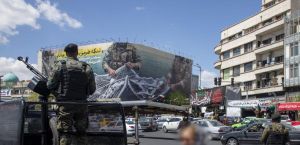
Iranian authorities are using the cover of what they call “wartime conditions” to intensify their repression of dissent through mass arbitrary arrests, accelerated grossly unfair judicial proceedings, politically motivated executions, harsh prison sentences, and asset confiscations, Amnesty International said today.
Since the unlawful military attack launched by the USA and Israel against Iran on 28 February 2026, Iranian authorities have arbitrarily arrested more than 6,000 people, including protesters, journalists, lawyers, human rights defenders, dissidents, and members of ethnic and religious minorities. Senior judicial officials have ordered expedited prosecutions against those arrested, including on capital charges, amid widespread concerns of enforced disappearance, torture and other ill-treatment, and the use of forced “confessions” in grossly unfair sham trials. During the same period, authorities have imposed decades-long prison sentences against individuals and carried out at least 39 political executions.
Authorities systematically isolated more than 90 million people through an internet shutdown, violating their right to freedom of information, through the longest and most suffocating internet shutdown on record lasting 88 days, while criminalizing online activity as “espionage,” which is punishable by death. The internet was restored, with restrictions, on 26 May 2026.
“Iranian authorities are exploiting the crisis to further erode the human rights of people in Iran who are already suffering from the devastating consequences of unlawful air strikes by US and Israeli forces, as well as decades of crimes under international law at the hands of the Islamic Republic,” said Erika Guevara Rosas, Senior Director of Research, Policy, Advocacy and Campaigns at Amnesty International.
Read More

Majid Sadeghpour Joined @NewsNation to Examine US Iran Policy Blind Spots | June 1, 2026
Dr. Majid Sadeghpour joins the conversation to discuss the fracturing Iranian regime. While diplomatic half-measures persist and the regime continues its regional meddling, Dr. Sadeghpour emphasizes that real change relies on the defiant population within Iran. With 100k expected to protest the regime’s brutal executions in Paris, the international community must pivot its focus to supporting organized domestic resistance.
Maryam Rajavi’s message to Canada Parliament: Iran Freedom Is Key to Global Peace | May 27, 2026
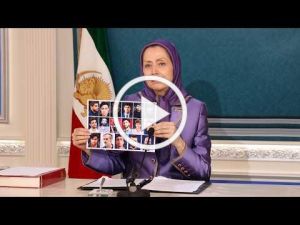
In her speech, Mrs. Rajavi emphasized that the regime’s primary war is not with foreign powers, but it is against its own people.
As Tehran escalates political executions to suppress the nightmare of another uprising, the message from the Iranian resistance is clear: no return to the Shah’s dictatorship, and no acceptance of the current religious fascism. The ultimate goal is a free, democratic republic based on the separation of religion and state. It’s time for the international community to recognize the Iranian people’s right to resist.
OIAC Donation | 501 (c)(3) Tax deductible
Your donation will help OIAC advocate for a democratic, secular and non-nuclear government in Iran. Founded on the respect for human rights, gender equality, religious and ethnic tolerance, as wells as social, economic justice, and security for America. Our goal is to organize Iranian-American communities in the United States to promote these values.