


Guest Column
RAMESH SEPEHRRAD
May 27, 2026
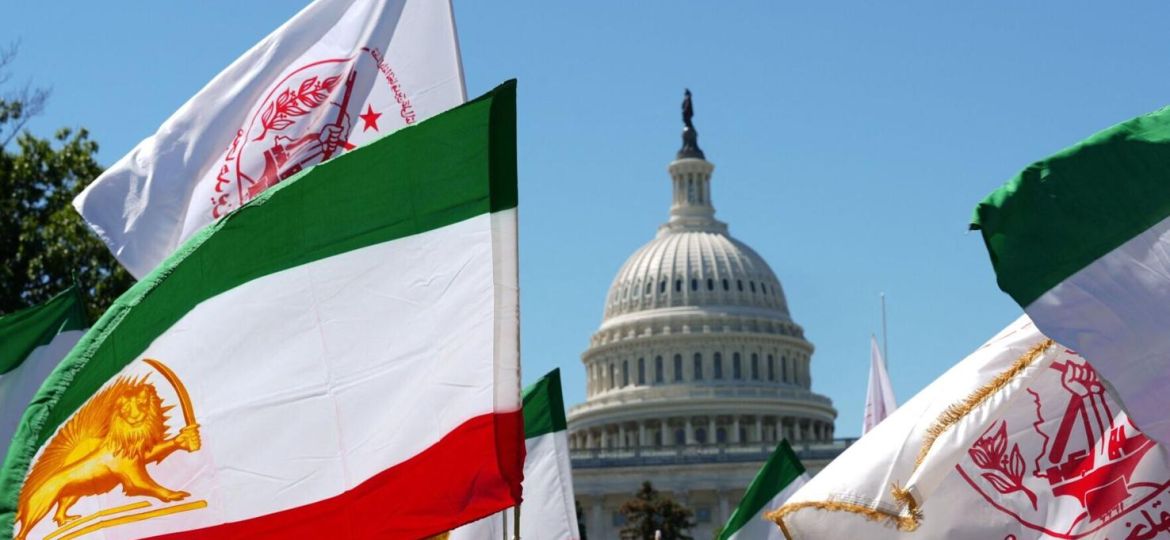
On May 16, thousands of Iranian Americans rallied and marched in Washington, D.C., with a message that should resonate across Virginia: Iran’s crisis is not only a foreign-policy problem. It is a test of whether free societies will stand with a people fighting dictatorship, or continue managing the symptoms of a regime that survives through repression at home and aggression abroad. The same message will echo in Paris on June 20, when more than 100,000 members of the Iranian diaspora and supporters of democracy are expected to rally for a free, secular, democratic republic.
In her address to the D.C. rally, Maryam Rajavi, president-elect of the National Council of Resistance of Iran, argued that lasting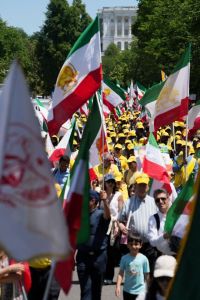 peace in the region is unattainable while Iran remains under the clerical dictatorship. Her message was not a call for foreign war. It was a call to recognize the Iranian people’s own struggle for a democratic republic.
That distinction matters.
For decades, U.S. policy has too often been trapped between two flawed choices: appeasement or military confrontation. One rewards Tehran in the hope that the regime will moderate. The other seeks to contain its violence after the fact. Neither addresses the root cause. The Islamic Republic is not destabilizing the Middle East because of a temporary policy dispute. It exports terrorism, takes hostages, advances nuclear blackmail, suppresses women, executes dissidents, and arms proxies because these are instruments of regime survival.
The same regime that threatens regional security is waging war against its own people. Rajavi described Tehran’s current posture as an impasse. The regime cannot return to the pre-uprising status quo, and it cannot offer a credible future. Its answer has been mass arrests, internet blackouts, street intimidation, and what she called a “strategy of the noose.” Executions are not isolated abuses of a broken judiciary. They are state policy.
This is not abstract. Political prisoners, protesters, and dissidents are being sentenced to death after torture, coerced confessions, and sham proceedings. Families are often notified only after loved ones have been executed. The regime’s goal is clear: terrorize society before the next uprising.
Virginia understands, perhaps more than most places, that liberty is not secured by flattering tyrants. Richmond’s own history reminds us that the demand for freedom begins when people refuse to accept arbitrary power as permanent. That is exactly what Iranians are doing today.
The democratic demand inside Iran is also clearer than many Western discussions admit. Iranians are not asking the world to choose between the mullahs and a return to monarchy. They are rejecting both. The slogan “No to the Shah, no to the mullahs” reflects a deeper political reality: Iran’s future must be decided by its people through the ballot box, not inherited rule, clerical rule, or foreign-backed political engineering.
That is why U.S. policy must stop treating the Iranian people as a side issue. They are the decisive issue.
A serious Iran policy should begin with five steps.
First, the United States should make a halt to executions a mandatory condition in any engagement with Tehran. A regime should not be allowed to negotiate abroad while conducting political purges at home.
Second, Washington should help Iranians bypass censorship and internet shutdowns. Internet freedom is not merely a communications issue. It is a lifeline for organizing, documenting abuses, and preventing atrocities from being hidden in darkness.
Third, the U.S. and its allies should expel regime operatives and intelligence-linked networks that monitor, threaten, or intimidate dissidents abroad.
Fourth, democratic governments should pursue accountability for crimes against humanity. The architects of torture, executions, hostage-taking, and mass repression must face consequences.
Fifth, America should recognize the legitimacy of the Iranian people’s struggle to establish a secular, democratic republic based on separation of religion and state, gender equality, pluralism, and equal rights for Iran’s diverse ethnic and cultural communities.
This does not mean imposing a leader on Iran. It means refusing to legitimize a dictatorship that does not represent the Iranian people. It also means refusing to elevate recycled authoritarian alternatives as shortcuts to stability.
Iran does not need another strongman. It does not need another externally packaged political project. It needs what its people have been demanding at enormous personal cost: freedom, dignity, accountability, and popular sovereignty.
The path to regional peace runs through freedom in Iran. U.S. policy should finally reflect that truth.
Ramesh Sepehrrad is a visiting fellow at George Mason University’s Carter School for Peace and Conflict Resolution, a cybersecurity and AI executive, and author whose work focuses on technology, human rights, democratic transitions and Iran policy. She serves as chair of the Advisory Board of OIAC and is a founding member of the Free Iran Scholars Network. She can be reached at [email protected].