


by Amr Gohar | Mar 12, 2026
WASHINGTON, D.C. – Dr. Majid Sadeghpour, Political Director of the Organization of Iranian American Communities (OIAC), said the proposal for a provisional government led by Maryam Rajavi represents what he described as a critical step toward preventing the return of authoritarian rule in Iran and ensuring democratic sovereignty for the Iranian people.
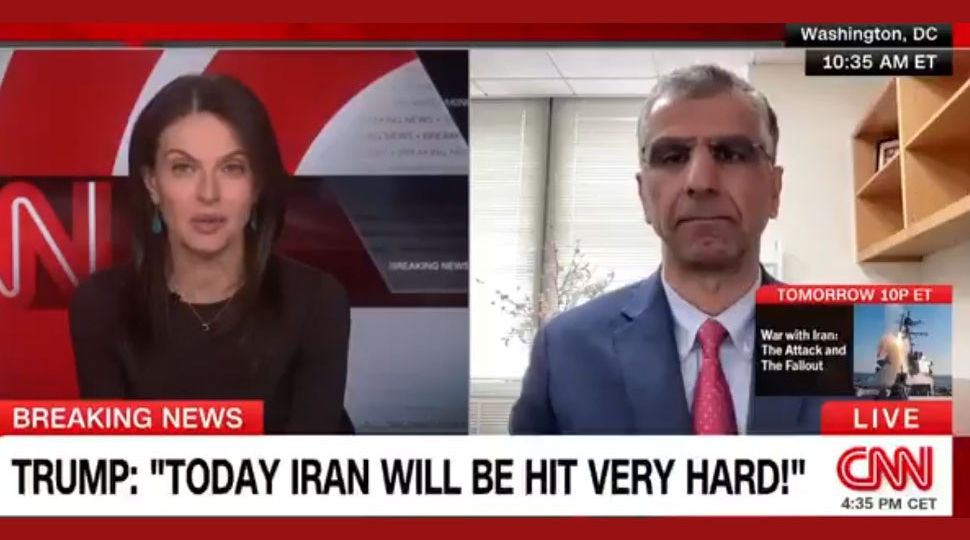
In remarks following a recent interview with CNN, Sadeghpour argued that the political structure of Iran’s ruling system has been severely weakened after the reported death of Supreme Leader Ali Khamenei, describing the moment as a turning point that could determine the country’s political future.
According to Sadeghpour, the proposal for a provisional government under Rajavi — who serves as the president-elect of the National Council of Resistance of Iran (NCRI) — is intended to manage a transitional period and prevent any power vacuum in the country.
“The formation of a provisional government is a decisive step to block attempts to reproduce tyranny in Iran,” Sadeghpour said. “The collapse of the pillars of the Velayat-e Faqih regime has placed the country on the path toward liberation.”
Sadeghpour said recent protests and unrest inside Iran demonstrate what he described as a growing determination among Iranians to reclaim political power. He also cited the role of resistance networks linked to the People’s Mojahedin Organization of Iran (PMOI/MEK), which he said are actively challenging the regime.
He argued that years of international negotiations with Iran’s leadership failed to deliver democratic change, saying political transformation must come from within the country rather than through outside military intervention.
Sadeghpour also pointed to demonstrations by supporters of the Iranian opposition in cities such as Washington, D.C. and Paris as signs of international backing for the movement. According to him, these demonstrations reflect the opposition’s slogan rejecting both the monarchy of the former Shah and the current clerical system.
He highlighted Rajavi’s proposed 10-Point Plan, which outlines a roadmap for a democratic Iran that includes commitments to human rights, gender equality, the separation of religion and state, and a non-nuclear policy.
Under the proposal, the provisional government would oversee a six-month transition period, during which elections for a constituent assembly would be organized to draft a new constitution and prepare for a democratic system of governance.
Sadeghpour said opposition groups believe the current moment represents the beginning of a new political era for Iran.
“The final victory will belong to the Iranian people and their organized resistance,” he said. “A democratic Iran can become a source of peace and stability in the region”.